




Brush/Debris Shelter
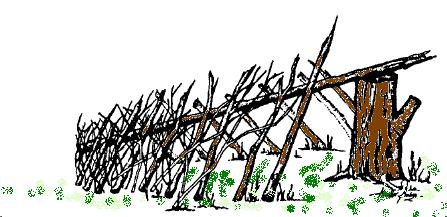
The brush or debris shelter is one the easiest ways to construct a shelter in a survival situation. The brush shelter works well to conserve heat and protect you from the elements when you are at rest. It is very easily constructed. You will want to find a branch of a tree that is at least 1foot to 1 � feet longer than you are tall. Gather shorter branches and leaves. To Construct you will need to you will want to first build the frame .first take the long branch and place one end on a stump or a rock or even a thick fork shaped branch then lay the smaller branches against the larger branch (Diagram 1a). Next you will want to cover the shelter frame with dry leaves and shorter branches to hold the leaves in place (Diagram 1b). To help prevent loss of body heat you will want to place at least a five inch layer of dry leaves and pine needles.
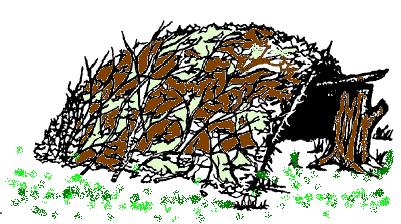
Brish Shelter Covered
Brush Shelter Frame
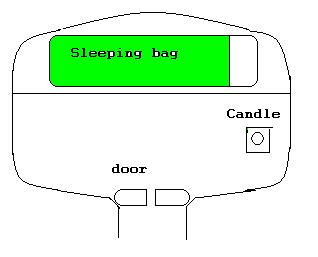
The snow cave shelter is one of the easiest shelters you can build in a winter survival Situation (Plus they are fun in the winter to build on your front lawn). To construct the snow cave shelter you will want to build an oval shaped pile of snow that is about as tall as you. So If you are 5� 9� tall your pile of snow should be about 10� l x 8� w x 7� h. Now that you have a snow pile start to dig out the pile. Start with your door opening it should be a little wider than you. Then as you dig further in you will want to dig hollow out the pile leaving about a foot of snow around you on all sides. You will want to leave a shelf of snow in the back half of the cave for you to place your sleeping bag on. Next you will want to poke a hole in the top of the cave to allow air to flow out of. You will want to cover your door hole you can use a pack or even a block of snow but make sure there is still an opening in the door so air can flow through. You can use a candle or even a small lamp in the cave for some heat. ( believe it or not this can actually keep you quite warm in a pile of snow)
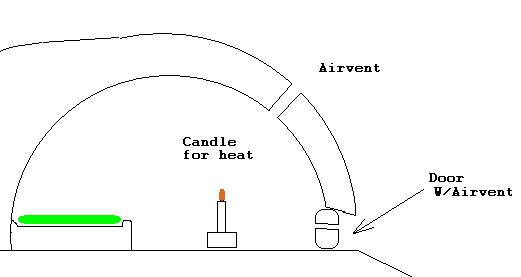
Snow Cave Side Cut Away
Snow Cave Top View