
Nuno Craveiro Lopes M.D.
Head
of Orthopedic and Traumatologic Department
Coordinator of Pediatric Orthopedics and Limb
Reconstructive Surgery Unit
Garcia de Orta Hospital, Almada - Portugal
Any comment, suggestion or contact can be done to: [email protected]
CLINICAL CASE PRESENTATION
Treatment
of Legg-Calvé-Perthes disease utilizing arthrodiastasis with an Ilizarov frame
Perthes
disease in children above 8 yo, generally has a worst prognosis. On this age
group it is common that hinge abduction appears in a descentered and
uncontained hip, situation that has a difficult solution with the standard
surgical procedures. On those cases arthrodiastasis as described, can be a
valuable treatment option.
The
rationale of arthrodiastasis on Perthes is that it permits to reduce the
hip, protect it during the fragmentation stage, and creating a space
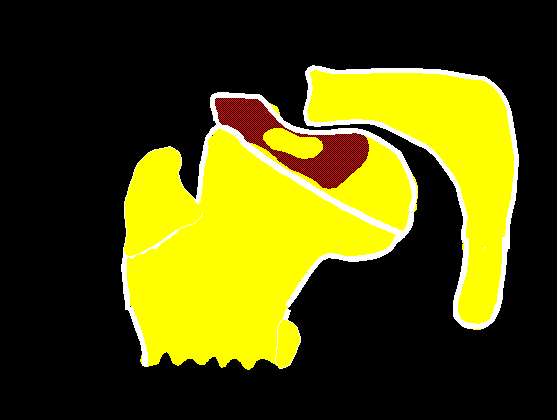
inside the acetabulum, permits the elastic memory of the articular cartilage to act over the collapsed plastic fragmented bone of the femoral head to regain its spherical shape.
|
|
|
|
|
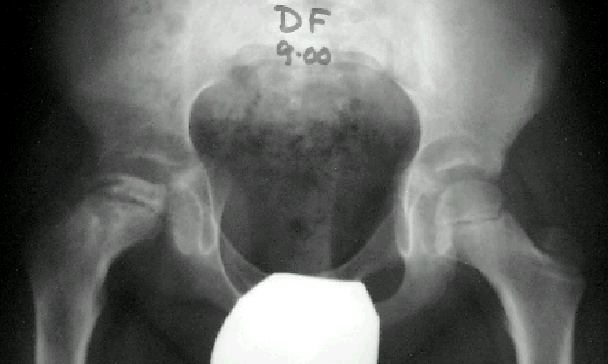
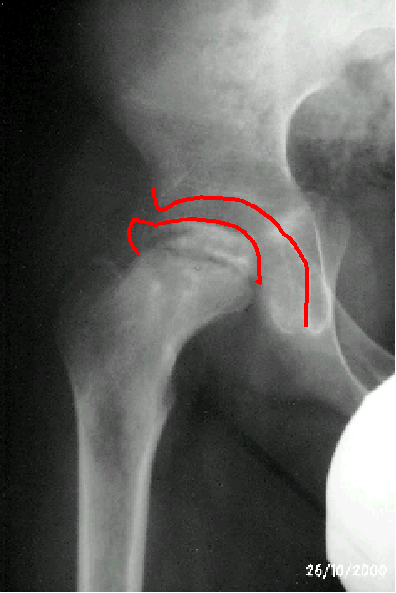
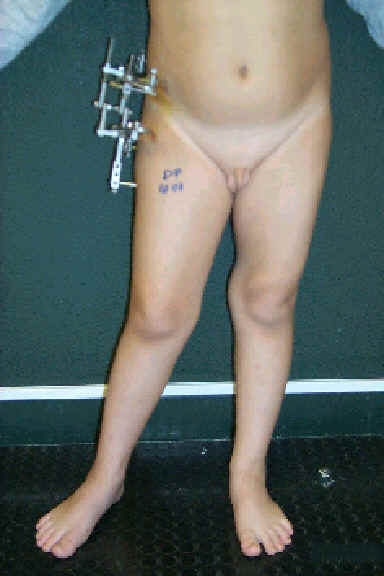
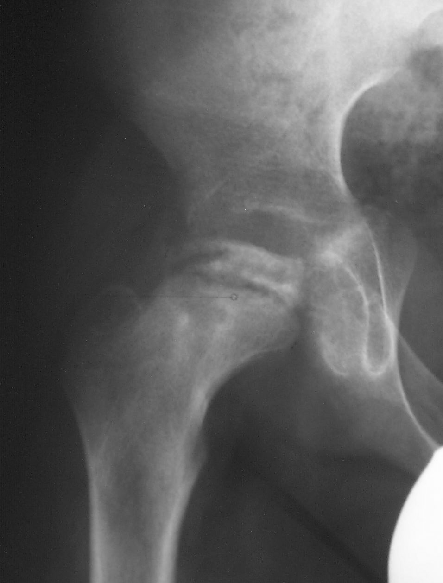
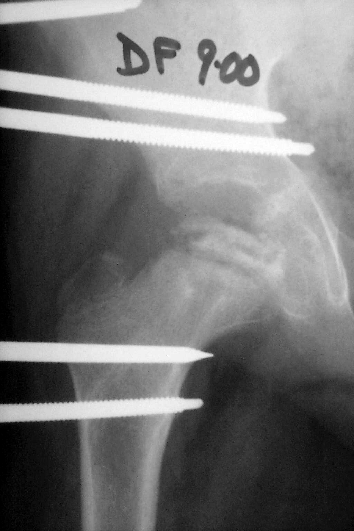
The present case was one of a 8 yo boy with a Perthes disease on the right hip, complaining of pain, loss of movement and a hinge abduction effect on the hip. Xr showed a descentered and uncontained hip.
|
|
|
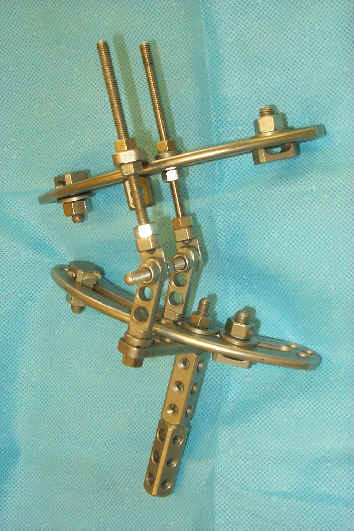
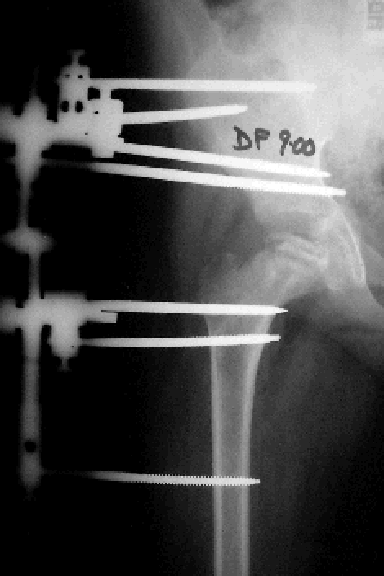
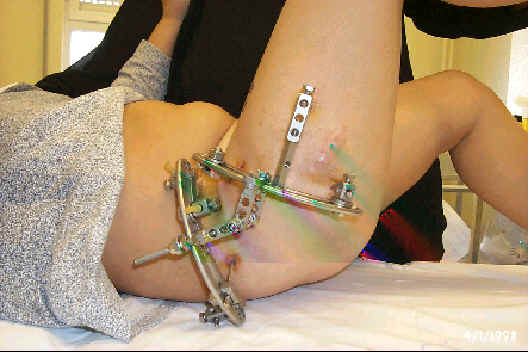
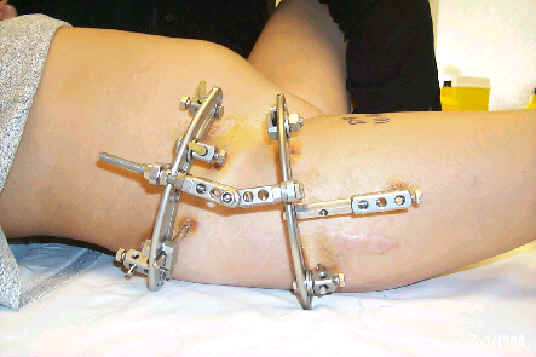
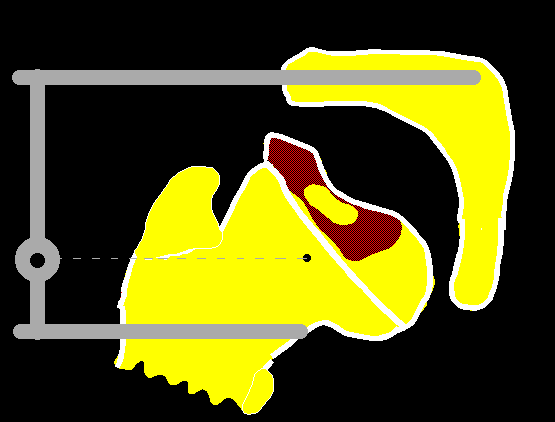
An Ilizarov frame with hinges centered on the center of rotation of the head, was assembled with the limb in a position of abduction and slight flexion, permitting the reduction and containment of the hip, a progressive arthrodiastasis and flexion-extension movements.
|
|
|
|
|
|
|
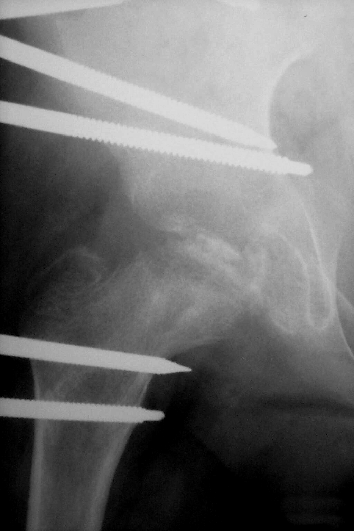
The frame was used for 3 months. During this period one could assist to the progressive reshapping of the femoral head. After that period the hip was protected with an abduction-flexion brace for 8 months.
|
02/2000 |
09/2000 |
01/2001 |
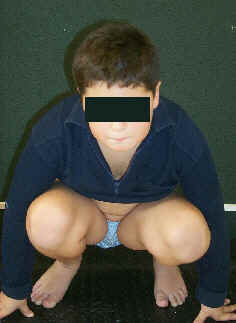
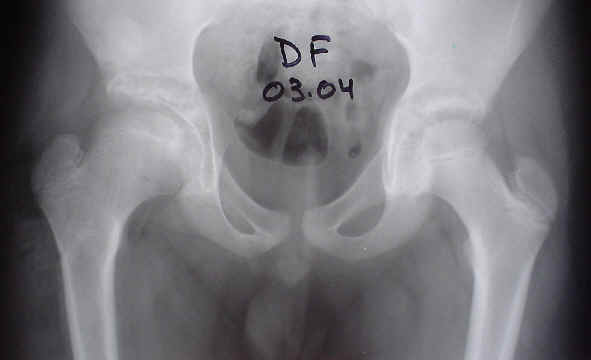
Those are the results 4 years after frame removal. Patient is asymptomatic, walking without any limp, movements are free and complete.
 |
|
|