The first named �Draffen� was James of Draffan who is recorded as witnessing charters of John, Abbot of Kelso between 1160 and 1180. James was the son of Lambyn Asa who appears as having been granted the lands of Draffane and Dardarach by Abbot Arnold between 1147 and 1160. James then inherited those lands which were confirmed also to his son A (very possibly Alan) by Abbot Henry between 1208 and 1218.
The Draffens were recognised in hereditary manner as Lairds of Lesmahagow which seems a slightly curious situation. King David I granted the regal barony of Lesmahagow to the Monks of Kelso, to include the priory of Lesmahagow, in 1144. However, it is not clear that the lands of Draffan were included within this grant as there was a dispute between the monks and William Comyn which ended with William making a gift of the lands of Draffen to the monks. William had a residence and possession of neighbouring lands of Machanshire (Dalserf), his own barony, to the North of Lesmahagow, the lands of Draffan bordering the two.
William Comyn would have been a man of mature years at the time of this dispute having been born around 1097 and it seems reasonable to conclude that he would have been well established in the area prior to David�s grant in 1144. Indeed, William Comyn was Lord Chancellor of Scotland between 1136 and 1141 following David�s accession in 1124. William was one of the many of the Flemish nobility who were invited to join King David as a result of his marriage to Maud, daughter of the earl of Northumberland, Countess for the honour of Huntingdon and daughter from the joining of the houses of Boulogne and Louvain (Leuven) within the Flemish empire. The origins of the Comyn family, it seems, were in Comines in the Flemish county of
It seems clear that Lambyn Asa would have had an association, maybe even a strong association, with William Comyn, being in possession of the lands under dispute between Comyn and Kelso and, given his apparent status as Laird of Lesmahagow, was likely in effective possession of those lands prior to the grant which David made to the monks of Kelso. This idea may be further supported by the fact that, according to the Annals of Lesmahagow, �The lands of Ardauch are mentioned in the chartulary of Kelso as belonging to a branch of the family of Lambyn�. Some of the family members given in the Annals of Lesmahagow are Eustace �The Fleming� of Ardauch, witness to Abbot John 1160 � 1180, William of Ardoch mentioned by Abbot Henry 1208 � 1218, in 1266, Robert, called the Franc of Lambinistun (the Norman Frenchman of Lamington?), son and heir of Henry, and grandson of William, formerly called of Ardach, alongside Theobald The Fleming. Also mentioned in another source is Robert from whom sprung Roberton.
Theobald The Fleming seems generally accepted as the ancestor of the Douglas family and he is also very clearly linked with Baldwin of Biggar, Sheriff of Lanark, who married the unnamed widow of Reginald Fitzalan, bastard son of the Earl of Richmond and who was stepfather to the very first Crauford, John de Crauford whose lands became Crawfordjohn. Lambyn Asa seems a very strange name but Baldwin and Eustace and their relationship with the Earl of Richmond give us some very interesting clues as to the possible (probable) origin of the father of the Draffens.
John Burke in his �History of the Commoners of Great Britain and Ireland, volume 3� tells us that directly before their time witnessing charters in Lesmahagow they were together witnessing charters for Alan, Earl of Richmond up to his death in 1146. His notes tell us that Baldwin was known as Baldwin of Multon. Researching the Lords of Multon will tell us that the recurring the names within this family are Thomas and Lambert. Lambert de Multon gained the barony of Copeland in Cumbria on marriage to Annabel de Morville. This Lambert was the son of Thomas, Lord of Multon, who was, in turn, the son of Lambert (de Multon), this Lambert being born around 1142. It seems reasonable to think that Baldwin and Theobald, and maybe Eustace, were of the generation prior to this. It also seems inescapable to conclude that Lambert (Lambyn) was either also of this generation or the generation before, especially given the different ways of recording names at the time and the possible flexibility with which such names are or have been interpreted by subsequent historians.
A feature of these families from Flanders is their propensity for inter-marriage as has been noted by many historians. Some have tried to identify the various relationships through the coats of arms borne by each. Of course, one would have to be fairly expert in heraldry to be able to do so. However, there do seem to be certain themes regarding the basic colour schemes, reverses of those schemes and basic charges used. Probably the most recurring charge both for Scotland�s royalty and many of the families of Flanders is the lion rampant. Also noteworthy for this explanation is the three Mullets (stars). In my most recent investigations the Flemish families who keep reappearing are; House of Flanders, naturally, house of Louvain, house of Louvain/Lower Lorraine, house of Boulogne and, to a certain extent, house of Hainaut.
As a little note on colour schemes;
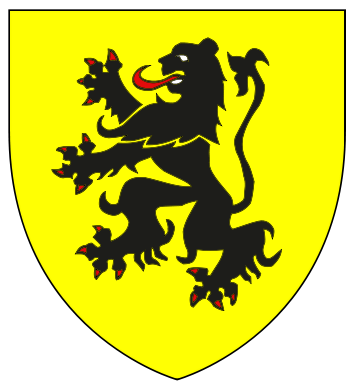
Flanders -� Field Or (gold), Charge Sable (black) |
|
|
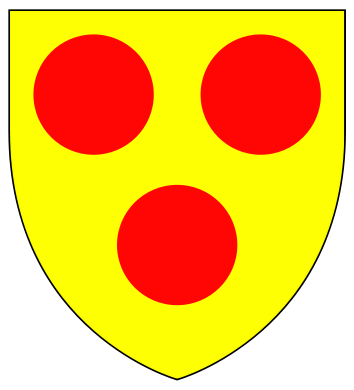
Boulogne � Field Or (gold), Charge Gules (red) |
|
|
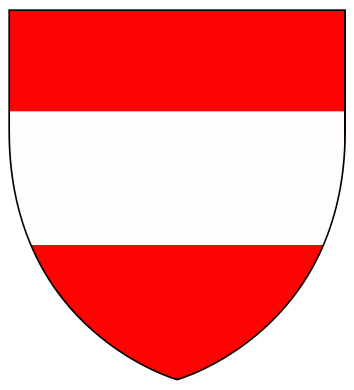
Louvain � Field Gules (red), Charge Argent (silver/white) |
|
|
Aumale |
|
|
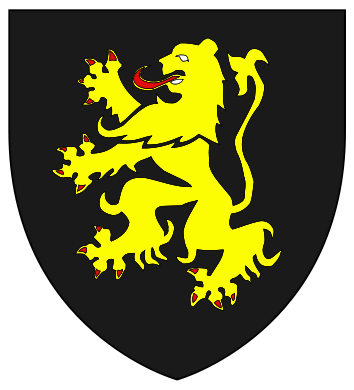
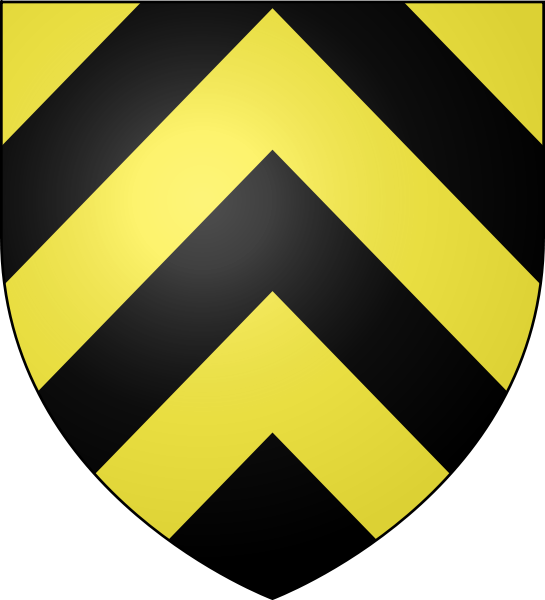
Louvain/Brabant � Field Sable (black), Charge Or (gold) � |
|
|
Louvain Younger sons (Bruges/Bruce) - |
|
|
Louvain/Percy |
|
|
Limburg/Lorraine |
|
|
Hainaut � Field Or (gold), Charge Sable (black) |
|
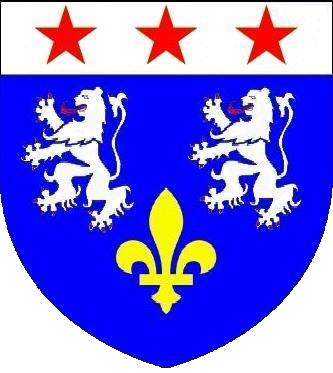
These are the colour schemes for the senior arms of the senior families, although Boulogne is not one of the more senior families, it is Highly relevant to the history of Scotland. Colours and devices (charges) would normally change in the descendancy of the family, first son, second son, third son etc. This is called differencing. However, the main colour of the Draffen shield, azure (blue), bearing in mind the charges it contains, is most consistent with the reversing of the most junior Louvain colours, those ultimately used by the Bruce (Brus, Bruges) family. I am referring here, of course, to Robert the Bruce.
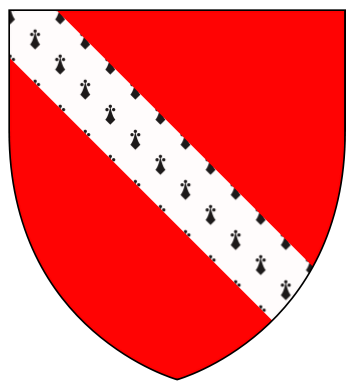
The arms of the earliest Earl of Richmond and the Crawfords are most consistent with the early Louvain colours and, indeed, charges, suggesting a fairly direct descent.
A demonstration of differencing can be inferred between the Boulogne and Aumale arms. Aumale is in respect of Count Lambert of Lens who was the son of �Maud of Leuven and who inherited the honours of Maud following her marriage to Eustace of Boulogne. Consequently we see the colours of Boulogne reversed on the charge which is placed on the argent (white/silver) field which appears to have been used in other cases of Leuven for differencing (the Bruce colours).
This gives the range of colour schemes which would seem most relevant when analysing the influence of Flemish families.
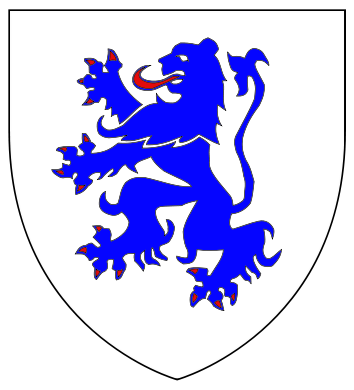
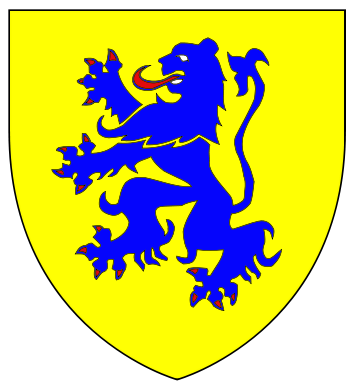
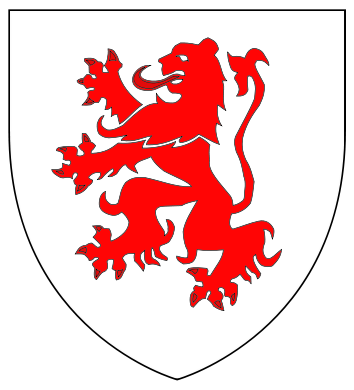
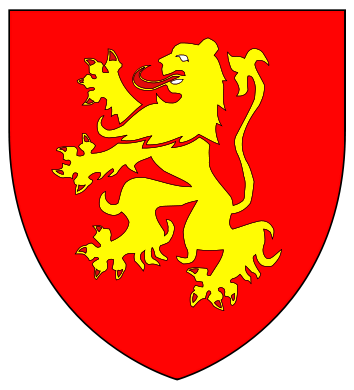
The charges placed on coats of arms appear to give the more precise detail of a lineage having established the general descendancy from the colour schemes and serve to define the relationships in more detail. In this respect the lion rampant is a continuing theme in many of the arms of these related families and also the grouping in threes of particular insignia. Examples of relevant Scottish families arms follow.
|
Richmond |
|
|
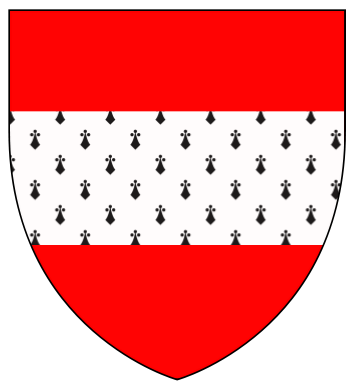
Crawford Clan |
|
|
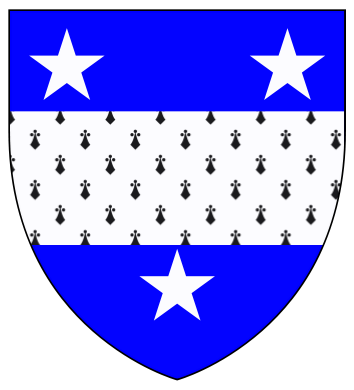
Crawford variation |
|
| |||||||
|
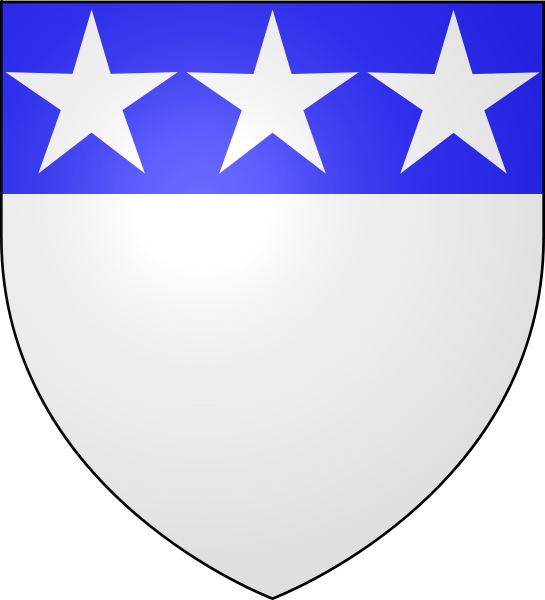
Douglas (pre 1330) |
|
|
Murray (Moray) |
|
|
Comyn |
|
| |||||||
|
Draffen Basic |
|
|
Draffen augmented |
|
|
Fitzalan |
|
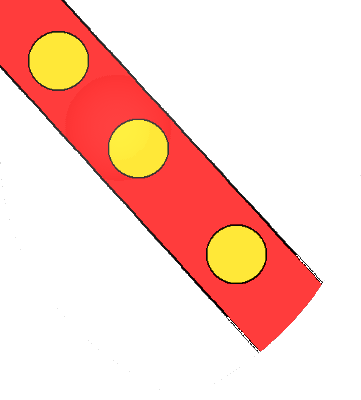
Of course, the arms of the Earl of Richmond are an English insignia but highly relevant to tracing the origins of the Draffens. As already stated, both Richmond and Crawford appear so closely related to the arms of Louvain as to suggest a very direct link. The bend (diagonal stripe) seems to be considered a more senior charge to the Fess (a bar). The charge is Ermine as opposed to Argent for Louvain and this is further evidence of minority. However, the Crawford variation shown above also suggests a very clear relationship with most of the others in the group and links the azure and argent of junior Louvain to the ermine fess of Richmond/Crawford, even though I don�t have details of who actually bore those arms (that may follow from further research). The striking feature of many of these arms is the use of three mullets (stars).
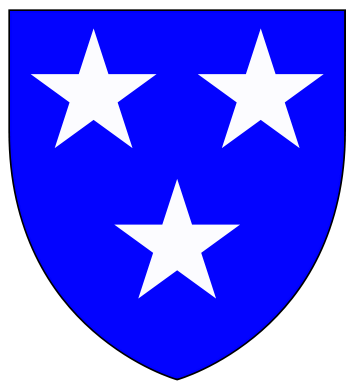
Starting with Murray (Moray), the least complicated of these arms, in colour scheme the younger of the Louvains reversed, many commentators have suggested the three mullets as being representative of a third son of a house. The house of Moray extends from William de Moray (de Moravia) who was the son of Freskin, a Fleming. Depending whose account you read, he was also the son of Donnchad II, king of Scotland who was killed in 1094, and was known as William Fitzduncan (William, son of Duncan). However, it has been argued that it was the Flemings who introduced the idea of coats of arms into Scotland where they had not previously existed. The reality is probably far more complicated than such a simple explanation would allow. For the time being it�s sufficient to note these arms as having a potential relationship within the group under discussion.
Comyn arms are, once again, a reversal of the colours of the younger Louvains, said to extend from Otto son of Henry I of Louvain and passed to a cadet of the family on his death but the charge is very different apart from being the group of 3.
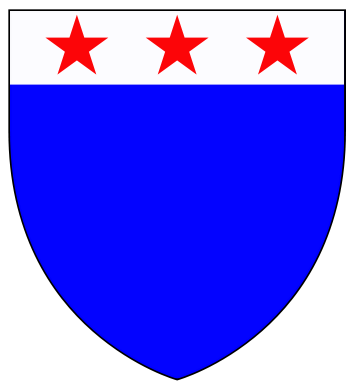
The Douglas (pre 1330) arms are noted as being a derivative of the Moray arms with the three mullets transferred to the chief with the Argent of the main shield being reminiscent of the fields for Aumale (count Lambert of Lens inheriting the honours of Maud of Louvain), younger Louvains and Limburg/Lorraine.
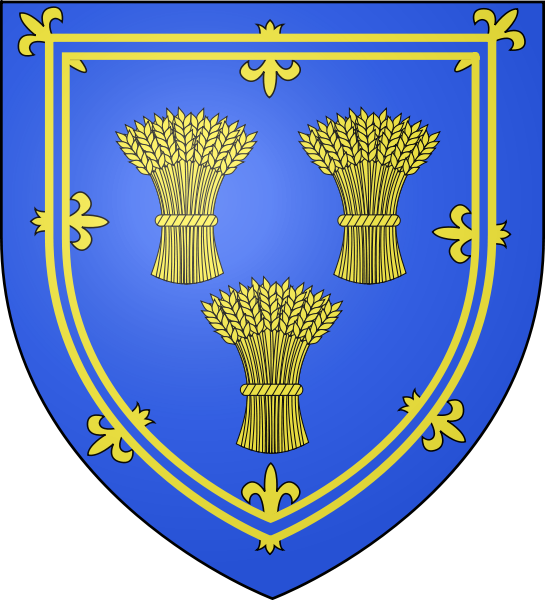
The Draffen arms are noted as being similar to those of Moray and Comyn and, indeed, the Crawford variation in terms of the main shield but with, the three mullets gulles (red) instead. Gules on Argent is very reminiscent of the arms of Limburg and one very interesting item, having struggled over where the name Asa might come from, there is a place in the County of Limburg with the name of As!
The design of arms became, quite naturally, much more complicated over time from relatively simple beginnings and some might argue that the Draffen arms contain a much more recent design. However, they still should tell a story. In time I shall embark upon the Fleur de Lys Or between Two Lions Rampant. Suffice it to say that the river Lys runs from Pas de Calais into Belgium and cuts the town of Comines in two and Lille, just to the south, has as it�s emblem ���. The Fleur de Lys. It�s a tantalysing thought!
All of this may serve to give a very good idea of the muddle of inter-marriages within this group of families to give an impression of so near yet so far. We are told that Baldwin and Theobald are of the family of Lambyn Asa and jointly they are effectively holding the regal barony of Lesmahagow yet the implication of the arms would suggest that they had very distinct lines of descent. One could see how Baldwin might attach to the alternative Crawford arms, Theobald being cited as the origin of the Douglas arms but the role of Lambyn (or Lambert) is slightly less clear. Certainly, if they were family they were probably neither brothers nor fathers/sons, making them cousins at best. Of course, this ignores the potential for intermarriage as so little is known at present of the relevant spouses of each.
However, there seems to be sufficient evidence to tie the various threads together, including the Multon link (the precise location of Multon yet to be decided, choices of Moulton of Lincolnshire (Gilbert of Ghent, Earl of Lincoln), Malton of Yorkshire (Earl of Richmond) and extensive links with Cumberland (Earl of Moray). Also worth watching out for a possible link between Eustace and Devon in the future ;) Each step takes us a little further towards the elusive history of the Draffens but the devil is in the detail!