Ducks
Submitted by Rachelle Mishelle
My favorite animal is duck. Here’s a little story about ducks and many interesting scientific information.
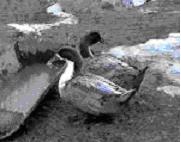
Before these 2 ducks were hatched, their eggs were placed into a goose nest. The mother goose raised them as if they were her own. Wherever the mother went the ducks did too. If the ducks were left by themselves they would quack, quack, quack until the mother goose came to get them.
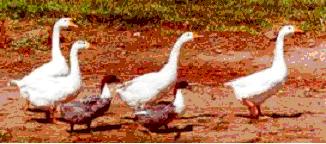

A "duckling" is a baby duck.
Introduction.
Almost everybody has seen waterfowl flying in a "V" formation like a squadron of airplanes. As they fly, they "talk" to each other by honking, quacking, and making other noises. This helps to keep the members of the flock together even in dense clouds or at night. As these birds migrate, some scientists think that waterfowl use the earth's magnetic field to help them find their way‹in the same way that people use compasses. Others think they navigate by using the positions of the sun by day and the stars by night.
What they eat.
Dabbling ducks eat almost anything that floats into their mouths—seeds, water weed, tiny organisms, and more. Sea ducks and mergansers prefer small fish, sea urchins, and shellfish.
How they multiply.
They build nests and lay eggs perfectly timed to hatch when the days are longest and the weather its warmest. Waterfowl chicks hatch with their eyes open and are covered with downy feathers. Within hours, the babies are swimming and diving for their own food. They grow very fast, and by the first snows they are ready for the long voyage south with their parents.
Where they live.
Ducks, geese, and swans are called waterfowl in the United States, and wildfowl in England. But no matter what you call them, they are one of the world's most beautiful and interesting groups of birds.
Long-distance flying is something that most waterfowl do very well. In fact, many species are famous for their long migrations. Every year, they travel thousands of miles to reach good sources of food and raise their young.
To guide them during these long flights, waterfowl use methods of navigation that scientists don't fully understand. The birds may use the sun and stars, as explained below.
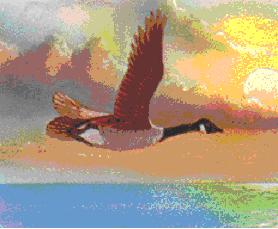
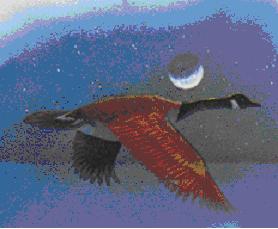
Waterfowl seem able to use the position of the sun in the sky to tell them where they are. Like pilots of long-distance airplanes, they may use the sun to make sure they are flying in the right direction.
Some waterfowl may fly night and day when they migrate. At night, they probably use the positions of the starts in the sky to guide them, as human sailors do.
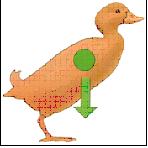
In general, the best swimmers among the waterfowl are the most awkward members of the group on land. This is because the best swimmers have their legs placed far back on their bodies. This gives them more power for swimming—but it makes it harder for them to walk on land. With so much of their weight in front of their legs, they have to walk very carefully to avoid falling on their faces.

