| The Middle East has been a leader in textile production since ancient times, while Arabs introduced to the West many forms of silk weaving and production. Witness, for example, the frequent use of such Arabic names as "damask" (from Damascus) and "gauze" (from Gaza) for certain fabric weaves. Ancient embroidery patterns, meanwhile, were passed on from the Arab world to Europe in the Middle Ages: these were perpetuated in European pattern books dating back to the 15th century. Until more recent times, the style of each costume in the Middle East, from bridal attire to ceremonial dress, not only bespoke an ethnic and regional identity, but both the identity of the village and the maker as well. Thus these costumes represent a wealth in diversity, number and local history. A collection of traditional Middle Eastern costumes could be vast and significant as a cultural conservator. This page presents just a few Palestinian costumes. |
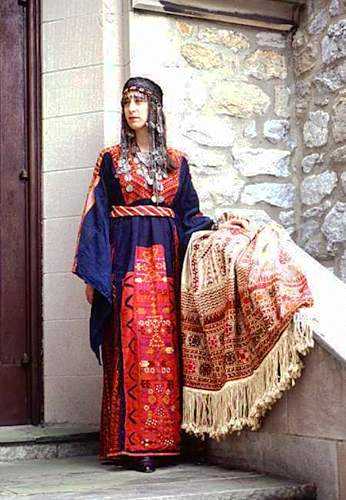
| Bethlehem "Malak Khdari" or "Royal" dress with the "Shatweh" headdress and a rare 19th century headscarf |
 |
 |
 |
| El Khalil dress with a rare early 20th century "Ghudfeh" scarf. |
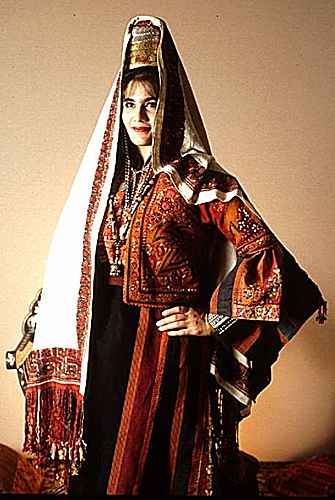
| Ramallah white Roumi bridal dress and scarf, embroidered with red silk thread on hand woven fabric |
| Bethlehem "Shatweh" headdress, early 20th century |
 |
 |
 |
| Palestinian Heritage Costume |
 |
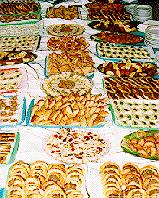 |
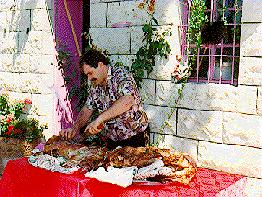
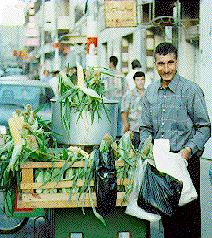
| Practically every consequential Palestinian street has some sort of fast food stall adorned with brightly coloured bowls of salads, pickles and sauces. This is food you grab on the run, munch on your way or take home as part of a meal. In comparison with the European or American equivalent, this fast food is surprisingly nutritious and tasty. It is common to begin a sit-down meal in a restaurant with meze, an assortment of salads, pickles and seasonal munchy things served with fresh bread, however these can easily make a meal on their own, and have spoiled the appetite of many still waiting for a main meal, so watch how much you munch if its only supposed to be a starter. A number of the popular meze dishes are also the foods served on the street as fast food. |
 |
 |
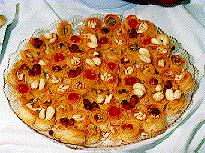
The meze can be followed by one of the 'traditional Palestinian main meals' which are usually meat centred and excessive in quantity. Every town has its sweet shops, selling slices of sweet sticky syrup doused concoctions from the huge metal trays decked out in their windows. There are also seasonal sweets for festivals such as Ramadan. With coffee houses, fresh juice stalls, wandering juice sellers and bars the choice of beverages is equally wide, with drinks to fit every occasion, cold and hot, bitter and sweet. The argeela, the tobacco water pipe, is the traditional after dinner relaxant. |
| Palestinian Food |
 |
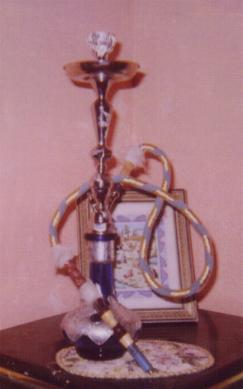 |
| Traditional Argeela |
|