|
The old lady trudged up the street, her back bent as she carried two large cloth grocery sacks. She did not live in this part of town but she always walked this way because she enjoyed the view of the old neighborhood; yes for twenty-nine years she had lived there on the corner, in that two story red brick house, the one with the roses growing everywhere and a large trellis and gazebo on the side next to the corner. She had grown up in that house and then became its mistress when she and Paul had married and her folks had moved to Florida. Lived in that house, bore three children and then. Oh well, water over the dam, she thought. But there were some sweet memories in that house, and one or two bad ones. But she was doing ok, getting by.
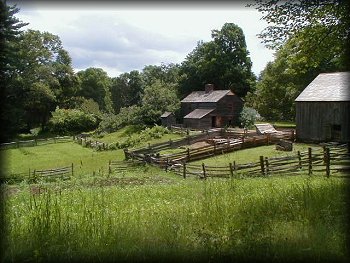
Her back was humped and her hair was stringy, pulled back and tied with a little piece of faded red ribbon. Her coat was a long blue one, which had seen many winters and looked as if it had made its debut in the roaring twenties. Her shoes were a big old pair of gaudy tennis shoes, which looked to be four sizes too large. And on her right side with a long strap to hold it in place was a small leather handbag. She hated the hump that was developing on her back but there was no way she could afford three dollars for a pill, that new Fosamax stuff and the $75 to see a doctor. No insurance, no Medicare, no nothing, for she had just eked a living out any way she could. She had been to the store and was now going back home, the eight-mile trip she made every Saturday morning, regardless of the elements. She would trudge the four miles to the grocery store, stopping along the way to deliver three or four-dozen eggs and a few half gallons of goat's milk. For she lived out East of town on a little three-acre plot in a small two room house by herself, along with her three goats, two dogs and twenty-two chickens, twenty hens and two roosters. She sold the eggs and the goat's milk, and then in the summer she would sell vegetables from her garden, a large garden that she worked herself. She delivered milk on Monday, Wednesday and Friday, and bread and eggs on Saturday, and produced every day, usually only one thing at a time. How many 63-year-old women lived like she did? When she got to the corner she stopped and looked over ever inch of the two sides of her house to see how it was being cared for, and how it was weathering. Then she would go around the block and look at the other two sides, reminisce about her life there and then plod back to her two-room shack. As she looked at the back stoop, she saw a pair of small yellow Wellies there and it struck a tender memory in her heart for there was where Mary Ellen had left her Wellies when she came into the house. Mary Ellen, my Mary Ellen, she said, smiling, and a few tears rolled down her sun-tanned face. For Mary Ellen had been her pride and joy, her wonder child, until.... She stopped, set both bags down and switched hands, picked them up and at a good gate started home, for she had stuff that must be taken care of. Gosh if she had a fridge and lights things would be so nice, she thought as she made her way out of town and to her place. Then she just smiled and thought, heck it isn't so bad after all, but she did wish she could at least talk to her son and play with her grandkids. Oh, there was so much love she could give them. As she trudged up to her little front gate, both dogs, A and B, were there to meet her. She had named the dogs which were strays she had taken in A and B because she used to laugh at the outlandish names people gave dogs. A dog didn't care what it was called as long as it received food, shelter, and some love. She undid the latch, entered the gate and then closed it; then she squatted to pet both dogs as she always did when she got home. The three of them eventually went into the house and she put away her groceries, some flour, salt, a package of raisins, a can of baking powder, plus the dog's treat, a bone for each and a soup bone so she could make a big pot of vegetable soup. There was the two-gallon can of kerosene, or lamp oil as they called it when she was a kid. After she had put her purchases away she then took her purse off her shoulder and checked how much money she had remaining. Boy money just doesn't go far these days she thought. She kept her perishables in a sort of root cellar she had slowly dug out back and covered over with boards and dirt; it kept stuff cool in the summer and warm in the winter. She had two big old steel drums which she kept filled with water in the summer, which were like the springhouse her friend Helen had when they were kids. Funny how long stuff lasted in her little home made root cellar. She put a little wood in the stove so she could heat her coffee, for she made one pot in the morning and it lasted all day. When the pot was warm, she closed the damper on the stove and reached up in her cupboard, well not a cupboard exactly, but some old wooden crates nailed together. She took down a gallon glass jar from which she took one cookie, a home made cookie, then she put the jar bar and sat down at the table to do some figuring and to relax. As she sipped her coffee and nibbled on her cookie, she sort of dropped off into a state of remembering, and the rememberings for the most part were so nice and good, till she woke up here in this little shack, all alone with just two dogs, no lights, and a one holer out back, which the county was trying to make her take down. It was a typical July day, hot and muggy. She had just finished canning some green beans and had just put supper on when she looked out the window and saw a storm brewing. She went outside to get Mary Ellen and John, but John was playing in the garage, and as she went around the house she could feel her hair standing up, for it was going to be a big thunderstorm. She could feel the electricity in the air. She saw Mary Ellen swinging and singing "Jesus Loves Me" in the swing Paul had made for the kids on that large limb of the big tree. Just as she yelled, "Mary Ellen, honey you had better come in for a storm is . . . . . . . . . . .," a bolt of lightning struck the tree. Kabooooooooooooooom, and a blinding bolt of lightning hit the tree, splitting it. The big limb dropped on her darling daughter, her five year old bundle of joy. She screamed and ran to the spot when a second bolt hit and knocked her all the way back against the house. When she came to, she was in the hospital and Paul told her that Mary Ellen had died when the limb fell on her, and then the second bolt that had hit her, Aggie, and it had nearly cremated her small daughter. When she got out of the hospital she had Paul cut down the old tree down and haul the wood off and then dug up the stump. She would not even let Paul use it for firewood. She never got over it, never really recovered and got over it, although she did see and talk to a lot of doctors. But alas, they could not help her unburden her heart. She wanted to have another child but Paul said no. After that, their love was there, but it was strained so she just tried to stay busy and to work with her son and to dote on him. She had married her high school sweetheart Paul Lane, and Paul had apprenticed as an electrician so it wasn't long till they were doing OK, and they lived in an apartment in the basement of the brick house...an apartment her mom and dad provided for them. One year, ten months and eleven days after she and Paul were married, she had her first child, a son. Then fourteen months later she had Mary Ellen. Then seven years to a day after Mary Ellen was born, Paul had had the stroke and had been hospitalized for four months, then he died. At the ripe age of twenty-nine she had become a debt-laden woman with two small children. The bill collectors came like buzzards after road kill. They came and she had to sell her house to pay off most of the bills. Her brother sold her the shack and the three acres for a thousand dollars, payable when she could pay it off. So she and her son had moved there and she had cooked at the school. She took in washing and ironing, sewed for people, and raised a big garden. Her son had hated living in this hut so at the age of seventeen, he had run away and joined the merchant marines. She scraped and managed to put him through school, giving him all she could, but all he ever said was, "Mom why do we have to live in this hovel? Why don't we live like other people? I hate you for making me live here," and those memories still haunted her. Finally she had paid off her brother and had been able to get hooked to the WPA water line, which ran by her house. For until then she had to draw water from the well with a windlass and a bucket. The WPA ran a pipe onto her property and put a spigot there and that was what she'd used for ten years, until that nice Mr. Jenkins, the janitor ran the pipe into her house and ran a drain line from a sink he had found at the edge of the garden. Funny how so many people along the road just had a simple faucet out front and carried their water by the bucket, as they had done from the springs and wells for thousands of years. But this was good clean treated water. She came back to reality and took down the cigar box, the ledger book, and started to figure. Taxes on the house, water bill, lamp oil, hay for the goats and grain, chicken feed, food during the winter and her contingency money. She fell asleep at the table and when she woke it was dark. She lit a lamp and then went out, milked the two goats, collected the eggs, ten eggs today, not bad. Later, she took her soup bone and cut up potatoes, carrots, onions, and added a can of tomatoes. Then she put a double handful of butterbeans in with a little salt and pepper and made a small fire to get it cooking. She really had a knack for being able to cook without using much wood or coal. She got her wood mostly from the people in town who trimmed trees or tore down something. They would haul it out to her place and dump it over the fence, then she would, with her one man buck saw, saw it up and stack it. She made a very conscious point to make sure her little house and her land was neat and not trash-laden. She might be dirt poor but she was clean and her property always looked nice. After a little milk and bread for supper she washed, and climbed into bed. Then she thought of her son, living in her house and not even letting her see her grandchildren. For when her son had come back from the Merchant Marines where he had become a diesel mechanic, and had played a lot of poker, he had bought the old homestead, planted another tree where the one had been cut down, and was soon a very prosperous businessman, a businessman with his own diesel and heavy equipment shop. He had married Jaylene Folander, whose mother had been after Paul and had never forgiven her for taking him. And Jaylene had told her son, "Your mother will never enter this house, never, and she will not come on this property. She will not have anything to do with our children." Her son had agreed so that is how it had been and still was. Finally she fell asleep with tears and warm remembrances in her heart. These remembrance periods didn't happen too often but often enough that she sort of looked forward to them. She felt good remembering how things were before Paul got sick and died. If she had raised her son better and he had not become so bitter to and about her. The following morning after she had milked the goats, fed the chickens and gathered the eggs, she decided to saw some wood. As she was sawing and chopping the brush, she noticed a man walking down the road. The thing that caught her eye was how erect her walked, with his head held high, and he looked so alert. Sort of reminded her of Paul if he had been allowed to age. "Morning maam, fine day it is, a very fine day," the man said as he doffed his tattered Stetson. She could tell it was a Stetson for they had a special look. "Morning, looks like good weather for a spell," she said. She stopped sawing and looked him up and down, for he was not from around these parts, yet he looked like the typical grandpa out of a book. He was sort of tall, not too heavy, but he did have a little bay window. He was dressed in a plaid shirt, brown cords, and wore high-top work shoes which had been kept quite clean. His coat was one of those mountain parkas, the kind they wear out west and for skiing, the kind you wear something under when it is really cold. It is of a real tight woven material and has lots of pockets. And he had white hair, what there was of it, and a short white beard, with a big smile and sparkling brown eyes, the kind that look as if there is a lot of devilishness behind them. "Couple of fine looking dogs you got there, are they friendly?" he asked. The dogs stood on their side of the fence looking at him. "I am new to the area and have been out just looking around." She knew he was either looking for something or a salesman when he made the remark about her dogs, for "A" was a medium sized dog of dubious parentage, looking a little like a Collie mixed with hound and Lab. Whereas "B" was a smaller dog that was part Boston Bull, Beagle and only the lord knew what else. But they were smart about people and friendly to those they liked, being durn durn mean to the others. "Well, I am the Widow Lane, Aggie Lane, but around here I am the "Widow"," she replied. "What can I do for you?" Aggie Lane was straightforward, that she was. And she could tell the man was interested in something and that was why he had earlier walked down the other side of her place. "Well I am Joe Beattleman, folks just call me "Old Joe", he said with a smile. "I was told that you are a sage woman and I would like to sit down and chat with you for a few minutes about some things around here. Not collecting gossip but things related to me buying some property and maybe settling down?" And she knew that was not the straight god's truth too. She liked this stranger for he was eloquent, not too forward but seemed like the type who knew how to get what he really wanted. She looked up at the sun and decided it was about half past twelve. "Well Old Joe, come in and have a cup of coffee and share my lunch with me," she said as she put her buck saw down and started to walk toward the gate. "It is Widow's soup and homemade bread. "Well, Widow Lane, I will accept your offer of hospitality and I appreciate it, he said. He put his hat back on and walked down to the gate and entered. Both dogs immediately met him and he squatted and let them smell him. Then in a calm and easy manner he began to talk to them and pet them. Both dogs liked him that she could tell. And she thought, I hope he is not selling anything for he could sell foot warmers to the Fijians. He was so smooth and slick, she knew he must be one big lady's man for he just oozed with appeal. But shucks it had been over thirty years since she had had a man, well Paul was the only man she had ever had. As they walked toward the house, he cased it: a two room shanty which was very neat and clean, flowers, bushes and vines all around, painted off white and had been around a long time. No basement but it had been built on rocks or bricks just stacked on the ground. The outbuildings were the same, and everything outside looked very neat and proper, well, except for that big load of tree limbs and brush just over the fence. That must be her wood supply, for she had two chimneys, small brick chimneys in the house. The front door was made from two by twelve's and reinforced with those old style hinges. The doorknob was a small round brass one which was quite shiny with age. Very neat and orderly lady Joe thought. As they entered the house, he saw a large room, which was neat and was sparsely furnished, but there was evidence of life, and one wall was covered with well-worn books. There were no electric lights but the old-fashioned oil lamps, and by the kitchen window was a sink with a tap. No radio or other modern appliances. Primitive, yet painted in a fresh off-white, and then there was a door to the other room, a bedroom. There was one of those old fashioned cook-stoves, like his grandmother had used, and a homemade table, which was something else. The table was made from two by fours and was sanded smooth and then lacquered, and there were four chairs, obviously homemade but they looked plain and in a rustic way elegant. There was no sofa or divan, but two large overstuffed chairs, a rocking chair and two other smaller chairs. He was impressed with the simplicity and warmth of this place. She offered him a seat at the table and then went to the sink and washed her face and hands. After she carefully dried them she went to a homemade cupboard and took down two bowls. She dished out two bowls of good smelling soup. She then opened one of those old red tin breadboxes, the kind that was white with little red flowers on it and took out a loaf of bread, which was wrapped in a white cloth. She put the bread on a board and set it with a wicked looking butcher knife on the table. Then she poured two mugs of coffee, and sat down. "Homemade soup, homemade bread, and coffee. You use anything in your coffee?" "No black is fine", he said as he took a small spoonful of the soup. "Good soup Widow Lane," Old Joe said as she handed him a slice of bread. "I would prefer to be called Aggie, don't like the name Widow," She said as she daintily took her spoon and took a little soup from the edge of the bowl. "Good bread, any special recipe?" he asked as he took another spoon full of soup. He dipped the bread in his soup and then bit off the dipped part. They chit-chatted about nothings for a while. "Just a recipe I have developed over the years. I bake every Sunday and usually sell four or five loaves to people in town who like my bread." He noticed that although she looked quite rural and primitive, she ate with the charm and grace of a city lady.
 
 |