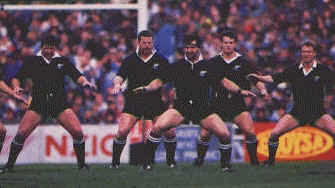
Haka!
Here are the Maori words and a translation of the haka performed by the New Zealand All Blacks before rugby matches, as well as a short blurb on what its all about.
Download here the sound file! (pure energie!) -no more available!-
Ka mate! Ka mate! Ka ora!
Ka ora!
Ka mate! Ka mate! Ka ora! Ka ora!
Tenei te tangata puhuru huru
Nana nei i tiki mai
Whakawhiti te ra
A upa ... ne! ka upa ... ne!
A upane kaupane whiti te ra!
Hi !!!
We're going to die! We're going
to die!
We're going to live! We're going to live!
This is the man, so hairy
who fetched,
and made shine the sun!
One upward step! Another upward step!
An upward step, another.. the Sun shines !!!
See how it's done...
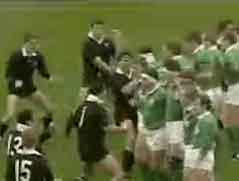
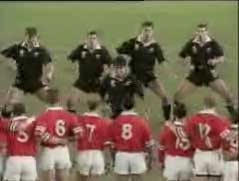
The haka is a war dance. The words are chanted loudly (shouted) in a menacing way accompanied by arm actions and foot stamping. A haka was traditionally performed before charging into battle. The Maori pronunciation is basically one vowel per syllable, with the vowels having the European rather than English sound. The `wh' is aspirated almost like an `f' (f is good enough for most people). As for what it all means, about 140 years ago, a particularly notorious warlike chief named Te Rauparaha of the Ngati Toa tribe (based just North of present day Wellington), was being chased by his enemies. He hid in a kumara pit (the local sweet potato, only much better) and waited in the dark for his pursuers to find him. He heard sounds above and thought he was done for when the top of the pit was opened up and sunshine flooded in. He was blinded and struggled to see those about to slay him, when his sight cleared and he instead saw the hairy legs of the local chief (reputed to have been exceptionally hirsute) who had hid him. Te Rauparaha is said to have jumped from the pit and performed this haka on the spot, so happy was he to have escaped. Undoubtedly, he also had in his mind to do a little pursuing of his own --- Te Rauparaha being that way inclined was he.
