 |
|
|
|
|
|
|
|
|
|
|
|
|
|
|
|
|
|
|
|
|
|
|
Diversity in The Military During World War Two |
|
|
|
The Tuskeegee Airmen and Their Legacy |
|
|
|
Back To Index |
|
|
|
To Learn More About the Tuskegee Airmen |
|
|
|
|
|
 |
|
|
|
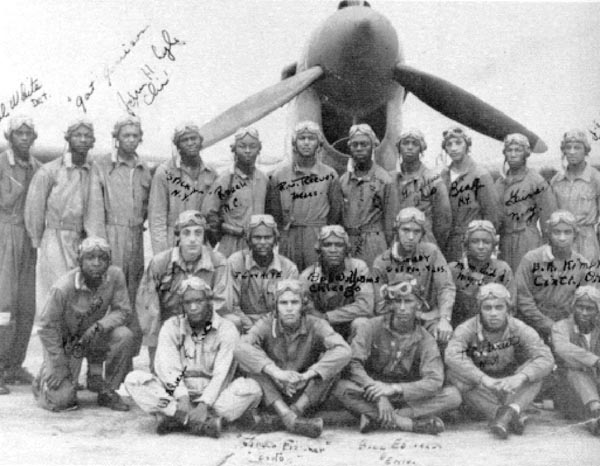
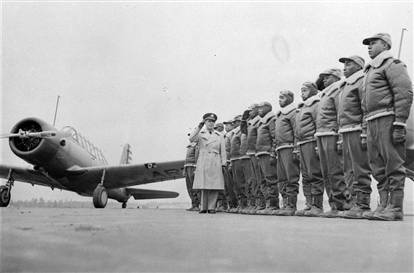
The Tuskegee Experiment was a response to President Roosevelt's call for military training for young men across America, in light of the possibility that the US might be forced to enter into the War in Europe. Black leaders requested the ability for young African American men to also be able to take part in this war effort, which led to the formation of an all Black flight training school at the Tuskegee Institute in Alabama. The 994 graduates of the Experiment became the members of the Tuskegee Airmen fighter squadron. These brave men would go on to have an outstanding military record, and their great success and patriotism would be a key aspect of President Truman's call to integrate the United States Military in 1948. The legacy of the Tuskegee Airmen is their role in the desegregation of the military through their proving that Blacks were just as capable of serving their country as any other soldier. |
|
|
|
 |
|
|
 |
|
|
|
|
|
|
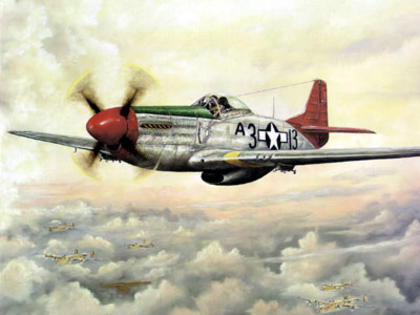
The Tuskegee Airmen were identified by the red tails on the planes that they piloted. A bomber could breathe a sigh of relief when he looked out of the cockpit and saw the red tail of his escort: he knew he was in good hands. |
|
|
|
 |
|