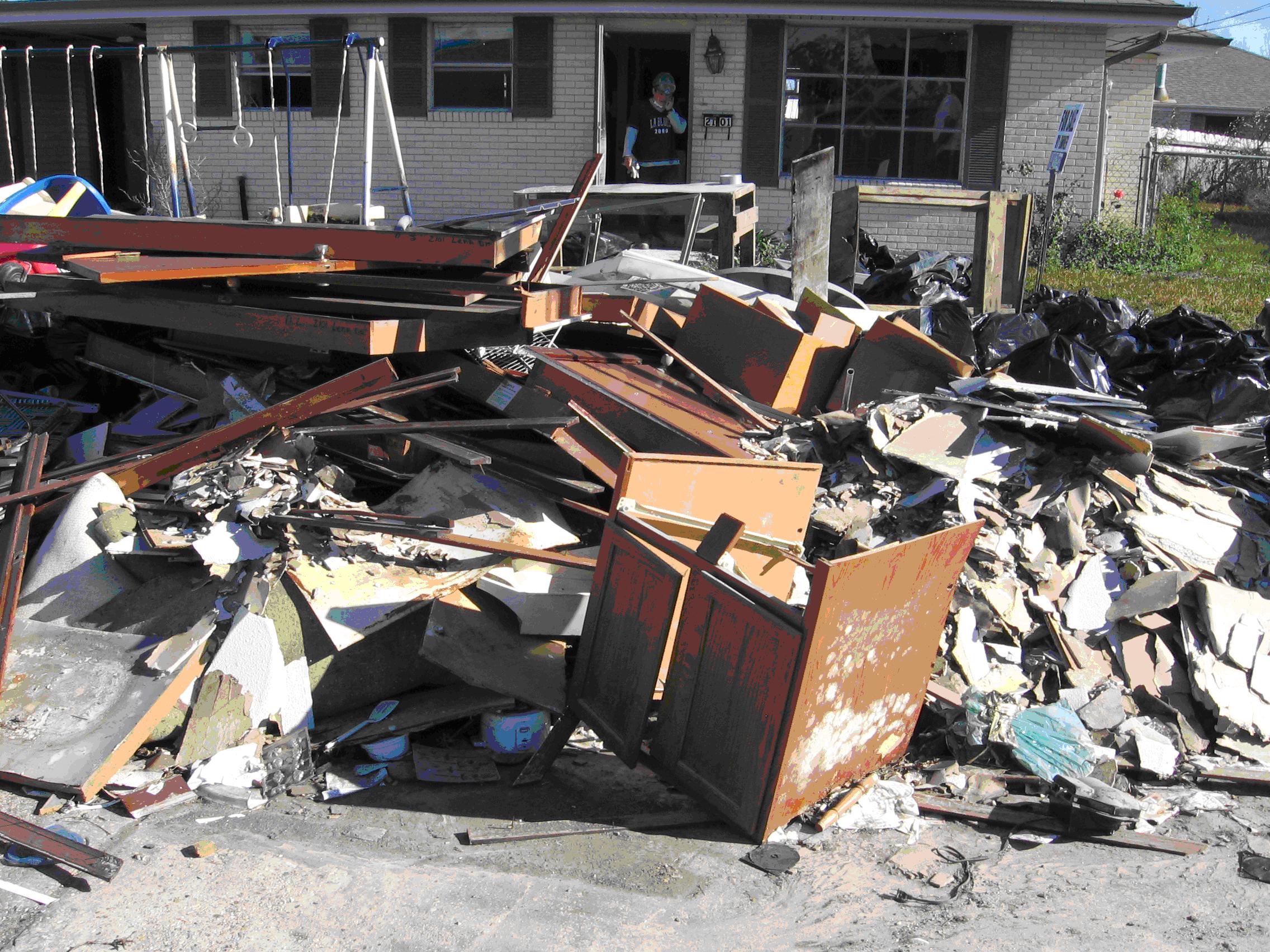
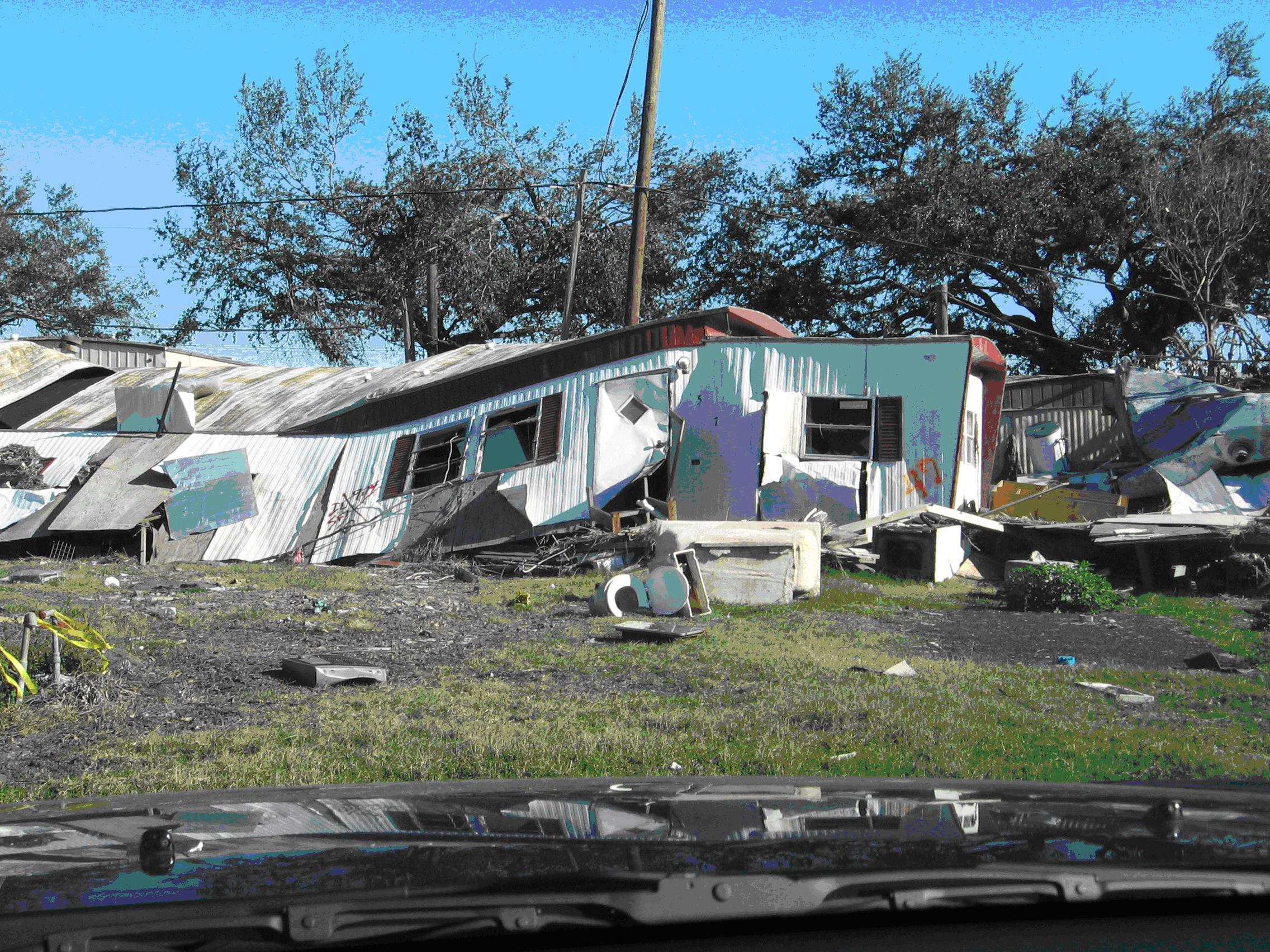
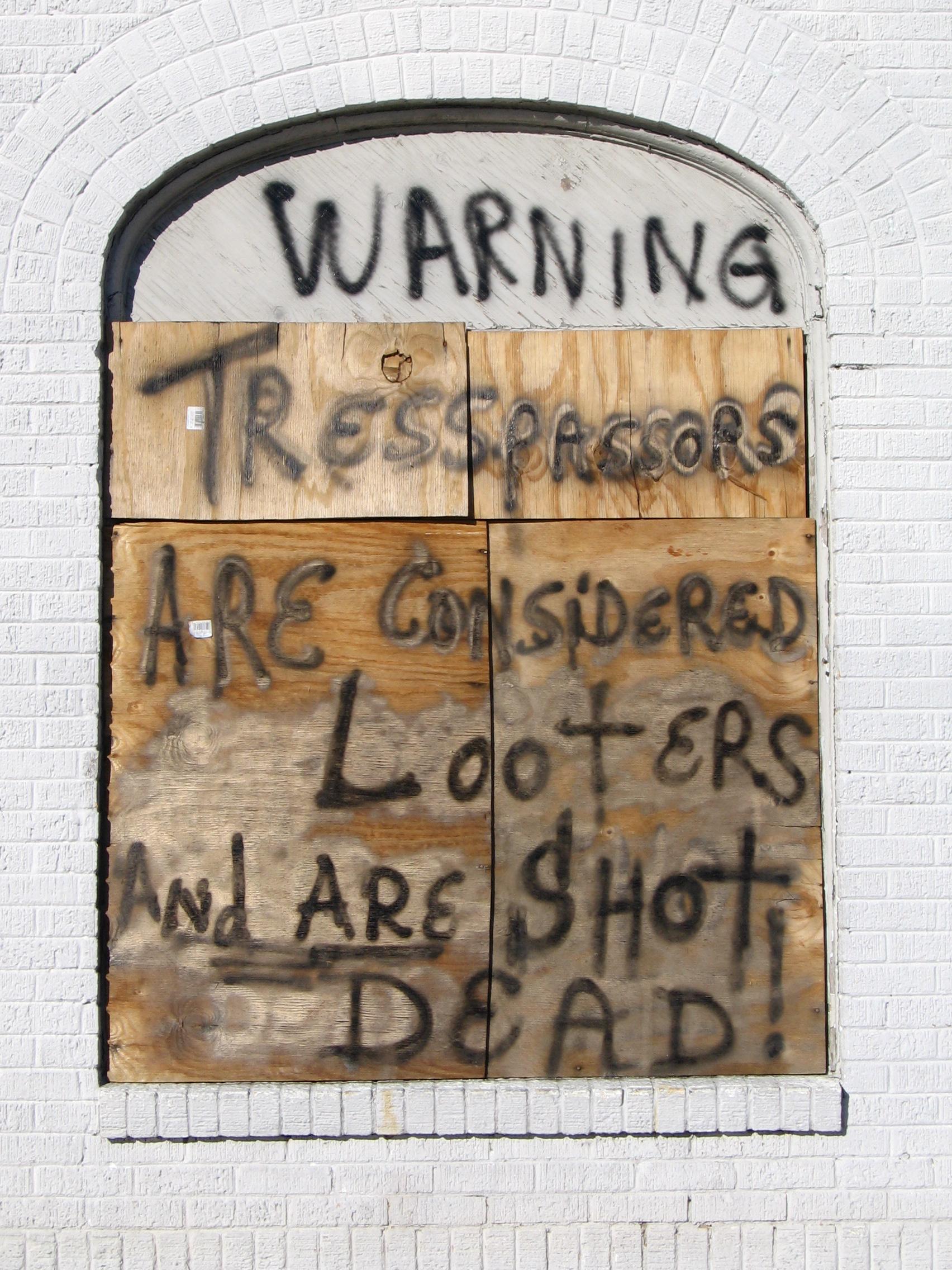
| On January 3rd, I traveled to Louisiana with a group of over 100 students and faculty from Centenary College and Drew University to assist with the cleanup effort in the aftermath of Hurricane Katrina. The trip was organized in September 2005, shortly after the hurricane hit the gulf region, and was undertaken during the college winter break. The trip would not have been possible without the generosity of local people who donated cash and items. The relief effort was coordinated through the United Methodist Relief, based in Metairie, Louisiana. One would think that after four months has passed there would be little to do, but the trip organizers knew better. The area is still in a state of devastation and despair. Some officials have estimated that it will take five to ten years to get the gulf region back to "normal." Three charter busses left Hackettstown on a snowy morning. In my own car, I followed two U-Haul trucks filled with donated supplies and drove the 1,300 miles (25 hours) to Kenner, Louisiana (a local suburb of New Orleans). As we entered New Orleans at dawn on Interstate 10, I was amazed to see boats and vehicles still lying on the highway medians and shoulders, apparently untouched since the storm. As we settled in at our home base (Kenner United Methodist Church), we prepared for six consecutive days of debris cleanup and rebuilding. Our large group slept in sleeping bags in the church facility and we used showers at a local YMCA several miles away. We were divided into 18 teams (approximately six members) and each morning we were assigned to work details in New Orleans and towns in adjoining parishes. At most of these locations, we were the first relief crews to assist local residents. Many residents moved to areas further away, while some (in the areas less devastated by the flooding), were living in FEMA trailers parked next to their home. Many of the people my team assisted were senior citizens. The level of damage varied from each location - some was total devastation (house submerged for over a week) while some had less than a foot of water. One team of college students (education majors) worked with a school set up at a relief shelter in Baton Rouge. These students also brought much needed school supplies donated by generous individuals from the greater Hackettstown area. There was no time to consider the impact of the storm on local Amateur Radio operators, though I did observe some leaning antenna towers in residential neighborhoods. We communicated with cell phones during our trip (cell service was up and running without significant problems). At the end of our mission, we worked on over 120 homes of local residents. We know that there is much more to do in that area. The best way for me to explain it is for you to imagine this scenario: get into your car and drive to New York City. As you leave your home near Hackettstown and drive eastward, you will see homes and businesses damaged, closed or destroyed; traffic siganals and electricity are still non-existant in some areas; police and military personnel are patrolling highways; curfews still in effect in some areas (see photograph at right to understand local sentiment). On January 12th, we arrived home with a better appreciation for what we have. I want to thank all who provided support and encouragement. 73 de Chris - N2OPO Chris gave a presentation at the March CLARA meeting. He took over 200 digital images some were included in the newsletter and many presented at the meeting. |
| N2OPO's Katrina Relief Trip |
 |
 |
 |