
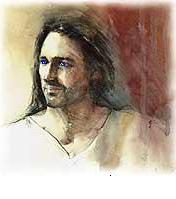
It should not be the aim of kingdom believers literally to imitate the outward life of Jesus in the flesh but rather to share his faith; to trust God as he trusted God and to believe in men as he believed in men. Jesus never argued about either the fatherhood of God or the brotherhood of men; he was a living illustration of the one and a profound demonstration of the other.

Jesus' devotion to the Father's will and the service of man was even more than mortal decision and human determination; it was a wholehearted consecration of himself to such an unreserved bestowal of love. No matter how great the fact of the sovereignty of Michael, you must not take the human Jesus away from men. The Master has ascended on high as a man, as well as God; he belongs to men; men belong to him. How unfortunate that religion itself should be so misinterpreted as to take the human Jesus away from struggling mortals! Let not the discussions of the humanity or the divinity of the Christ obscure the saving truth that Jesus of Nazareth was a religious man who, by faith, achieved the knowing and the doing of the will of God; he was the most truly religious man who has ever lived on Urantia.
The time is ripe to witness the figurative resurrection of the human Jesus from his burial tomb amidst the theological traditions and the religious dogmas of nineteen centuries. Jesus of Nazareth must not be longer sacrificed to even the splendid concept of the glorified Christ. What a transcendent service if, through this revelation, the Son of Man should be recovered from the tomb of traditional theology and be presented as "the living Jesus" to the church that bears his name, and to all other religions! Surely the Christian fellowship of believers will not hesitate to make such adjustments of faith and of practices of living as will enable it to "follow after" the Master in the demonstration of his real life of religious devotion to the doing of his Father's will and of consecration to the unselfish service of man. Do professed Christians fear the exposure of a self-sufficient and unconsecrated fellowship of social respectability and selfish economic maladjustment? Does institutional Christianity fear the possible jeopardy, or even the overthrow, of traditional ecclesiastical authority if the Jesus of Galilee is reinstated in the minds and souls of mortal men as the ideal of personal religious living? Indeed, the social readjustments, the economic transformations, the moral rejuvenations, and the religious revisions of Christian civilization would be drastic and revolutionary if the living religion of Jesus should suddenly supplant the theologic religion about Jesus.
Mark, Matthew, and Luke retain something of the picture of the human Jesus as he engaged in the superb struggle to ascertain the divine will and to do that will. John presents a picture of the triumphant Jesus as he walked on earth in the full consciousness of divinity. The great mistake that has been made by those who have studied the Master's life is that some have conceived of him as entirely human, while others have thought of him as only divine. Throughout his entire experience he was truly both human and divine, even as he yet is.
But the greatest mistake was made in that, while the human Jesus was recognized as having a religion, the divine Jesus (Christ) almost overnight became a religion. Paul's Christianity made sure of the adoration of the divine Christ, but it almost wholly lost sight of the struggling and valiant human Jesus of Galilee, who, by the valor of his personal religious faith and the heroism of his indwelling Adjuster, ascended from the lowly levels of humanity to become one with divinity, thus becoming the new and living way whereby all mortals may so ascend from humanity to divinity. Mortals in all stages of spirituality and on all worlds may find in the personal life of Jesus that which will strengthen and inspire them as they progress from the lowest spirit levels up to the highest divine values, from the beginning to the end of all personal religious experience.
Earlier in the evening it had not seemed so difficult to drink the cup, but as the human Jesus bade farewell to his apostles and sent them to their rest, the trial grew more appalling. Jesus experienced that natural ebb and flow of feeling which is common to all human experience, and just now he was weary from work, exhausted from the long hours of strenuous labor and painful anxiety concerning the safety of his apostles. While no mortal can presume to understand the thoughts and feelings of the incarnate Son of God at such a time as this, we know that he endured great anguish and suffered untold sorrow, for the perspiration rolled off his face in great drops. He was at last convinced that the Father intended to allow natural events to take their course; he was fully determined to employ none of his sovereign power as the supreme head of a universe to save himself.
Shortly after one o'clock, amidst the increasing darkness of the fierce sandstorm, Jesus began to fail in human consciousness. His last words of mercy, forgiveness, and admonition had been spoken. His last wish--concerning the care of his mother--had been expressed. During this hour of approaching death the human mind of Jesus resorted to the repetition of many passages in the Hebrew scriptures, particularly the Psalms. The last conscious thought of the human Jesus was concerned with the repetition in his mind of a portion of the Book of Psalms now known as the twentieth, twenty-first, and twenty-second Psalms. While his lips would often move, he was too weak to utter the words as these passages, which he so well knew by heart, would pass through his mind. Only a few times did those standing by catch some utterance, such as, "I know the Lord will save his anointed," "Your hand shall find out all my enemies," and "My God, my God, why have you forsaken me?" Jesus did not for one moment entertain the slightest doubt that he had lived in accordance with the Father's will; and he never doubted that he was now laying down his life in the flesh in accordance with his Father's will. He did not feel that the Father had forsaken him; he was merely reciting in his vanishing consciousness many Scriptures, among them this twenty-second Psalm, which begins with "My God, my God, why have you forsaken me?" And this happened to be one of the three passages which were spoken with sufficient clearness to be heard by those standing by.
On other worlds, as well as on Urantia, this sublime spectacle of the death of the human Jesus on the cross of Golgotha has stirred the emotions of mortals, while it has aroused the highest devotion of the angels.
Along with the faith of the creature and the life of the Creator it should also be noted that this God-man was the personified expression of the Father's will. If, in the contact of the human need and the divine power to meet it, the Father did not will otherwise, the two became one, and the healing occurred unconsciously to the human Jesus but was immediately recognized by his divine nature. The explanation, then, of many of these cases of healing must be found in a great law which has long been known to us, namely, What the Creator Son desires and the eternal Father wills IS.
It has not been revealed for the purposes of this record, but we have been led to infer that the Master, during many of these solitary seasons in the hills, was in direct and executive association with many of his chief directors of universe affairs. Ever since about the time of his baptism this incarnated Sovereign of our universe had become increasingly and consciously active in the direction of certain phases of universe administration. And we have always held the opinion that, in some way not revealed to his immediate associates, during these weeks of decreased participation in the affairs of earth he was engaged in the direction of those high spirit intelligences who were charged with the running of a vast universe, and that the human Jesus chose to designate such activities on his part as being "about his Father's business."
This move of his mother was a great disappointment to the human Jesus, and he was much sobered by his reaction to her suggestive proposal that he permit himself to indulge in some outward demonstration of his divinity. That was one of the very things he had decided not to do when so recently isolated in the hills. For several hours Mary was much depressed. She said to James: "I cannot understand him; what can it all mean? Is there no end to his strange conduct?" James and Jude tried to comfort their mother, while Jesus withdrew for an hour's solitude. But he returned to the gathering and was once more lighthearted and joyous.
THE HUMAN MAN OF JOSHUA THE TEACHER