
This page displays original Corvette and aftermarket fiberglass panels for determining originality and repair.
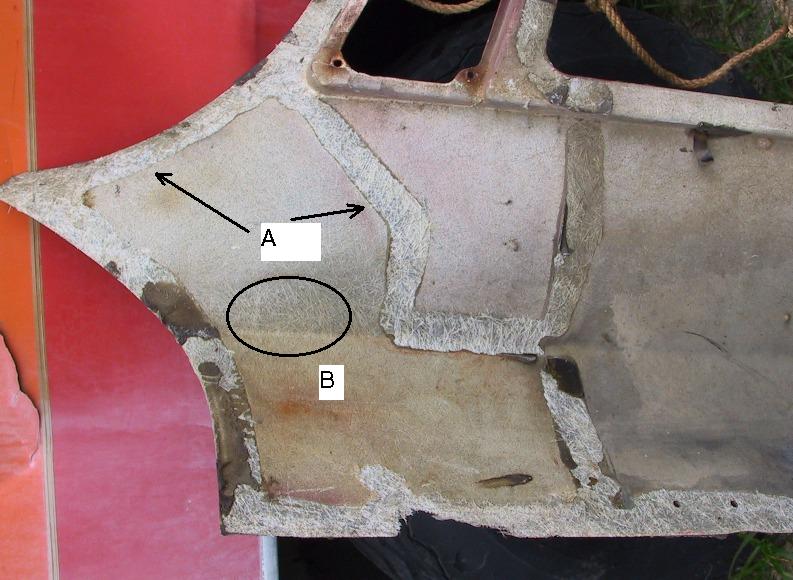
In the first picture showing the underside of a top hood surround panel, you can see the areas (item A) where the bonding material ripped away the smooth surface to reveal the rough fiberglass underneath. This shows the panel has been bonded on a car. However, notice that this fiberglass, enough though rough, is still flat, because the original piece was pressed flat in the die when made.
In item B, you can see that you can clearly see fiberglass fibers, but if you were to touch the area, you'd find it very smooth except for dirt or undercoating that may have been sprayed on it. In a new piece, this almost looks polished, and is as good of a surface as the outside.
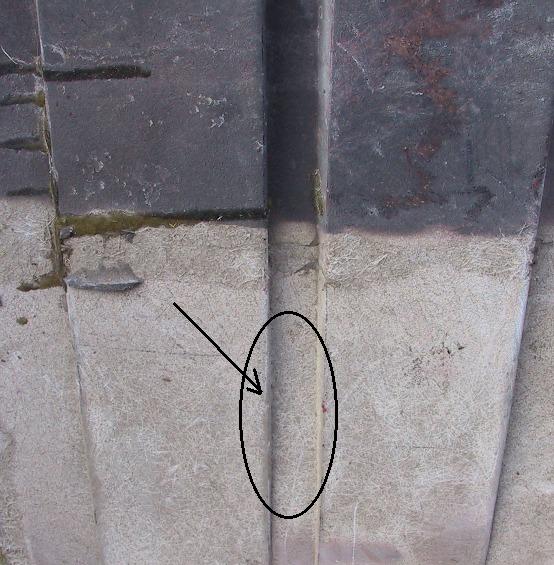
The above picture is of the back (inside) of an original 1963 left side louver panel. Notice the sharpness to the lines where the insets rise from the panel and the smoothness, almost finished look of the backside. This fiberglass surface is nearly as smooth as the outside, and is rough only because of age and the wear and tear of being on a car for 25 years. The color is a very light gray.
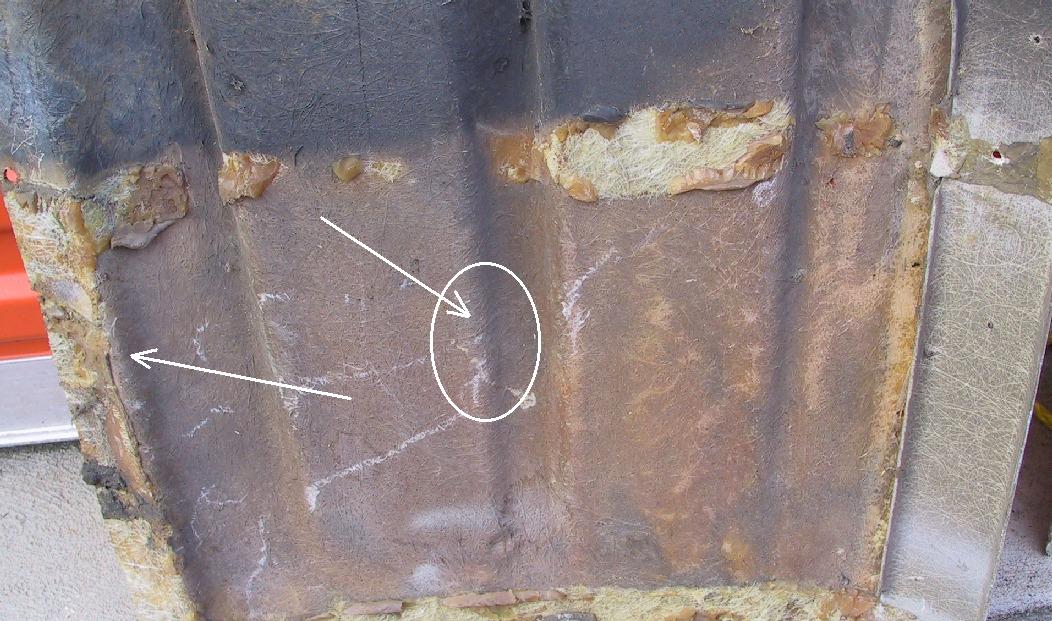
The above picture is an aftermarket right side louver panel for a 1963 or 1964 Corvette. Notice the roughness to the fiberglass surface and the lack of sharpness to the molding of the insets as they rise from the surface. The fibers look as though they were laid on wet resin and allowed to dry as is. Also note that the fiberglass is a yellowish color. The factory bonding strip along the right side of the picture shows the differences between stock, original fiberglass and aftermarket.
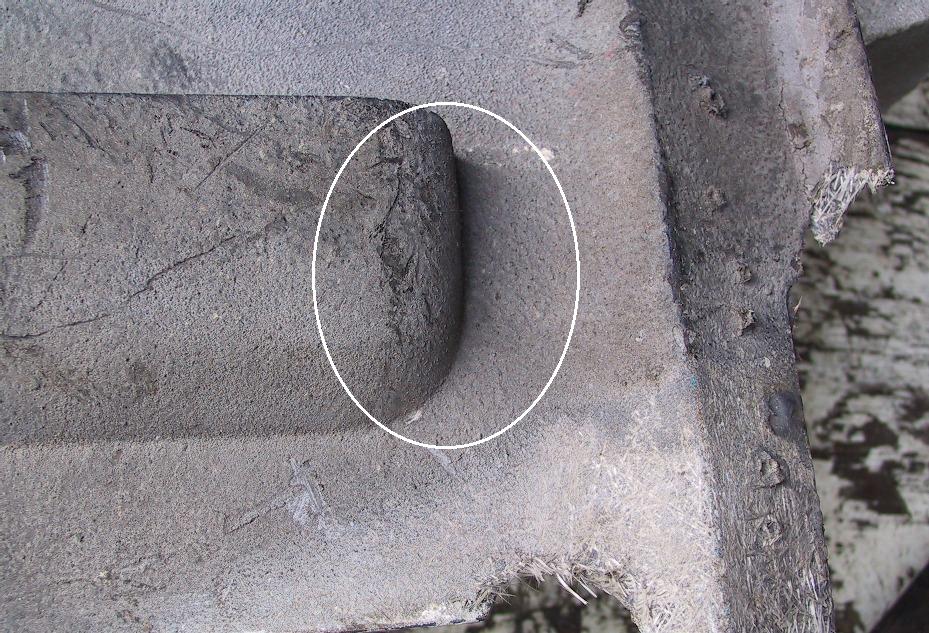
This picture above is of an original 1965 or 1966 side louver panel. While it does not look smooth like the 1963 stock panel, the roughness is the result of something that has sprayed upon the surface, such as an undercoating, paint over dirt, or paint overspray. Notice that the sharpness to the molding of the inset is readily visible. Also, there is some characteristic crazing of the fiberglass surface due to the resin pooling in the die without fiberglass fibers. This doesn't occur with hand-laid fiberglass.
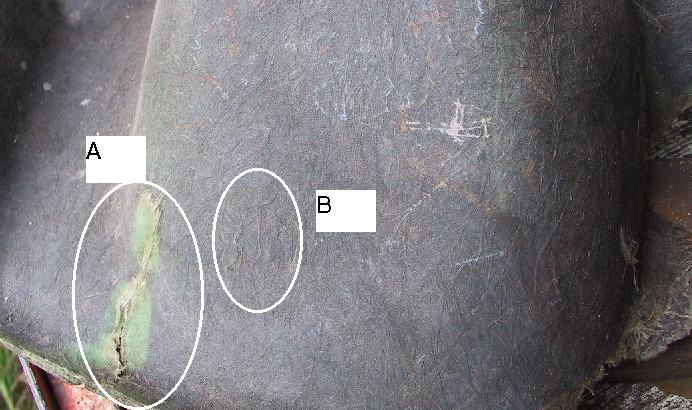
This panel is an aftermarket spoiler. Some aftermarket fiberglass has this characteristic green color, which is much more visible in cracked or thin areas when held to the light as shown in item A. In item B, the fibers that appear to lay on top of the resin similar to the 1963 louver panel above.
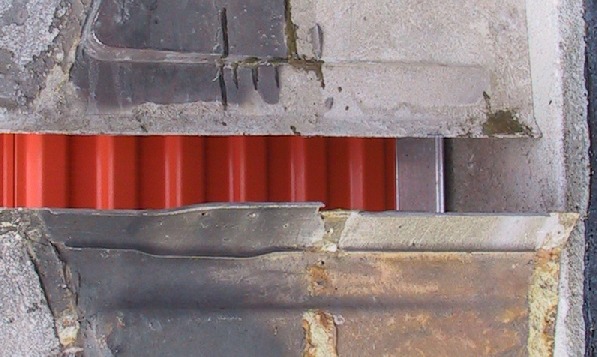
The top edge of the lower panel in this picture shows part of a stock bonding strip. It bonded an aftermarket side panel to the original top surround panel. The bonding strip would continue to the front of the clip. The presence of the bonding strip does not mean it is original, but the absence would indicate an aftermarket one-piece clip.
Return to the Corvette Doctor's Corvette Page
Copyright © 2001-2004 by The Corvette Doctor™. All Rights Reserved. Use of this material is protected by the copyright laws of the United States of America.