SAS
project website
‘He
Who dares wins and then has a nice cup of Bovril’
Contents
1) Introduction
4)
History of the SAS: from North Africa
to Kickassville USA
5)
SAS operations: mayhem and mad explosions
6)
Weapons of the SAS: the business end
7)
Tactics of the SAS: blowing off the
hinges
8)
Joining the SAS: four weeks of hell
9)
H Squadron: SAS Publishing regiment
10)
contact
Introduction
Welcome to Richard
James Stanley’s official SAS project website! SAS soldiers are all tough as
cornflakes and are like walking armouries. All of the information on this site
was gathered from the research that I did in the course of writing an essay on
how cool the SAS are. Enjoy!
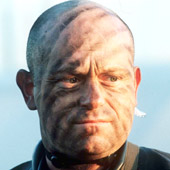
Hi
fans, my name is Ross Kemp and I played Sergeant Henno Garvie in the smash hit
TV series ‘Ultimate Force’. Whilst researching for the part I spent several
days with real SAS soldiers and was able to learn what makes an SAS soldier
different from any other run-of-the-mill semi-covert special operations
executive tactical deployment squadron. SAS soldiers are 65% solid matter and
are fuelled nearly entirely on Bovril. They find knock-knock jokes absolutely hilarious
and are kind to all animals other than dolphins with the SBS established
specifically to target and destroy these aquatic deities. Each SAS soldier that
I met spoke highly of my role in Eastenders and was looking forward to my
return to the show at the end of the year. They also often mentioned their disappointment
that I was not asked to play Jesus in ‘The Passion of the Christ’.
Ross
Kemp
The SAS hold a
worldwide reputation for being one of the coolest and most hardcore fighting forces
on the planet. Each SAS soldier is trained to be a one-man army and is able to
live off wild monkeys in the jungle/zoo for an infinite amount of time up to
three years. SAS soldier’s have very well manicured nails and are super fit
being able to jog for up to 700 meters non-stop. In order to preserve their
high fitness levels, SAS soldiers always take the stairs if they need to get to
the upper floors of a tall building and are careful to never eat too much ice
cream in one sitting so to avoid feeling a bit bloated and, inevitably after
any large meal, rather tired. Members of the SAS all posses special badges
which affords them many benefits and privileges including a 15% discount at Vue
cinemas, preferential treatment at Pizza Hut and free membership to the Dennis
the Menace fan club.
The Queen has the SAS on speed dial as they
are so very good at defeating terrorists and blowing stuff up. The SAS have
been involved in many sieges and hoedowns (usually on the good guy’s side) and
are always ready to kick some ass be it half eleven in the morning or just
around teatime. The ‘can do’ attitude of the SAS is what keeps them at the
forefront of the fight against terrorism and is instrumental to the maintenance
of their ice cube straight to the T MAX side cutting image junk steering wheel
grasshopper.
History of the sas: from north Africa to
kichassville usa
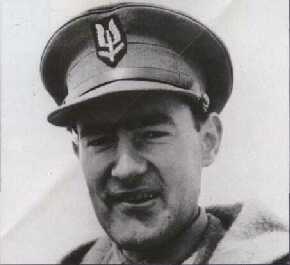 In
1942 (Adolph) Hitler was at the height of his popularity and success – the
lions share of Europe was covered with a giant silk Nazi flag, lederhosen was the
fashion to be seen in and the Allies had been reduced to the analogy of
whimpering school children who had just watched an especially brutal road
safety film. It seemed that all was lost and that frankfurters were about to
replace rainbow kipper as Britain’s favourite dish when suddenly a tall man
named David Stirling suddenly burst into the Whitehall wartime bunker, threw
down a kilogram sack of oysters onto the map-laden table and then declared to
the cowering Churchill, Stalin and Roosevelt that he could win them the war.
‘How?’ they inquired whilst busily plying open the oysters and tucking into the
sweet gel within. ‘Simple’ answered Stirling, he too busily burrowing into a fresh
oyster and loudly slurping away at the hapless crustacean within. ‘I will
assemble a crack four man team which you will be able to send into the heart of
Germany and which will be capable of defeating the entire war machine
singlefourhandedly!’. The wartime leaders took a short break from their oysters
so that they could express their bewilderment and their desire for more oysters
and then allowed Stirling to outline his plan in more detail. Stirling
proceeded to string many singular words into sentences and argued that should
the four man team be provided with the full support of all available army
groups and naval and air resources the war could be won within one week. The
war leaders thought the proposal over and then agreed to the plan reasoning
that ‘we have nothing to loose but the war itself’. The rest of the story is
very much history (in fact, all history).
In
1942 (Adolph) Hitler was at the height of his popularity and success – the
lions share of Europe was covered with a giant silk Nazi flag, lederhosen was the
fashion to be seen in and the Allies had been reduced to the analogy of
whimpering school children who had just watched an especially brutal road
safety film. It seemed that all was lost and that frankfurters were about to
replace rainbow kipper as Britain’s favourite dish when suddenly a tall man
named David Stirling suddenly burst into the Whitehall wartime bunker, threw
down a kilogram sack of oysters onto the map-laden table and then declared to
the cowering Churchill, Stalin and Roosevelt that he could win them the war.
‘How?’ they inquired whilst busily plying open the oysters and tucking into the
sweet gel within. ‘Simple’ answered Stirling, he too busily burrowing into a fresh
oyster and loudly slurping away at the hapless crustacean within. ‘I will
assemble a crack four man team which you will be able to send into the heart of
Germany and which will be capable of defeating the entire war machine
singlefourhandedly!’. The wartime leaders took a short break from their oysters
so that they could express their bewilderment and their desire for more oysters
and then allowed Stirling to outline his plan in more detail. Stirling
proceeded to string many singular words into sentences and argued that should
the four man team be provided with the full support of all available army
groups and naval and air resources the war could be won within one week. The
war leaders thought the proposal over and then agreed to the plan reasoning
that ‘we have nothing to loose but the war itself’. The rest of the story is
very much history (in fact, all history).
Sas operations: mayhem and mad explosions
 For
every publicly documented SAS operation there is at least probably another one
that is not publicised but that doesn’t mean it didn’t happen. It did.
For
every publicly documented SAS operation there is at least probably another one
that is not publicised but that doesn’t mean it didn’t happen. It did.
The SAS are trained
to be able to deal with absolutely any situation e.g. they could be storming a
flaming banana in the morning, tackling some insurgent cross stitch embroidery
at lunch time (breaking for lunch of course) and then going barefoot
water-skiing down the piranha infested Amazon in the afternoon. Amongst some of
the more exciting SAS operations in recent times are:
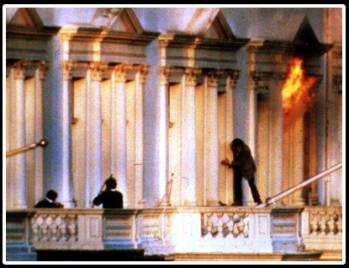
Iranian
Embassy Siege: May 5th 1980
When farmers maddened
at the falling cost of cucumbers took hold of the Iranian embassy in London the
Queen knew that violence would be the only safe method of peacefully diffusing
the situation and so speed dialled the SAS and hollered at them to get to
London ‘like yesterday’. The SAS arrived and promptly used an explosion to gain
access to the building before spraying the farmers to bits with bursts of hot
lead from their MP5 submachine gun rifle guns. All but some of the hostages
were unharmed and the Queen was so happy that she climbed up onto the top of a
nearby police car and danced a neat little jig.
Iraqi
Scud hunting: 1991
Coalition leaders
were becoming increasingly concerned about the growing threat posed by Saddam
Hussein’s Scud launchers and so enlisted the help of the SAS (who had just got
back from holiday in Spain so they were already acclimatised) to locate and
eliminate the problem. After many days searching in the Iraqi desert the SAS
located what they thought to be the scud launchers and radioed their HQ with some
surprising intelligence. The so-called ‘scud’ launchers were actually ‘spud’
launchers designed to catapult potato peelings over a very small distance.
Knowing that they did not pose a real threat to the advancing coalition the SAS
called in a cluster bomb strike from a nearby B-52 and then finished off any
remaining resistance barehanded with their guns.
Operation
‘Enduring Freedom’: 2003
As preparation for
the allied invasion of Iraq in 2003, SAS soldiers were given fake accents and
were instructed to slip unnoticed into the streets of Baghdad with the task of
purchasing a map to the star’s homes for use by the Allied commanders. The
mission lasted four days and was highly successful with maps proving essential
to directing Tomahawk strikes against the city residences of Hussein and his
generals.
Operation
‘Cut Up’: 2004
In late 2004, SAS
Soldier X (name of Cpl. Alex Patterson withheld for security reasons) was
driving toward the SAS headquarters in Herefordshire when he was cut up by a
motorist in a white Golf. SAS Soldier X (name of Cpl. Alex Patterson withheld
for security reasons) flashed his lights in anger however the motorist sped
onwards toward a nearby fishery which was actually a bakery disguised as a shoe
shop. Not wanting to be shown up, SAS Soldier X (name of Cpl. Alex Patterson
withheld for security reasons) took note of the Golf’s registration plate and
then used the SAS Spectrum computer to track down the cars owner. A year then
passed (in about a week) so to ensure that the owner would be unsuspecting and
then operation ‘cut up’ went into action. The purpose of the operation was to
achieve sweet revenge and its success hinged on the ability of the various
participating forces to coordinate. At 5.30 AM (H Hour) the Royal Artillery
began the preliminary bombardment of the semi-detached house and then forty
minutes later the first ground troops were deployed arriving at the target via
helicopter and armoured troop carrier with full support from Army Apache
helicopters. A one way shootout/siege ensued and up to 27 Milan anti-tank
rounds were fired into the ruins of the house whilst chain-gun rounds flew in
from the distance. By about 1PM a ceasefire was called and a note was left at
where it was estimated the front door of the house would have once been saying
simply ‘please don’t cut me up again because it is rather dangerous and it
caused me to spill Monster Munch crisps all over the dashboard, cheers SAS
Soldier X (name of Cpl. Alex Patterson withheld for security reasons’.
Weapons of the sas: the business end
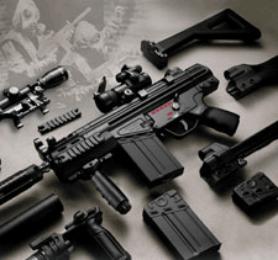
Each and every member
of the SAS (even the cleaners) love guns and spend all of their spare time
drawing pictures of them or simply lying in a field trying to make out
different gun shapes in the clouds. When out on a mission an SAS soldier will
typically carry upwards of 21 different guns and in addition to this will also
pack many different types of explosives, knives and forks. Some of the most
important SAS weapons are:
Heckler
and Kock MP5A3
Reasons for why the
MP5 is a favourite with law enforcement agencies around the world are not hard
to find. The MP5 was the weapon of choice for Bruce Willis in the Die Hard
movies and has also found gainful employment in movies such as Hard Boiled and
Shrek 2. A small, little and compact weapon, SAS soldiers are trained to fire
the MP5 with one hand so that their other hand remains free to stir a cup of
tea or play with a yoyo.
Browning
High Power
Only 9mm long, the
Browning High Power was originally designed in the Republic of Ireland as a
weapon tailor-made for IRA Lepricorns. The High Power was soon adopted by the
SAS regiment owing to its ease of operation and excellent balance. The High
Power has interchangeable facias allowing for modifications suited to the users
individual taste.
Grenade
Grenades are little
balls with an explosion and a loud bang inside. SAS soldiers usually carry them
in their socks just in case they go off and are trained to be able to throw
them accurately over eight miles.
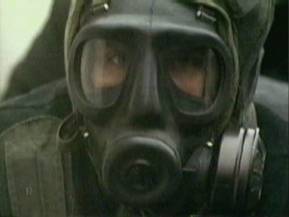
SF10
Respirator
Despite the common
misconceptions, the trademark SAS respirator is rarely actually worn in combat.
The reasoning behind wearing the masks when training in the ‘killing house’ at
their Herefordshire HQ is that the base is adjacent to a large Bass brewery and
Marmite factory and the fumes have been known to overpower some of the weedier
SAS soldiers.
Tactics of the sas: blowing off the hinges
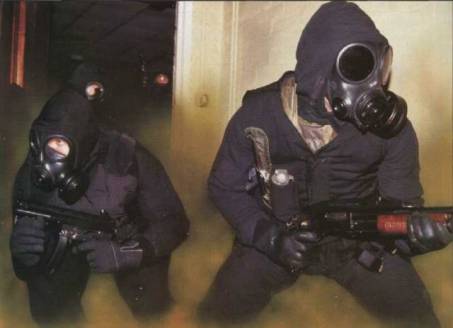
In the SAS operations
manual it is written that ‘the cooler the method of assault the greater the
likelihood is that it will succeed’. SAS tactics reflect this doctrine and are
routinely super-cool. Although tactics must remain top secret they include:
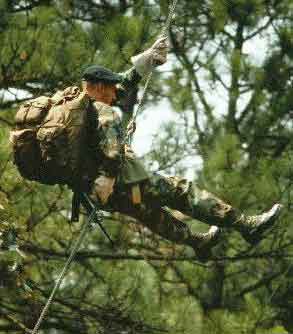
High
Altitude Low Opening (HALO) bungee rope tactical parachute insertion
A tactic so dangerous
not even a turtle would dare attempt it, the HALOBRTPI method was used on
several occasions during the Gulf War. HALOBRTPI involves jumping from a C130
at an altitude of 25,000 ft whilst attached to a long bungee rope. Once the
rope is fully extended the soldier must cut himself free and then parachute the
rest of the way down to the LZ. The jump is made extra dangerous by the fact
that the reserve parachute is replaced with a classroom pet from a nearby
school (usually a hamster or goldfish) and the safety checks are performed
rather haphazardly. The HALOBRTPI method has never been attempted over
Wales.
Low
Altitude High Opening (LAHO) parachute insertion
A tactic equally as dangerous
as HALOBRTPI but even more dangerous involving a low altitude jump (from lets
say around 5000 ft) and then a high altitude parachute deployment at around
20,000 ft.
Close
quarters combat role
A move essential to
fooling would be terrorists, when clearing a room during a siege SAS soldiers
are trained to summersault around the floor so to dodge gunfire. Another
popular tactic is diving in slow motion whilst unloading two handguns towards
the evil-doers.
Joining the sas: four weeks of hell
 Ever
mention the term ‘selection week’ to an SAS trooper and he will most likely
shiver and spill a little of his cup of Bovril. The selection course for the
SAS is reputedly one of the toughest enterprises in the world and physically
scars all of those that take part. Selection takes place twice a year with the
winter programme very much geared towards indoor activities as it usually to
cold to play outside. The course is split into four weeks culminating in the
selection week during which the men are separated from the boys according to
their date of birth. Each week is given its own specific name to avoid
confusion:
Ever
mention the term ‘selection week’ to an SAS trooper and he will most likely
shiver and spill a little of his cup of Bovril. The selection course for the
SAS is reputedly one of the toughest enterprises in the world and physically
scars all of those that take part. Selection takes place twice a year with the
winter programme very much geared towards indoor activities as it usually to
cold to play outside. The course is split into four weeks culminating in the
selection week during which the men are separated from the boys according to
their date of birth. Each week is given its own specific name to avoid
confusion:
Week
1 – ‘Mother Hankey’s Jumbo Sized Bloomer Week’
During the first week
of the selection course home comforts such as letters from home and patchwork
quilts are taken from the entrants so beginning the process of breaking them
down. Throughout the selection process the entrants will receive letters from
people that they don’t know (aka strangers) and have to get up and adjust the
thermostat if they feel cold at night. A gruelling series of long distance
marches begins with the troops being required to trek up to five miles a day.
At night time the troops are taught how to skim stones and will gather around a
campfire to tell each other ghost stories.
Week
2 – ‘Mother Hankey’s Jumbo Sized Bloomer Week*’
By the end of week 1,
many of the soldiers will have dropped out of the course due to homesickness so
leaving only the most hardened or forgetful troops to enter week 2. The
selection process is as tough mentally as it is physically and the troops will
spend much of their second week tackling crossword and Sudoku puzzles. Firearms
tests take place in which the troops must identify a rifle from a host of other
objects (eg. An orange, a cricket wicket, a photocopier etc) and then the
troops are handcuffed to a radiator and are taunted with Bovril. By this stage
the recruits will be familiar with the five mile long marching routes and will
probably have made many good friends along the way e.g. with local farmers and
shop owners.
Week
3 – ‘Mother Hankey’s Jumbo Sized Bloomer Week**’
The five-mile long
marches are made even more challenging in week 3 when the requirement is
introduced that the troops must carry with them a 1 kg bag of sugar. The
marches are not only a test of endurance but also of initiative with the
brighter candidates opting to ride sheep for most of the route and to lash
sheep together with rope as a raft so to facilitate the crossing of streams. To
increase he pressure, during the third week the SAS officers running the course
will lock the games cupboard thereby restricting the troops access to games
such as Monopoly, Boggle, Scrabble, Snakes n’ Ladders and most importantly
Jenga.
Week
4 – ‘Mother Hankey’s Jumbo Sized Bloomer Week***’/Selection Week
Selection week itself
is actually seven days. Various methods are employed to narrow down the
selection of troops for example straws of different lengths are handed out and
the soldier with the shortest straw is out. Towards the end of the week a large
talent show is held in which each entrant must demonstrate an individual skill
to the judging panel. Many men choose to dress in drag and the night usually
ends with a loud and cheerful sing along around the regiment’s piano. The drop
out rate on the selection course is a phenomenal 96% with only 6.2 out of 155
applicants successfully reaching the required standard however, for the SAS
only the very best will do.
*
Week 2, ** Week 3, *** Week 4
H Squadron: SAS publishing regiment
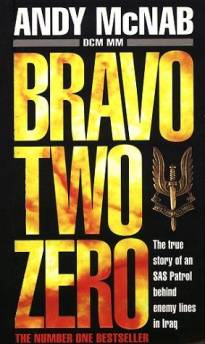
Upon joining the SAS, each
soldier undertakes a requirement to write at least one book concerning either
his combat experiences or the knowledge he gained during training. Andy McNab
is one of the more prolific authors in these areas writing a new book every
three days about a new adventure he just remembered he had during the Gulf War.
When writing, McNab always types at a distance of 1000 yards away from his word
processor as he finds it hard to focus otherwise.