| Day 6: |
| Activity Title: | Subtracting Fractions the Ooh-La-La Way Grade Level: 4 |
|
Rationale: |
Students will use and encounter fractions in their everyday lives. They will need to understand that these fractions will have to be applied within their everyday lives. Also, students will encounter certain mathematical vocabulary with which they need to be familiar with in their lives. |
|
Goals: |
Students will apply knowledge and number sense including numeration and operations. Students will investigate, report, represent, and solve problems using number facts and their properties by solving one and two step problems involving fractions. |
|
Objective: |
Students will identify fractions at the symbolic level and subtract fractions with like denominators. Students will be able to identify and explain the vocabulary of subtrahend and minuend. |
|
Readiness/Pre-assessment: |
Students should know how to add, subtract, multiply, and divide. Also should understand the concepts of subtrahend and minuend as we have reviewed these in our units on subtraction with whole numbers. We have been working on these concepts since the beginning of the year, and I know most students have adequate skills in these areas. Students should have encountered fractional vocabulary in third and fourth grades. Their fractional encounters should also have been with the concepts of subtracting fractions with like denominators. Prior lesson introduced in this unit will further increase their knowledge of subtracting fractions. |
|
Materials and equipment needed: |
Base 10 blocks, Cuisenaire rods, rectangles of various sizes (handout attached). |
|
Introduction: |
I will begin this lesson by praising the students on all their hard work thus far and tell them that I think they will have no problems understanding our next concepts. Tell them that they understand why addition with fractions is important (i.e. doubling of recipes etc.), now ask why they would think that the subtraction of fractions would be important and how they think it could be used in the real world. |
|
Instruction: |
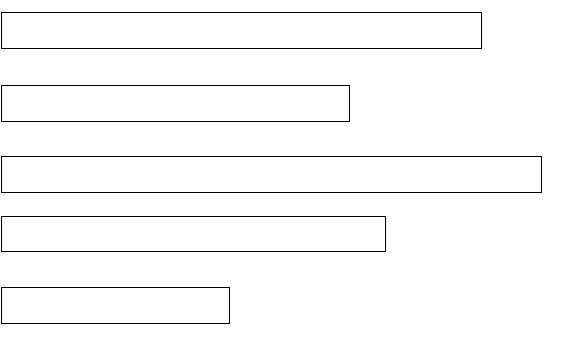
Have the students divide into groups of two. Explain to the students that each pair will be given a set of Cuisenaire rods and base ten blocks. Begin the lesson by reviewing simple subtraction of whole numbers. Talk about the minuend and subtrahend. Have the students first demonstrate simple subtraction strategies with their base 10 blocks. After students have reviewed these strategies using manipulatives move into helping students understand that subtracting fractions with like denominators is the same as basic subtractions. Pass out the handout attached. Tell the students to take their Cuisenaire rods and fill their first rectangle completely. It looks as if it would hold ten blocks. Next, ask the student to name the fractional whole of this rectangle (10/10). Ask what would happen if I asked you to “take-away” or “subtract” 2/10ths of your Cuisenaire pieces? What part of the whole is left? Have the students do this. I should see them taking away two of the pieces. They should be understand that as 8 blocks are left that 8/10ths of the whole 10/10 is left. Ask the students what would happen if you took away or subtracted 3/10ths from the 8/10ths? Have them take away 3/10ths. They will see that 5/10ths would remain. Continue this lesson with each rectangle demonstrating the concept of subtracting fractions. With the various sizes of the rectangles, I will be able to show the students that they MUST think in terms of their fractional whole (based on the number of their total) in order to achieve what would be left after subtracting. |
|
Evaluation of Lesson: |
I will want to see if this lesson would stay within the time frame allotted for it. Did the students meet the objectives of understanding the concept of subtracting fractions of like denominators using this lesson? Did they understand the concept of subtrahend and minuend using this lesson? What questions did they ask? Did I answer knowledgably so as they could understand? Did I give clear, concise demonstrations and directions? |
|
Of students: |
I need to ask questions throughout to make sure the students understand the concepts of subtracting fractions with like denominators. I need to record questions asked and also need to record the groups and their understanding of making the various fractions. I will have the students to take their Cuisenaire rods and individually make up a subtraction problem that they will explain to the class. This way I will be able to assess individually if the students understand the concept of subtracting fractions with like denominators. |
|
Individualization: |
Remediation: Have the students use Crusinaire rods of different colors to model the part being taken away. The color left will be their answers. . |
|
Enrichment: Ask these students to use their Crusinaire rods to explore what would happen if you had to take away two fractions with unlike denominators. See if they can come up with a solution. |
|
|
Special Needs: Make sure to work individually with these students. Also make sure pairs include a peer that usually grasps new concepts quickly in order to help with demonstrating. Work with resource teacher to make sure they receive follow up on each concept introduced within the classroom using manipulatives at all times. |
|
|
Self-Reflections: |
_____________________________________________________________________ _____________________________________________________________________ _____________________________________________________________________ _____________________________________________________________________ This section will be to reflect on how the lesson went with the students and if I would have any changes etc. the next I would use this lesson. |
| Computer
Adaptation: |
To adapt this lesson to the use of a computer, students could use the word processor and autoshapes program in order to create various problems for their classmates to work on. Students could print these problems out or have their classmates use the computer to answer and manipulate the problems. |
| Name______________________________________________________
|
Page Author: Carolyn Cope/Return
to Unitplan
