Chapter 5 : Concrete basic relations
Any
thing that increases the workability will indirectly increase the strength as
the workability can be reduced to the suitable level by lowering the water
content, which will lower the w/c ratio resulting in a higher strength.
Water
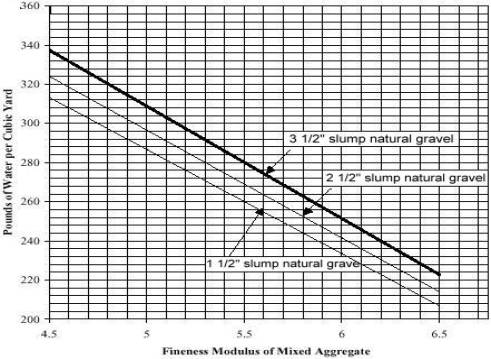
↑ water → ↑ w/c (constant cement) → ↑workability
Increasing the water content will increase the workability as it will increase the paste volume for a constant cement content making the paste more diluted and available to the inter particle lubrication and coating of the aggregates.
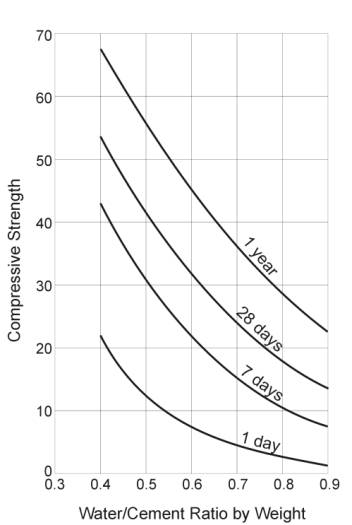
↑ Water → ↑ w/c (constant cement) → ↓ strength
When water is add, the
paste volume increases causing the paste to become more diluted and the density
lowered because of the increase in the total volume of the capillary voids which
will decrease the strength when crack in the mortar start to open when at 70% and more of the ultimate stress
cause when the load is applied.
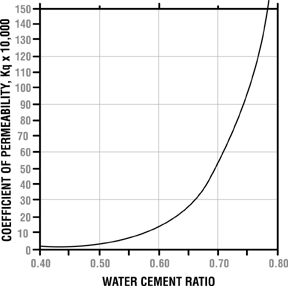
↑ water → ↓ Durability
Increasing the water
content will decrease the durability, as the concrete becomes more porous and
permeable resulting to a lowered resistance to external and internal attacks.
Aggregates
In general:
Coarse aggregates → affect strength
Fine aggregates → affect workability
Grading:
↑ the better the grading of aggregates → ↑ workability
The grading of the aggregates determines the paste requirements of the concrete and by that it controls workability. The grading of the aggregates reflects on the volume of the voids between those aggretes that needs to be filled with paste.
Uniform grading : as only a few aggregates sizes dominates the grading. The aggregates won’t be effectively packed and more paste is required to fill the voids which will decrease the workability.
Gad grading: same as uniform grading more voids to be filled with paste.
Well grading: the spaces between the large particles are effectively filled with the medium ones and the voids between the medium aggregates are filled with the finer aggregates. This will produce maximum packing with minimum voids to be filled with paste thus increasing the workability.
↑ the better the grading of aggregates → ↑ strength
The better the aggregates
pack together the less voids between the aggregate with less paste needed to
fill these voids. As the aggregate is taking the place of paste and the
aggregates is far stronger than the paste the strength increases. And as the
paste and as the paste needed is lower the workability increases which give way
for decreasing the water content thus lowering w/c ratio which will increase the workability.
Fineness of sand:
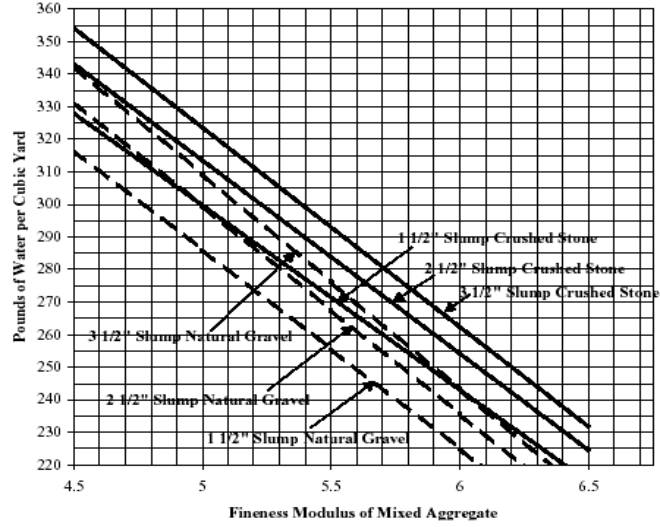
↑ Fineness of sand → ↑ workability
↑Crushed sand → ↓ workability
A low fineness modulus of
sand means that the sand is finer (smaller in size not smoother) with a larger
surface area than coarser sand. This larger surface area needs more paste to
coat it and lubricate it. This decreases the workability and increases the
paste requirement. Crushed sand is coarser and more angular than natural sand.
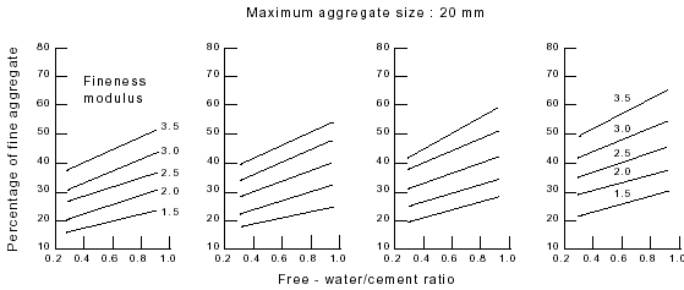
↑ Fineness of sand → ↓percent of fine in aggregates
as the sand decrease in
size, the volume of the voids increases and the weigh of a fixed volume of the
fine aggregates is lowered. in the total weigh of aggregates the weight of the
fines will decrease as they decrease in size forcing the percent of the coarse
to increase to maintain the total weight of aggregates

Size of coarse aggregates:
↑ Max size of aggregate → ↑ compressive strength ↓ tensile strength
Increasing the maximum size
of aggregates increases the compressive strength of the concrete as aggregates
are usually stronger than paste. The cross section of the concrete now consists
of more aggregates than paste leading to a higher strength. The effect is up to
1 ½” then the strength will decrease due to the placing requirements and
spacing between steel bars in the concrete formworks which restrict the maximum
size up to 1 ½”.
At the same time increasing
the maximum size decrease the tensile strength because larger particles reduce
the specific surface area of the aggregate which leads to a reduction in bond
strength; also, larger particles are better in resisting shrinkage than the paste
and tend to restrain volume changes in the cement paste and therefore induce
some internal stress which will weaken the concrete.
↑ Max size of aggregate → ↑ Workability
Increasing the maximum size
of the aggregates increases the workability as the total surface area is less
and the extra paste can be also used elsewhere increasing the workability.
Increasing the maximum
size of the coarse aggregates will lower the voids volume between those
aggregates decreasing the volume of the sand needed to fill those voids which
means decreasing the volume of the voids between the sand particle that needs
less paste to fill them.
↑ Max size of aggregate → ↑ compressive strength ↓ tensile strength
Increasing the maximum size
of aggregates increases the compressive strength of the concrete as aggregates
are usually stronger than paste. The cross section of the concrete now consists
of more aggregates than paste leading to a higher strength. The effect is up to
1 ½” then the strength will decrease due to the placing requirements and
spacing between steel bars in the concrete formworks which restrict the maximum
size up to 1 ½”.
At the same time increasing
the maximum size decrease the tensile strength because larger particles reduce
the specific surface area of the aggregate which leads to a reduction in bond
strength; also, larger particles are better in resisting shrinkage than the paste
and tend to restrain volume changes in the cement paste and therefore induce
some internal stress which will weaken the concrete.
↑ Max. Size → ↑ Durability of concrete
Not because larger
aggregates got a better durability (the smaller ones are more durable as there
are less in total pores volume and lower in permeability) but because the
larger the maximum size the larger the absolute volume of aggregate and the
lower the paste volume which means lower paste permeability and higher
durability.
Shape and texture:
↑ Smoother the aggregate → ↑ workability → ↓ strength
As the shape of the aggregates gets rounder the (surface area/volume) ratio decreases, the paste requirement to lubricate the surface is lowered which will increase the workability.
In addition for having a larger surface area, The rough texture aggregates interlock with each other needing more paste to lubricate them which will decrease the workability.
using a rough texture aggregates will increase the strength as it got a better bond with the cement paste than the smooth aggregates.
↑ Flaky and elongated aggregates → ↓ strength and durability
Elongated and flaky aggregates will lower the workability as they tend to orient themselves in one plane trapping water and air voids under them preventing the entrapped water on be mixed within the paste which will lower the water content of the paste reducing the workability.
↑ size and flatness→ ↓ Durability
Elongated and flaky aggregates will lower the durability as they tend to orient themselves in one plane trapping water and air voids under them preventing the entrapped water on be mixed within the paste this reduces the durability as the entrapped air pockets are more likely to be attacked by the freezing and thawing, in addition to reducing the air content of the paste by entrapping the air pocket beneath them not allowing them to be distributed evenly.
↑ Angular aggregates → ↑ sand content
Angular aggregates got more
voids in between them so more sand is needed to fill the gaps other wise more
paste has to be used.
Materials finer than 0.075 mm
(#200 ASTM sieve):
↑ Percent passing
#200 → ↓ workability & ↓ strength
The materials finer then #200 will decrease the strength of concrete (like clay coatings) as they prevent a bond between the aggregates surface and the cement paste and cause shrinkage cracks in the paste. Superfine materials will also decrease the workability because of their very large surface area (like loose silt) that will absorbed water from the paste.
Some fine materials (like organic materials) will cause retardation of setting and growth in strength.
Porosity of the aggregates:
↑ Porosity of aggregates → ↓ strength
The more porous the
aggregates the lower the strength as the increased porosity will decrease the
surface bond with the paste and increase the abrasion.
↑ Porosity of aggregates → ↑ freezing and thawing
The high porosity of the
aggregates will decrease the freeze-thaw resistance as absorbed aggregates may
freeze in inside the pores.
Absorption of the aggregates:
↑absorption od aggregates → ↓ workability
Increasing the absorption
of the aggregates in an already proportioned mix will decrease the workability
as it will absorb more water from the paste decreasing the paste volume
resulting in a more concentrated paste.
Aggregates proportioning:
↑ % fine aggregate →
↑ workability
Increasing the fine/coarse aggregates ratio will increase the workability as the fine aggregates fill the voids in the coarse aggregates, minimizing the paste required to fill those voids.
But after 40-50% the workability
will decrease as the volume of the fine aggregates will exceed the volume of the
voids and the finer aggregates start to replace the volume of the coarse which
will increase the surface area and thus increase the paste requirements.
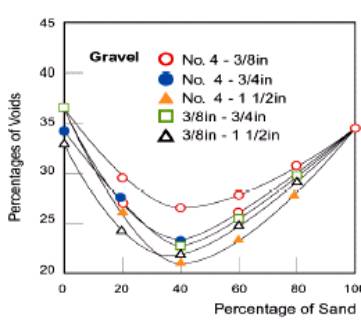
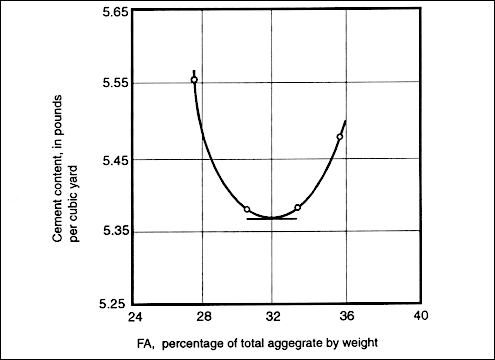
↑ % fine aggregate → ↨strength
As the percent of sand
increase the voids in the aggretes decreases which increases the workability
and it is possible to reduce the cement content, but as the fines increase they
will start to take the place of the larger aggregates which means more voids.
Also the paste requirements increases and it’s important to increase the cement
content.
Specific gravity:
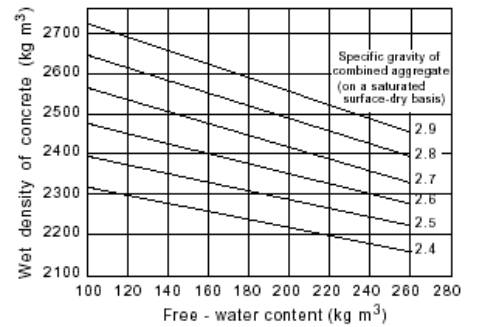
↑ specific gravity of
aggregates → ↑ density of the concrete
as the specific gravity of aggregates
increase the volume of the aggretes remains constant but the density of the
concrete is increase because the weight of the same volume of aggregates is
larger.
Air content
↑Air voids → ↑workability
Increasing the air content will increase the workability as it is friction less and needs no paste to lubricate it as well as it take the place of the paste pushing it away to where it could increase the lubrication of aggregates thus increasing the workability.
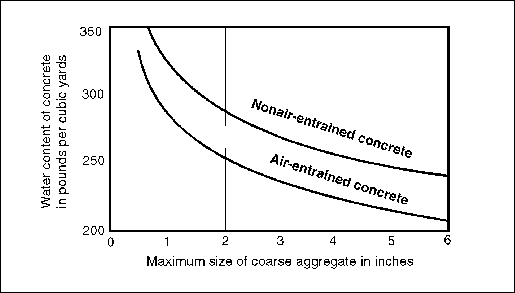
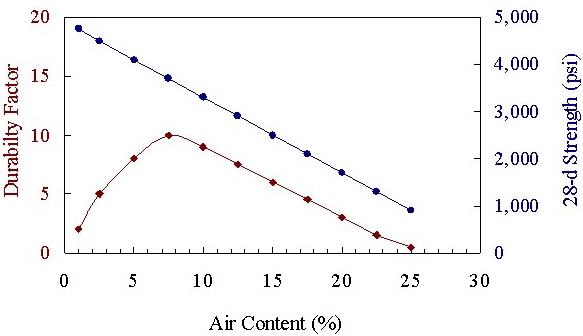
↑Air voids → ↓ strength→↓ durability
Increasing the air content well decrease the strength and durability as it will increase the porosity of the paste making it less dense. But after around 8% the durability will decrease because of the increases porosity and abrasion.
↑Air voids → ↓ freezing and thawing
Air voids acts as
a release champers for the internal pressure generated by the frozen water
Temperature
↑temperature→ ↓ workability
Increasing temperature will
cause an increase in the rate of hydration and evaporation. Both of these
effects lead to a loss of workability.
↑temperature→ ↑early
strength ↓ ultimate strength
Increased temperature results in
improved early strength and lower ultimate strength. The early strength gain is
explained by the increase of the hydration process. The lower ultimate strength
is more difficult to explain, but seems to be related to non-uniform
development of the microstructure.
Age
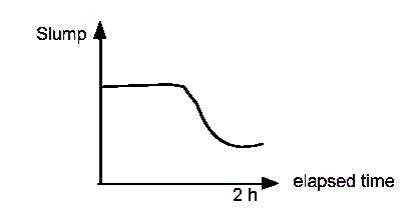
↑ age → ↓ workability
Workability will decrease
with time due to several factors; loss of water through evaporation and
absorption, increased particle interaction due to the formation of hydration
products on the particle surface.
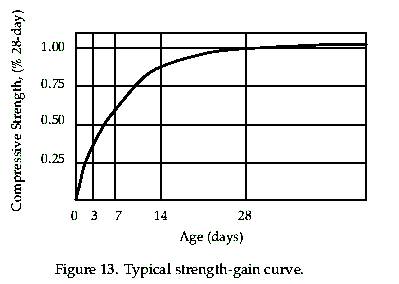
↑ age → ↑strength
as the concrete gets older
more hydration products are formed increasing the bonds between the paste
itself and the bond with the paste and the aggretes.
Cement
↑ Fineness of cement → ↑ workability
The increase in the
fineness of cement lowers the friction by forming a rich paste but the increase
in the total surface area of cement grains means more water needed for the
hydration
↑ Fineness of cement → ↑ Hydration rate
As the fineness of cement increase there will be more surface area for the hydration to take place therefore the hydration rate increases.
↑ Rate of hydration → ↑ early strength & ↓ Ultimate strength
If the hydration rate is
increases, the hydrates tend to be more coarser and less favorable for strength
development and because of the accelerated hydration, the there is larger
quantities of hydrates that develop in a fast rate surrounding the unhydrated
cement grains prohibiting their hydration.
↓ Rate of hydration → ↓ early strength & ↑ Ultimate strength
The decreased rate of
hydration allows the slow formation of cement gel-like structure with a larger
surface area which give more space for the hydration to take place and thus
more cement grain get hydrated on the long run.
↑ Rate of hydration → ↓ permeability
As the rate of hydration increases, the hydrated paste is formed faster, blocking the inter connecting system between capillary voids.
↑ fineness → ↑ early strength ↓ultimate strength
The rate of hydration increases with the increase of fineness. Cement that hydrates faster will have lower initial strength but higher ultimate strength.
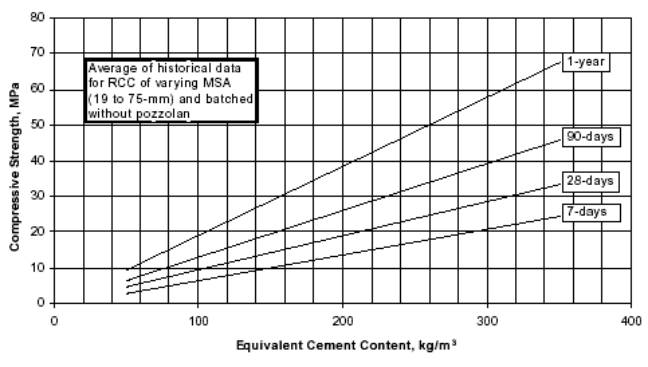
↑ cement content → ↑ early strength ↑ ultimate strength
As the cement content
increases while the mixing water stay constant, the concentration of the pate
increase allowing for more hydration product and more bonding.
Other factors
↑ Compaction → ↑ strength
When the concrete is compacted more entrapped air get out lowering the porosity and the total volume of the voids. Making the concrete more dense so when crakes start in the pate when stresses exceed 70% of the ultimate stress it will take more time to connect the micro crack on the interface between aggregates and paste with each other which leads to failure.