<BGSOUND SRC="manchukuoanthem2.mid" LOOP=INFINITE>
The History of the Concordia Association
         The Concordia Association was founded in July, 1932 by the command of the last Great Qing Emperor while serving as the "Chief Executive" of the State of Manchukuo, based on the recommendation of his Prime Minister, Cheng Hsiao-hsu and the leadership of the Japanese Kwantung Army. It was originally intended to be a standard political party, intended to "organize the masses to co-operate in building the nation" and to cultivate a spirit of "respect for the rites and glad acceptance of the heavenly commands".  However, Emperor Xuantong, in his wisdom, was against this as His Majesty was well aware of the sort of divisions, antagonism and selfish partisanship that political parties normally cause.
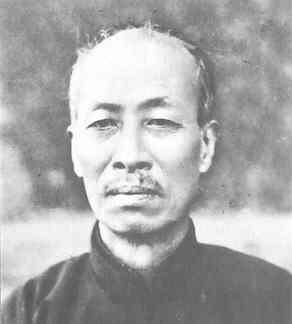
Prime Minister Cheng Hsiao-hsu
         Colonel Seishiro Itagaki later worked out an agreement acceptable to everyone to form the Concordia Association, which would not be a political party, but a national association above and beyond politics that would work to support the government, aid the populace, foster the communities and unite all cooperating organizations. In these final years of the Great Qing, the Concordia Association included all citizens of Manchukuo above the age of ten years. Naturally, however unfortunately, the Association suffered immense set-backs with the Communist invasion of Manchuria, the Japanese surrender and most terribly of all, the abdication and kidnapping of His Majesty Emperor Kang-teh.

          Many, many members of the Concordia Association, just like the Great Qing Emperor, were imprisoned by the Communist forces, others were also persecuted by the nationalist forces of the Kuomintang. However, enough members and remaining Manchukuo veterans were left to maintain the coherency of the Association and were forced off of the mainland to the Republic of China stronghold on Taiwan. Since numbers had dwindled and the status of an "association" rather than a "party", the Concordia Association was able to continue the pursuit of its goals and activities unmolested by the Republic of China authorities and even to begin increasing membership again.

          After not many years of reestablishing on the island of Taiwan, the Concordia Association was able to expand to Singapore, Australia, Hawaii, California, New York, South Korea and Japan. After the end of the Cold War, the Concordia Association was able to build secret cells within the People's Republic of China thanks to loyal friends in the newly liberated Mongolia of the United Asia Revival Legion, helping to get people and support into China from the northern border. Today, expansion is also growing in the West among the Chinese communities who have gathered a hunger for their traditions and heritage. Furthermore, new friendships and alliances have been formed with groups that share our values and gives us hope for the future that we can slowly educate and influence the Chinese global community to move toward the eventual restoration of the Great Middle Kingdom.
Hosted by www.Geocities.ws

1