| Component market surges even as economy
slows
By Jim Haughey The electronic-component market continues to gain strength in the United States, despite signs that the rest of the economy is slowing down following interest rate hikes by federal economic regulators. Component shipments rose 2.3% in May from the prior month, and early indications suggest a similar increase in June. Order backlogs are rising, the inventory- to-sales ratio has fallen 14% over the last year to a record low, and prices are relatively firm. Shipments have increased for 10 consecutive months and are now about 25% higher than last May. Unfortunately, this is too good to last although it appears that the boom has least six months left. This year’s shipment forecast has been bumped up to a 22.8% gain, with a further 15.6% increase in 2001. This stands in stark contrast with if state of the general economy: housing starts down; oil prices up; interest rates up; stock indexes flat; and employment, production, and income gains slowing. Surging worldwide investment in IT systems, especially wireless communications and Internet servers, is driving the electronic-component boom, which, in turn, is being fueled by technological innovation. It is happening because the technology is now available and affordable. As a result, the demand for electronic components is not directly affected by rising interest rates, as are cars and houses. Nor is it affected at the second stage, at which time auto and construction workers are laid off and consequently reduce their consumer spending. Other products such as food, clothing, and consumer service supplies are more immediately struck by these changes. By stage three, however, the electronics market will feel the impact caused by consumer-goods suppliers cutting back their investments in capacity because of slowing sales and lower profit margins. A clear, sustained drop in interest-sensitive consumer spending has already occurred in housing but not in autos. And it could be reversed in housing if the Federal Reserve Hoard does not raise credit costs in August. So stage one can occur as early as July, as late as September (most likely), or not at all. Stages two and three follow automatically after three months, The slowing economy will likely hit the electronics market in the period between January and April. The EBN forecast supports this scenario. Offsetting the U.S. slowdown, European economic growth should be steady through 2001, at 3.2% to 3.4%, while Asian economic growth will rise from 4.5% to more than 5.05% by the end of next year. EBN July 17, 2000 www.ebnonline.com 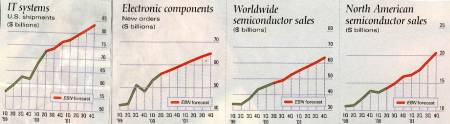
|