Explaination
- An IP address is an identifier for a computer or device on a TCP/IP network. Networks using the TCP/IP protocol to route messages based on the IP address of the destination. The format of an IP address is a 32 bit numeric address written as four numbers separated by periods (four groups of eight bits called Octets). Each number can be zero to 255. For example, 1.160.10.240 could be an IP address. Within an isolated network, you can assign IP addresses at random as long as each one is unique. However, connecting a private network to the Internet requires using registered IP addresses (called Internet addresses) to avoid duplicates.
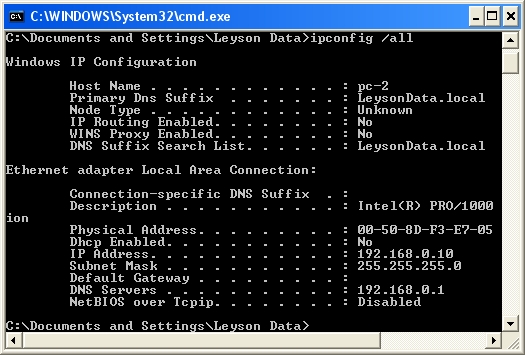
The address for your own workstation can be seen by typing 'IPCONFIG /all' at the DOS command prompt (look under the IP Address heading).
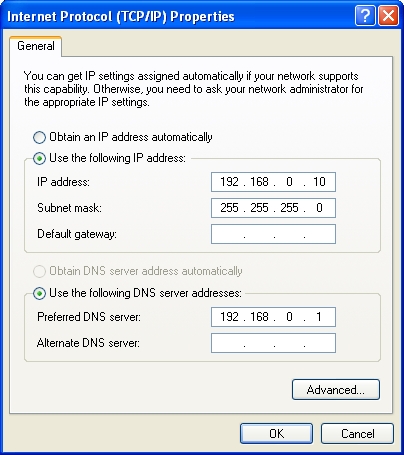
Altenatively you can right click on 'Network Places' in Window Explorer - Properties - right click 'Local Area Connection' - Properties - Select Internet Protocol (TCP/IP) - Properties, to get to the screen below
There are three main classes used for IP addressing.
Class A - Used for very large networks. The defult mask is 255.0.0.0 Class A networks range from 1.0.0.0 through to 126.0.0.0. Claas A networks provide 16,777,214 host adddresses. THis is because the second, third and fourth octets are availible for host addressing. ARPNET is an example of a Class A network. Class A addresses (that are not submitted) provide network and host information in the format network.host.host.host.
Class B - is used for networks that still need a large amount fo node addresses, such as a large company or institution. Class B ranges from 128.0.0.0 to 191.0.0.0. The defult subnet mask is 255.255.0.0. There are 16,384 Class B network addresses, with each supplying 65,534 host addresses. The third and fourth octets are availible for host addressing. Class B addresses provide network and host information in the format network.network.host.host.
Class C - is used for small networks. There are 2,097,152 Class C networks. Class C addresses range from 192.0.0.0 to 223.0.0.0. The defult subnet mask is 255.255.255.0. Class C networks provide 255 host addressses per network. This is because the fourth octet is reserved for host addressing. Class C addresses provide the network and host information in the format network.network.network.host.
There are two other classes of IP addresses of note: Class D and Class E. Class D network addresses are used by multicast groups receiving data from a particular application or server sevice. An example of a multicast use of Class D addresses is Microsoft NetShow, which can braodcast the same content to a group of users at one time. Class E addresses belong to an experimental class, which is not used for public IP addressing.
The Ip addressing scheme discussed above is for IP Version 4. A new version of IP, IP Version 6 (IPv6 or IPng) will soon be implemented giving us a 128 bit address (16 octets).
An example would be "192.168.1.2.3.4.5.6.7.8.9.10.11.12.13.125"
|
|



