 |
|
|
|
|
|
|
|
|
|
|
|
|
|
|
|
|
|
|
|
|
|
|
|
|
|
|
|
|
|
|
|
|
|
|
|
|
|
|
|
|
|
|
|
|
|
|
A |
|
|
|
Brief History |
|
|
|
of the |
|
|
|
121st Ohio Volunteer Infantry |
|
|
|
 |
|
|
|
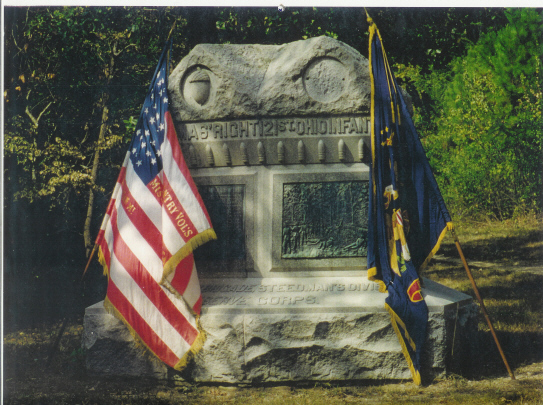
Monument of the 121st Ohio on Snodgrass Hill, Chickamauga and Chattanooga National Battlefield Park. It is flanked by the company's reproduction flags. |
|
|
|
 |
|
|
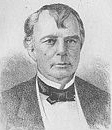
"The battle-flag I am proud to receive and deposit in an appropriate room, as a trophy of the heroic valor and partriotism of your gallant command. Please, convey, Colonel, to your brave officers and men my profound admiration for their glorious achievements on that desperate field, and the heartfelt thanks of all Ohio's loyal people."
Ohio Governor David Tod to Lieutenant Colonel Henry B. Banning, commanding 121st Ohio, at the reception of the flag of the 22nd Alabama, which was captured September 20, 1863 at the Battle of Chickamauga, Georgia. |
|
|
|
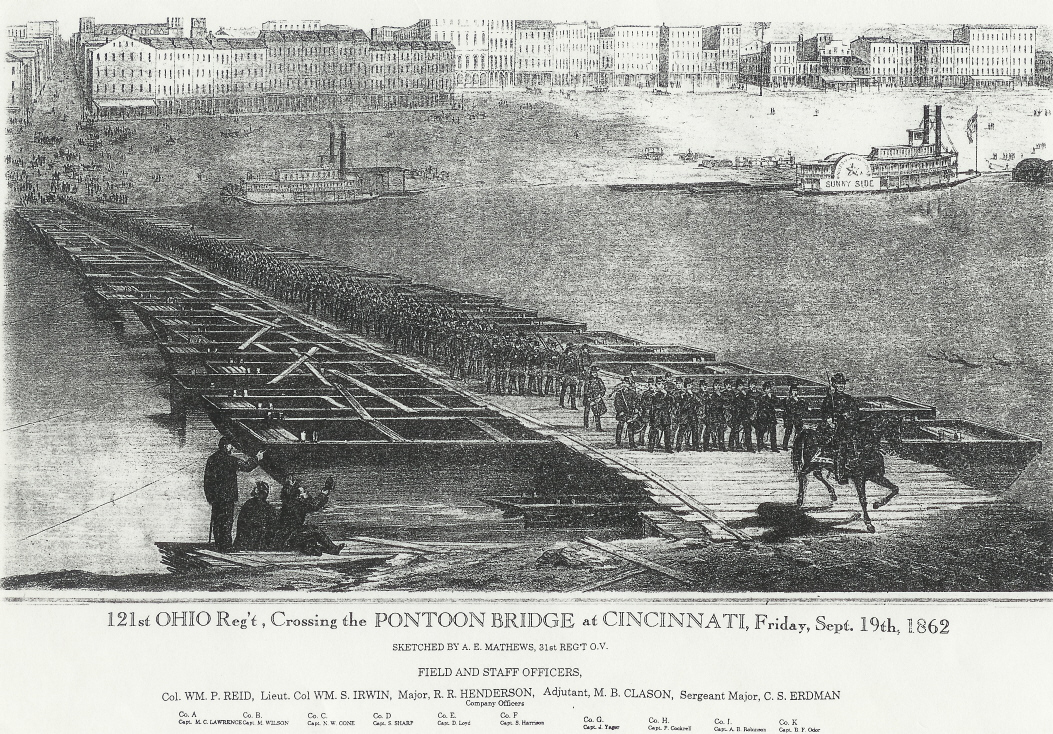
The 121st Ohio Volunteer Infantry was recruited in mid-August, 1862 from the counties of Delaware, Hardin, Knox, Logan, Marion, Morrow, Richland, and Union and offered to Governor David Tod for service. The 958 officers and men, under the command of Colonel William P. Reid, gathered at Camp Delaware on September 3 to organize. On the 11th, it was quickly mustered into United States service and shipped to Cincinnati to defend the city from Rebel Major General Edmund Kirby Smith's forces. After Smith stalled at Frankfort, Kentucky, the 121st was sent to Louisville, where it joined Major General Don Carlos Buell's Army of the Ohio. On October 8, it went into the Battle of Perryville with next to no training and poor weapons, half of which could not fire. The regiment broke and ran, with several small portions rallying to continue the fight. After the battle, it garrisoned various posts in Kentucky, where it trained and received Springfield Rifled Muskets. After Christmas, the regiment unsuccessfully pursued Brigadier General John Hunt Morgan's cavalry when he raided through central Kentucky. |
|
|
|
 |
|
|
|
In February, 1863, the regiment was transferred to Franklin, Tennessee, under the command of Major General Gordon Granger. Here, sickness and lack of discipline and leadership nearly destroyed the unit. In late March, after the resignation of the popular Lieutenant Colonel William Smith Irwin, the line officers requested that Lieutenant Colonel Henry Blackwell Banning of the 125th Ohio Volunteer Infantry be assigned to command. Banning had a solid reputation, known for his bravery, strict discipline, and effective leadership. Within a short time, Banning had transformed the 121st into an effective fighting force. In late May, Banning was officially transferred to command of the regiment and later was promoted to colonel. On June 11, it fought a small skirmish near the town of Triune against Brigadier General Nathan B. Forrest's cavalry, holding the line long enough to allow Union cavalry to form and counterattack. Also in June, the regiment was transferred to Major General William S. Rosecrans' Army of the Cumberland and occupied the pro-Union town of Shelbyville on July 4. In mid-August, it marched alone to the town of Fayetteville, dealing with local guerrillas. |
|
|
|
 |
|
|
|
|
On September 20, 1863, the 121st went into battle at Chickamauga in northern Georgia as part of Granger's Reserve Corps, holding the extreme right of Major General George H. Thomas' Snodgrass Hill defense. They made three bayonet charges to hold the only road of retreat open and captured the flags of the 22nd Alabama Infantry and, circumstantial evidence suggests, the 10th South Carolina, but the latter was lost in the retreat. They suffered through the siege of Chattanooga, Tennessee, rushing to assist the XII Corps in a battle along the Wauhatchie River in late October. At this time, the 121st, and its brigade (the 2nd), was transferred to the 2nd Division, XIV Army Corps, where they remained for the rest of the war. After the breaking of the siege, the regiment pushed back the Confederate rear guard and then, under Major General William T. Sherman, marched to the relief of Knoxville, which was besieged by Rebel Lieutenant General James Longstreet. Returning to Rossville, Georgia for the winter, it received about 200 recruits and prepared for the 1864 Atlanta Campaign. |
|
|
|
|
|
|
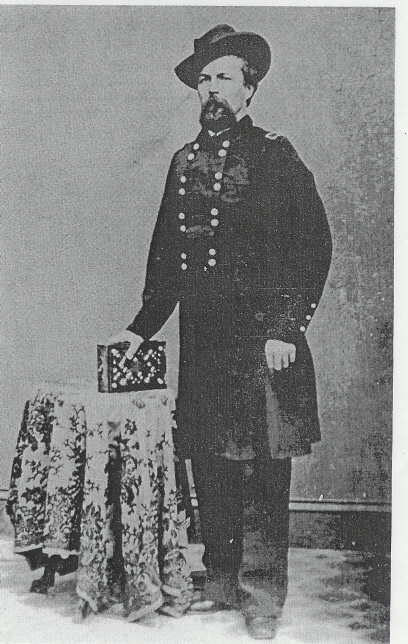
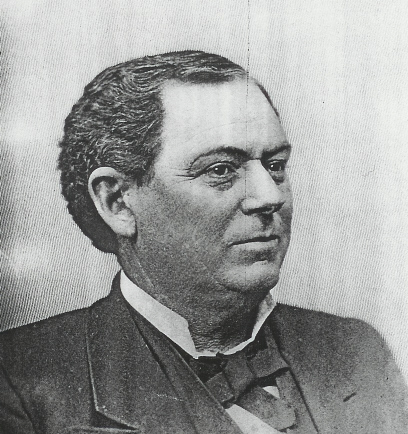
Brevet Major General Henry Blackwell Banning commanded the regiment from April, 1863 to October, 1864, transforming it into a fierce fighting force. |
|
|
|
|
|
On May 4, 1864, the 121st Ohio marched off with the rest of Sherman's army, and on May 8, three companies, B, G, and I, assaulted Buzzard's Roost Gap, taking the position. It remained in reserve during the Battle of Resaca and marched with the 2nd Division to take the town of Rome, being the first to enter the city on May 18. They rejoined the main army near Dallas and pursued the rebels back to their Kenesaw Mountain stronghold, where they were involved in almost daily skirmishing and under heavy artillery fire. On June 27th, the 121st unsuccessfully assaulted what later became known as "Cheatham Hill," in the Battle of Kenesaw Mountain, losing 164 men in about fifteen minutes, the majority from the left wing, with three captains killed and Major John Yager, commanding the wing. The regiment fought at Peach Tree Creek and in and around Atlanta, taking some outer works on August 7. The 121st led the XIV Corps in the advance on Jonesboro, assaulting the works on September 1, helping to take and operate a rebel battery. Atlanta surrendered the next day. |
|
|
|
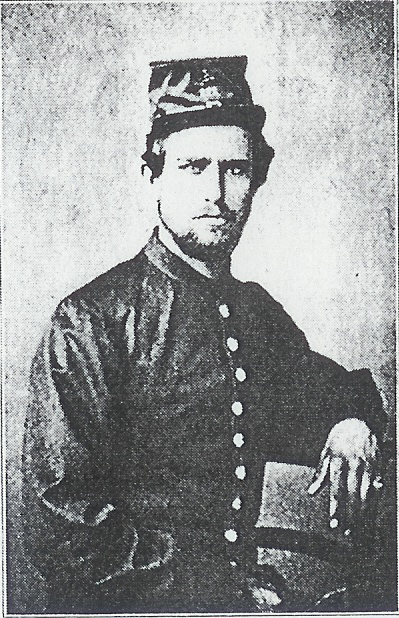
Private Otway B. Cone, Company A, wears the uniform that the regiment was issued in September of 1862. They were issued dark blue trousers, frock coats without the standard light blue pipping around the cuffs and collar, and forage caps. The 121st wore their forage caps in a unique way; instead of allowing the top of the flimsy hat to slope forward, they wore them sitting straight up. Unit brass insignia was placed just above the brim of the hat, instead of on top. (His brass "121" can be barely seen in the picture.)
Private Cone was a 22 year old Marysville school teacher when he enlisted with his two brothers, Stephen and James, on August 15, 1862. He was wounded in the left hip on June 27, 1864 in the Battle of Kenesaw Mountain, Georgia. He died July 21, 1864 in a hospital at Chattanooga, Tennessee. |
|
|
 |
|
|
|
 |
|
|
|
|
"We formed ourselves in the front line and were among the first to reap the fruits of that brilliant charge, the impetuous gallantry of our brave Colonel impelling him forward disdaining to be behind, and where he led my men never faltered."
Captain Aaron B. Robinson, acting major, about the Battle of Jonesboro, Georgia, September 1, 1864. |
|
|
|
|
|
|
|
|
|
|
|
The regiment pursued General Forrest's cavalry out of northern Alabama, before returning to the main army in time to join it on Sherman's famous "March to the Sea." It was now under the command of Major Aaron B. Robinson, Colonel Banning having left in protest over being demoted because the regiment's size did not warrent a full colonel. After the fall of Savannah, the 121st marched up through the Carolinas, fighting at Lexington, South Carolina, in February, 1865 and a skirmish at Averysboro, North Carolina the following month. It fought its final battle at Bentonville, North Carolina on March 19, being overwhelmed and forced to retreat and reform, and holding its position the two following days. It was stationed at Goldsboro with the army until Rebel General Joseph E. Johnston surrendered on April 24, 1865. |
|
|
|
|
|
|
|
|
The final leg of its journey took the regiment north through Virginia, passed the burnt remnants of the former Confederate capitol, to Washington, D.C., where it participated in the Grand Review of the Armies on May 25. It was mustered out of service on June 8, 1865 with 244 officers and men and was transported to Camp Chase, Columbus, Ohio, where it was paid off and discharged on June 12. The 121st Ohio had fought in eight major battles, eight miltiary campaigns, and numerous skirimishes, captured an enemy battle flag and battery and suffered through nearly three years of bloody civil war. |
|
|
|
Victory Belongs to the Brave!
Regimental Motto |
|
|
|
"Wipe Out Perryville!"
Regimental Battlecry |
|
|
|
Home |
|