
 Clever Types - Scholars
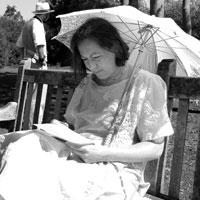
| Miss.
Amy Fawcett |
 |
|
Miss
Fawcett has admirably conducted the cataloguing my finds at
the university museum during my absence in Egypt. As an epigraphologist,
she is only surpassed by my own dear wife and when we are both
abroad, she is surely the best in London. That said, I find
it rather selfish of me to hold on to the both of them, thus,
I recommend Miss Fawcett to you whole-heartedly. May I wish
you all the best with your proposed excavations in Sumeria.
I am sure Miss Fawcett will find cuneiform a welcome change
from hieroglyphs.
Letter
of recommendation from Professor Flinders Petrie
to Sir Charles Leonard Woolley, 1921
|
| Sir Charles Leonard Woolley |
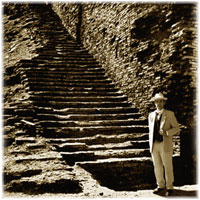 |
...and I think it is fair to say that Sir Charles, the renowned British archaeologist whose excavation of the ancient Sumerian city of Ur (in modern Iraq) has greatly advanced our knowledge of ancient Mesopotamian civilization, was pleased to be back in England. His discovery of geological evidence of a great flood has suggested a possible correlation with the deluge described in Genesis and his upcoming lecture tour is guaranteed to raise still further debate. Speaking to him briefly at the The British Museum, this charming and unassuming gentlemen was looking forward to reexamining many of his finds recently imported into the country..
London Times , August 1924
|
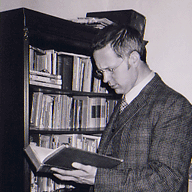
| Mr.
Waylon Riley |
 |
|
Also this month, The British Library acquired
an exceedingly rare 17th century English translation of the
1486 Malleus Maleficarum - 'The Hammer of the Witches', through
Sotheby's the Auctioneers, for the sum of £6,600. Discovered
by Mr. Waylon Riley, of Mandeville's Bookshop, Camden, it is
a rare find indeed. Mr. Riley, proving himself something of
a specialist in these matters, we are told plans to open a store
of his own dealing with further articles of this nature and
hopefully bringing them to the libraries attention.
Clerks Literary Review, March
1912 |
| Professor
Edward Jacobs |
 |
|
Not
long after Jacobs was made a Professor at Cambridge I attended
a syposia at the University. I had the pleasure of visiting
him in his chambers. I recall one particular evening, after
I had presented a generalization of your light and quanta theory
to the usual faces. We played poker and discussed particle spacing
and theoretical temporal dynamics over gin and tonic. Jacobs
will never know it, but those conversations that week were the
catalyst for theorum for which I am now repeatedly acclaimed.
He's a good man, underated, though some of his ideas can sometimes
run to the speculativly fantastical.
Private
Letter to Max Planck from Albert Einstein, May 1922
|
| Dr.
Henry Lawrence |
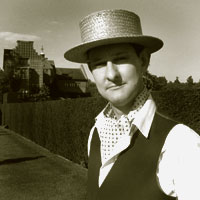 |
Following in the wake of his friend and Cambridge mentor, renouned
psychologist and anthropologist
William Halse Rivers, Doctor Lawrence has developed a singular approach to the medicine of the mind. Favouring prolonged analysis and confrontationa psycology to motivate patents he has had remarkable success with ex-servicemen previously diagnosed as suffering "anti-war complex", or those in a state of catatonia, through the use of literature and art as a medium of expression and a controvercial no noncence approach verging on the attitude of "just forget about it"...
West Lancashire Medical Digest, 1921 |
| Sgt.
Richard "Chunky" Baxter |
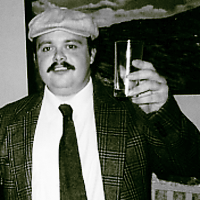 |
...and
high praise was given to one member of the regiment in particular,
Sargent Baxter, who's positive attitude in the face of adversity
saw the the new tanks onto the battlefield against all odds.
He and his men worked without sleep to roll out 18 new machines
into the Somme in September 1916 in an effort to break the
deadlock on the Western front. In a surprise attack the tanks
had spectacular success. Without the solid northern British
dedication and skill in their trade of men like Sargent Baxter
and the engineers of The Royal Tank Corp. there would have
been further delay and the loss of many more lives. Sometimes,
it's the soldier we never see who are as much the true heroes
as our pilots...
Oficial
Regimental History - Royal Tank Corp. 1917
|

<
BACK
|
