BACK
To Ray Griffin's Resource page
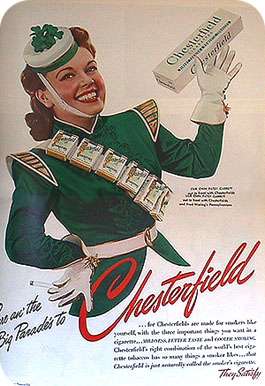
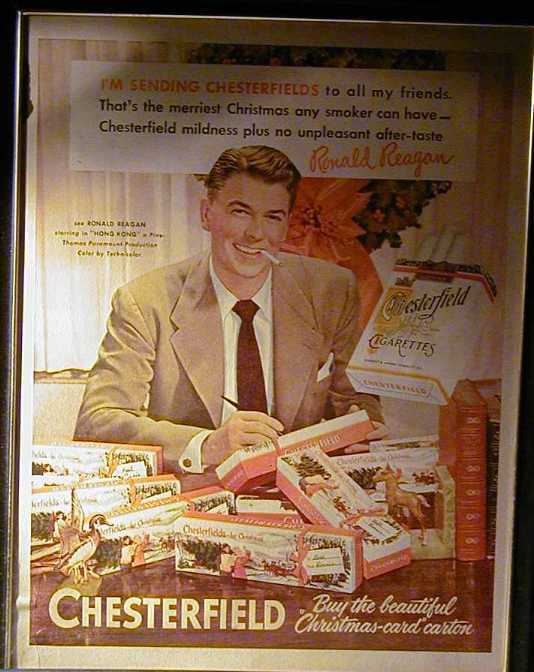
It promised sophistication, sex appeal, even longevity itself. Gosh Darn!


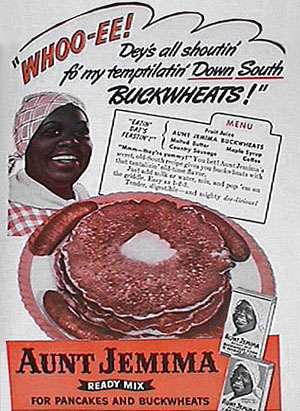

| Offensive Adevertising:
BACK
To Ray Griffin's Resource page
|
Once upon a time, the rich, sweetly pungent smoke of tobacco
offered more than dreary old diseases like emphysema and lung cancer.
It promised sophistication, sex appeal, even longevity itself. Gosh Darn! |
|
|
|
|
|
|
|
| http://www.adbusters.org/home/ | ||
"Pervading
all the media, but limited to none, advertising forms a vast superstructure with
an apparently autonomous existence, and an immense influence." (Williamson,
1991: 11)
Few
would question the enormity of the advertising 'machine' that runs within our
society. Therefore, in asking what value there is in studying it, we are also
asking what value it has within our society, and as such, the impact and
influence that it has on our lives.
It
can be argued that the main function of advertising is to sell us, the
consumers, products. But how do they achieve this? One might argue that
advertising simply serves to inform us of the choices that we have as consumers,
and leaves us to make rational decisions based on what we need. This is somewhat
problematic; for example, how can we define a need in comparison to a want? Many
of the products we buy, we do not need, in so far as we are perfectly
able to live without them. One might ask, therefore, what the reason is for
buying a specific product, be it shampoo or a new car. Indeed, many car ads
portrayed on television say little, if anything about the car's capabilities,
instead showing an individual driving fast around steep mountain roads etc.
Through examples such as these car adverts, it is obvious that many advertisers
do not rely on rationalism and information to buy their products. Furthermore,
as Myers (1986) argues, advertising does not allow us to make any real choices
between products. Indeed, our 'choice' frequently consists of different brands
manufactured by the same company, or being distorted by a form of advertising
reliant on frustration or other negative feelings in order to sell its products.
So therefore, what exactly are we buying into when we consume products, and
perhaps more importantly, why?
In
answering these questions, we need to focus upon how we make sense of the
adverts we see, how the advertisers reach us and persuade us, and the complexity
involved in this process. In watching an advert on television, or looking at one
in a magazine, we do not simply come under some hypnotic 'spell' resulting in an
unquenchable desire to buy a new type of toilet roll etc. simply because the
advert states that it's the answer to all our problems. Adverts are generally
far more complex: furthermore, so are we.
Depending
upon the media used, adverts generally consist of images, text and sound. Each
of these aspects are encoded with various meanings and messages, some of which
are associated with the particular product the advertisement is trying to sell,
and some of which are associated with its image. The phrase 'a picture can speak
a thousand words' is far from untrue.
As
for us, far from being passive, we actively, although perhaps subconsciously,
construct meaning according to our knowledge of the world and our experience in
it, building associations with concepts presented to us within a given
advertisement.
Within
such a context then, advertisements are largely created to appeal to the
irrational aspects of our psyche; using emotional appeals, playing on our fears,
our need to belong; and in doing so, offer us their product as an answer. This
theory has been supported by a great deal of research, which has found
relatively few purchases to be made by rational choice. Indeed, how can
'rational' choices be made between those goods which have the same use values,
for example, different brands of toothbrush? We can see from examples such as
car ads, how advertisements have become less concerned with communicating
essential information with regard to the product in question, and more involved
with manipulating attitudes and social values.
Owing
to the fact that different brands of a product are not necessarily so different
in content, the advertisers must market the product in such a way as to persuade
the consumer to buy it. Indeed, Packard (1964) found that advertisers are given
clues via our 'subconscious needs, yearnings and cravings'. Furthermore, once
advertisers have identified our psychological needs, they can design an appeal
focused towards it and based upon the product. Packard went on to identify a
number of psychological appeals that are utilised in adverts, some of which will
be highlighted now.
Firstly,
he found that adverts sell a 'reassurance of worth'. Using the example of the
housewife in the 1950's, he notes how adverts would sell them pride in their
designated 'role' according to how 'white their whites were' or how clean their
house was etc. Today, however, owing to the great changes that have taken place;
i.e. women moving out more into the workforce, such selling tactics do not
necessarily play on affirming a particular role that the consumer has, instead,
encouraging a self-indulgence because 'you're worth it'; more as a person than
simply a functional role.
The
flip-side to this particular method of advertising is one that Packard did not
cite, but one which has become a standard approach for some types of product;
that is to play on our guilt, fear, and insecurities. These can include
anxieties regarding looks, age, loss of respect and status, and so on. The
anxieties of consumers, especially with regard to physical appearance, have been
'homed-in' on. The product in question tends to be held up as a cure for
physical sensitivities; for example acne. Focusing on presenting the product as
a cure for one's skin complaint also tends to present it as a cure for one's
isolation, shame, feelings of unattractiveness etc. The majority of adverts used
to promote acne creams have tended to follow the same format: Girl/boy has spots
and is isolated, and after using the product, has baby-like skin, and a much
improved social life as a result of being a more 'attractive' person.
Some
advertisers even go to lengths to reinforce this. Brierly (1995) cites the
example of Ryvita, whose main selling point is that it "helps you
win the inch war" (p.167). It reminds women that they need to lose weight
in order to achieve the 'ideal' 24-inch waistline, as indicated by a measuring
tape on the packet. With such appeals, the consumer is made to feel guilty
concurrently for not 'measuring up' and at the same time, is offered a solution
in the form of Ryvita. In realistic terms, however, we are generally
aware that we are not going to gain the 'perfect' figure by simply eating Ryvita.
In such a way, therefore, adverts offer us solutions, while simultaneously
separating us from them, in order to continue to sell their product.
Another
approach which Packard highlights is that which involves a 'sense of roots'.
These adverts tend to focus upon the 'good old days' with a certain warmth and
sentimentality. A good example of such an approach would be the Werthers
television advertisement in which we see a grandfather and grandson in a
'special' moment, whereby the grandfather gives his grandson his first Werthers
Original sweet, because he's such a 'special boy'. We as consumers are
placed in a timeless situation, which emphasises the giving of a sweet as the
giving of affection, and accentuates the concept of family tradition; i.e. all
grandfathers in the family have introduced their grandsons to Werthers.
By using nostalgic appeals, advertisers remove the recent brand history, at the
same time, playing on a distrust of modern life.
Adverts
have been found to sell a 'sense of power'. Indeed, Packard found that,
particularly in men, there is an inherent desire for power. Indeed, advertisers
have tapped into these motives and exploited them. Such a selling point has
obviously been aimed mainly at men, with products such as cars, chocolate (Yorkie
Bars), Deodorant (Lynx) and so on. As an appeal, the use of the
'powerful man' has been applied in contexts such as power over the environment,
physical power, and power over women. Increasingly, however, the power appeal
has also been used in ads aimed at women; yet these tend to be within a more
traditionally feminine context. For example, a girlfriend getting revenge on her
boyfriend for criticising her driving (Fiat Punto). The eighties
saw the birth of women in advertising displaying the same aggressive qualities
of power traditionally associated with masculinity. For example, a Clarks
advert portrayed women getting revenge on men by performing such actions as
stapling the boss' tie to his desk, or pouring dinner over the head of an
unfaithful partner. However, such portrayals proved unsuccessful as they tended
to be associated with radical feminism and 'man-haters', the result of which,
was rejection by the majority of female consumers.
The
power appeal is arguably just one aspect of the fantasy that advertisements are
common for inviting us into such as the long drive in a car with no concept of
time or place. The purpose of such adverts is to associate the stereotypes which
surround our views of 'paradise' with the product in question. Brierly argues
that 'the familiar elements are more important than the unfamiliar' (Brierly,
1995: 167). The familiar elements are the fantasies we bring to the
advert, as opposed to the unfamiliar; the situation in which the product is
presented to us.
Therefore
we can see how the world of advertising is not a real world. But at the same
time, it is not unreal. Advertisements tend to be a paradox of the two. As a
general rule, adverts tend to be based in reality, but stretched or exaggerated
somewhat. Some have accused adverts as 'perverting' the truth. However, as Myers
points out, the particular perversion that advertising carries out, does not
concern misleading the consumer with regard to the properties of the product,
but it has been accused of concealing the 'true condition of life'. Indeed,
'real' life as we would know it is not perfect; each of us, our environments,
possessions etc. are all flawed in some manner. This is not the case in
advertisements. In our search for perfection, we are continuously presented with
it in the world of advertising and, like the proverbial donkey chasing the
carrot on a stick, we never do find it, regardless of what we consume.
The
concept of perfection is now presented to us in perhaps a more realistic fashion
than it ever was, owing to the advances made in technology; namely computer
technology. Being female, one example that springs to mind is how women are
presented with an increasingly unattainable concept of what beauty is. I say
unattainable, owing to the fact that not even the women featuring in the ads really
look like the finished product: that is to say that they themselves cannot even
live up to the standards set in advertising.
If we
look at the two given examples of adverts from women's magazines, we can see how
the two images have been altered by computer, yet not in a particularly obvious
way: they look 'real'. If we look first at the Organza advert, we can see
that the woman featured appears to have an extremely unnatural figure, owing to
the way her hips and waist have been pulled in so that her figure resembles that
of the bottles around her. Likewise, in the Dior ad, we are presented
with a woman who doesn't have a blemish on her face; neither for that matter,
does she have any pores either! Indeed, her complexion is that of a porcelain
doll, setting unrealistically high standards for the consumer to live up to.
While
in these two adverts the tampering can be spotted with little effort, it is far
more subtle in many adverts and not just restricted to beauty products. Indeed,
with the technology we have now, we can transform any product into perfection,
at the same time, misleading the consumer into seeing it as 'real', and thus
permanently providing impossible standards. We can see therefore, the manner in
which advertising can suspend our sense of reality in order to reinforce the
image of a product.
As
previously mentioned, the image that a product has is one main aspect which will
differentiate it from similar products. Very often, it is the products image
that we are actually buying into. We tend to create ourselves, create our image,
via the images of the products we consume. Indeed, as Williamson states:
"Instead
of being identified by what they produce, people are made to identify themselves
because of what they consume" (Williamson, 1991: 13).
We
are made to feel that our status and who we are is sustained through what we
buy. As mentioned earlier, we each have an inherent need to belong, and the
images of products presented to us, provide us with an imaginary 'belonging'.
Research
has found that if a product (sign) is associated with a particular (signified)
concept, meaning or emotion which is reinforced by the advertising campaign, the
consumer tends to eventually skip the translation, thus taking the sign for the
signified. In this way, we come to associate different products with different
meanings. For example, with the Impulse adverts, the product has come to
be associated with 'a man you've never met before, giving you flowers'. In
similar ways, diamonds have come to be associated with love, in both functional
and conceptual ways, because of engagement rings, and the associations of
lasting forever, being strong and beautiful etc.
In a
large number of adverts, our bodies and other aspects of our lives are broken
down into separate parts. In order to renew ourselves as 'whole beings'
therefore, we consume the products, thus recreating ourselves from what
Williamson refers to as our 'identikit of parts'. Through the buying of
products, we do not simply create our image for ourselves, but also in order
that other people can see the 'type' of person that we are. One of the most
obvious examples of this would be the buying of clothes: designer names imply
status and money; the colours we wear are said to reflect the kind of person we
are, again, owing to the associations we bring. Therefore, in buying a product,
we are effectively buying ourselves. We consume the product, but at the same
time, we are the product.
While
products can be imitated, it is far more difficult to imitate an attractive
personality image. This image is what a large number of consumers have been
found to buy the product for. Indeed, Packard found that the majority of smokers
and beer and whiskey drinkers couldn't actually identify their favourite brand.
This further indicates the irrationality with which people tend to purchase
their products.
In
America in the sixties, image builders were providing evidence to show the
extent to which consumers buy into a self-image. According to the results,
approximately 65% of all smokers were absolutely loyal to one cigarette brand
(Packard, 1964: 49). Psychologists at the time found that even though in tests,
smokers could not identify their brand, they would walk down five flights of
stairs to purchase it rather than accept an alternative. Indeed, Packard cites a
psychologist who, according to the emotional make-up of eighty people,
indicated, with only several mistakes, the brand of cigarette that each had
to favour. In America, a new concept by the name of 'trolley-ology' has been
developed, whereby people can give a psychological profile of a person, or even
work out their identity according to the products that they buy. We can see
therefore, how advertisers must know, and need to know, a great deal about us as
potential consumers in order to direct particular appeals, and 'persuade' us to
consume.
This
concept is referred to as target marketing. Indeed, no forms of advertising
would be effective without the advertiser having a prior knowledge of who the
product is speaking to. The target market affects all levels of decision making
when advertising the product, from the image it is given and the approach used,
to the types of media utilised during the campaign and magazines it is placed
in, or television programmes it appears with.
The
shift in focus from the brand to the buyer, over the past forty years,
demonstrates the impact that market research has had upon the practice of
advertising. Furthermore, the availability of the target market, determines the
approach, or method of persuasion that the campaign will use, and whether or not
it will be launched at all. Some target markets are notoriously problematic; for
example, homosexuals. Unlike the target markets generally, the homosexual market
is not easy to define, as they are not easily identifiable, accessible or
measurable, which results in them not being profitable. This is due to the fact
that the gay community exist across age, income and race, and therefore are not
such a clear-cut section of society as are students for instance. Advertisers
need to know almost everything they can about the target market and its
relationship with the product in question, yet with such diversification within
some target markets, this becomes almost impossible.
The
advertising machine is not without it's critics; indeed, it is not short of
them: the majority of which are concerned about the negative effects that
advertising might have in our society. Many see the advertising industry as
decadent and corrupt. Some criticise it for inspiring 'irrationality of
emotion'. Raymond Williams has been cited as arguing that advertising 'plays a
role in the destruction of a decadent society' where it is 'no longer just a way
of selling goods, but a true part of the culture of a confused society' (Myers,
1986: 84). Some argue that perhaps were we not seduced by the glamorous world of
advertising, that we would make more rational decisions regarding the products
we buy.
However,
the reason that advertisers have to 'induce' us to purchase their product is
because the use of a rationalist approach tends not to sell the product in
sufficient quantity. Dyer (1982) cites Leavis, who drew attention to what he
considered to be the 'numbing effect' that adverts have on peoples critical
responses to their environment. Many agree with this school of thought, pointing
out how advertising can lead to apathy and 'one-dimensional thought' (The
Frankfurt School of Thought & Herbert Marcuse). However, it is very possible
that such arguments are aimed at creating moral panics and finding a scapegoat
for all of society's ills, which has not been unusual with any kind of medium.
However,
there is concern for the extent to which advertising can attempt to dehumanise
people, compensating for, and concealing the deficiencies we have in our lives.
Indeed, the promises advertisements make, Dyer argues, 'can keep people from
knowing what the root causes of social and personal problems are, and from
knowing what they really want' (Dyer, 1982: 84). To an extent, this is
undoubtedly true, given the examples of how adverts use their consumers' guilt
and fear in order to sell a product; more over, we have seen how some may even
instigate and sustain those feelings.
Through
studying advertisements, and the various aspects of how they work, we are able
to look at them with open eyes and an open mind, being able to see the 'how's'
and 'why's' of adverts appealing to us as they do. We are also more likely to be
aware of our own reactions to adverts; why we find some appealing, yet others
not: taking a critical stance. On a wider scale, we can also appreciate the role
it plays in the economy, and the processes which take place in order for adverts
to reach us.
Perhaps
one of the most interesting reasons for studying adverts is to appreciate them
as a form of art. On a single page of paper, or in thirty seconds of our viewing
time, an advert has to be created to make an impact. Being consciously aware of
the meanings and connotations within an advert, helps to make us more aware of
how we interpret them, how we think, and how we take an active role in forming
'meaning' in adverts.
In
conclusion then, we can argue that the value in studying advertisements gives us
a greater awareness and understanding; not only of the marketing machine, but
also of ourselves.
Bibliography