|
|
30 YEARS ON THE ASSASSINATION OF
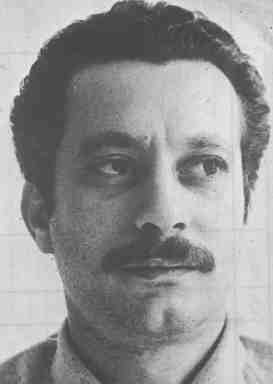
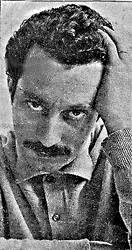
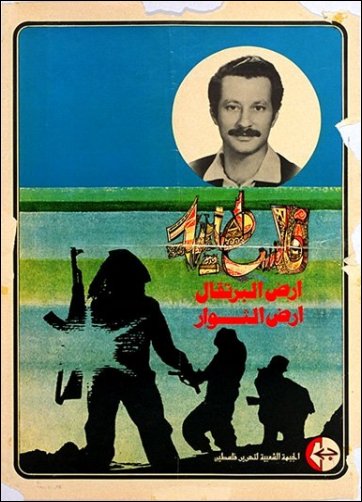
COMRADE GHASSAN KANAFANI
|
|
As I stood leaning against the ancient wall of the house I saw your mother getting into the truck, then your aunt, then the young ones, then your father began to chuck you and your siblings into the car and on top of the luggage. Then he snatched me from the corner, where I was standing and, lifting me on top of his head, he put me into the cage-like metal luggage compartment above the driver's cabin, where I found my brother Riad sitting quietly. The vehicle drove off before I could settle into a comfortable position. Acre was disappearing bit by bit in the folds of the up-hill roads leading to Rass El-Naqoura [Lebanon].
It was somewhat cloudy and a sense of coldness was seeping into my body. Riad, with his back propped against the luggage and his legs on the edge of the metal compartment, was sitting very quietly, gazing into the distance. I was sitting silently with my chin between my knees and my arms folded over them. One after the other, orange orchards streamed past, and the vehicle was panting upward on a wet earth... In the distance the sound of gun-shots sounded like a farewell salute.
Rass El-Naqoura loomed on the horizon, wrapped in a blue haze, and the vehicle suddenly stopped. The women emerged from amid the luggage, stepped down and went over to an orange vendor sitting by the wayside. As the women walked back with the oranges, the sound of their sobs reached us. Only then did oranges seem to me something dear, that each of these big, clean fruits was something to be cherished. Your father alighted from beside the driver, took an orange, gazed at it silently, then began to weep like a helpless child.
In Rass El-Naqoura our vehicle stood beside many similar vehicles. The men began to hand in their weapons to the policemen who were there for that purpose. Then it was our turn. I saw pistols and machine guns thrown onto a big table, saw the long line of big vehicles coming into Lebanon, leaving the winding roads of the land of oranges far behind, and then I too cried bitterly. Your mother was still silently gazing at the oranges, and all the orange trees your father had left behind to the Jews glowed in his eyes... As if all those clean trees which he had bought one by one were mirrored in his face. And in his eyes tears, which he could not help hiding in front of the officer at the police station, were shining.
When in the afternoon we reached Sidon we had become refugees.
Translated by Mona Anis and Hala Halim
Source: Kanafani's short story "The Land of the Sad Oranges", collected in his Complete Works, Beirut , 1975 .
*Born in Acre in April,1936. Spent his childhood in Jaffa where he received his education in a French missionary school. Left Jaffa in 1948, first for Lebanon then Syria and Kuwait.
* Moved to Beirut in 1961, where he wrote novels, short stories, film scripts, political articles and edited a number of political and literary publications, including Al-Hadaf, the organ of the Popular Front for the Liberation of Palestine. Appointed official spokesman of the Popular Front in 1970.
* Was blown up in a car explosion, which also killed his niece, on July 1972. Amid the wreckage a scrap of paper from the Israeli Embassy in Copenhagen was found, a reminder of the fate awaiting those who fought Israel.