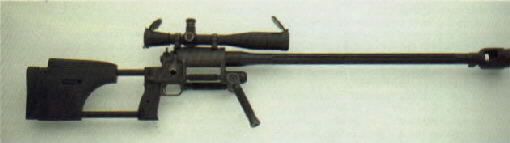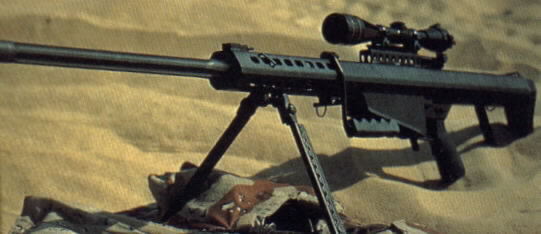


SEAL Sniper
One of the fine somewhat neglected military art is that of the sniper. SEALs and Green Berets study this skill at the Target Interdiction Course, part of the Specail Operations Comand Center and School at Amry's Fort Bragg, North Carolina. Here, out among the weeds and chiggers, aprentice SEAL sbipers learn how to move invisibly across terrain, to build a hide so natural that enemy soldiers can stand on top of it and not know that two Navy SEALs are in residence below, and to shoot so well that enemy soldiers over half a mile away die with the first shot, tank commanders standing in the turrets of their tanks lose their (literaly), and antennas and vision ports on armored vehicles become useless
Snipers work as two man teams; the shooter and the spotter. They are inserted near an their objective by boat or parachute, or swim ashore from a submarine, or caom by a Volswagen bus-whatever works for the tacticle situation. The will travel the last kilomater or so to their hide by crawling. It can take a doy or more. Their weapons and equipment are contained in a "drag bag", pulled along behind each. Under the cover of darkness they carfully, methodically carve a hole in the ground then recover it so artfully that it seems undisturbed. In this hole the pair will live for a day or tw, observing, recording, and possibly reporting by radio. Normally the snipers mission will not include actually firing on an enemy force but calling in artilery or aviation to do the job.
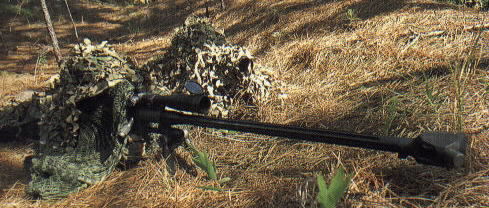
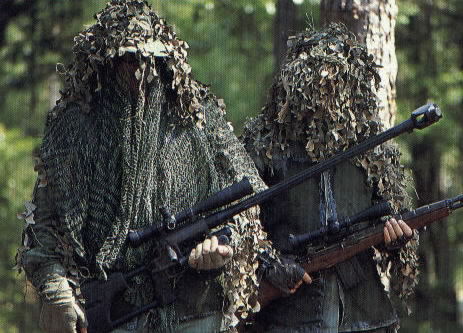
Determining range to the target and wind effect are the two principle problems confronting the sniper team, and the pair will expend considerable effort preparing to fir the first shot. The site will be well computed.
The spotter uses a compact little telescope to look downrange. Intead of the target the spotter watches the bullet. Then the spotter will tell the point of impact and let the firere know if he needs to make any corrections.