Granny's Cold War Scrap Book
A WebQuest for 7th Grade Social Studies
Designed by Cynthia Cassidy
Introduction
This lesson was developed as part of the Rutgers University online course, Integrating the Internet into the Curriculum Through WebQuests, taught by Shane Russell.
The purpose of this lesson is for students to understand how every day life was affected by the Cold War era. By researching the key events, people, news stories, technological advances, and trends of the era, students will begin to understand this period in history.
Learners
This webquest was designed for seventh grade social studies students, but incorporates language arts, science, and workplace readiness standards as well. The webquest could easily be extended to include music and art standards, and could be adapted for older or younger students.
Prior to beginning the webquest, students should be able to work in cooperative groups, and have a basic knowledge of American history through World War II.
Curriculum Standards
View New Jersey Core
Curriculum Content Standards at:
http://www.state.nj.us/njded/cccs/
Social Studies
Standard 6.3
-
All Students Will Acquire Historical Understanding Of Political And Diplomatic Ideas, Forces, And Institutions Throughout The History Of New Jersey, The United States, And The World.
Standard 6.5
- All Students Will Acquire Historical Understanding Of Varying Cultures Throughout The History Of New Jersey, The United States, And The World.
Language Arts Literacy
Standard 3.1
-
Reading: All students will understand and apply the knowledge of sounds, letters, and words in written English to become independent and fluent readers, and will read a variety of materials and texts with fluency and comprehension.
Standard 3.2
-
Writing: All students will write in clear, concise, organized language that varies in content and form for different audiences and purposes.
Standard 3.5
-
Viewing and media literacy: All students will access, view, evaluate, and respond to print, non-print, and electronic texts and resources.
Science
Standard 5.2
-
Science and society: All students will develop an understanding of how people of various cultures have contributed to the advancement of science and technology, and how major discoveries and events have advanced science and technology.
Cross-Content Workplace Readiness
Standard 2
- All students will use technology, information and other tools.
Standard 3
- All students will use critical thinking, decision-making, and problem-solving skills.
Standard 4
- All students will demonstrate self-management skills.
In addition to meeting these standards, this webquest promotes critical thinking as students analyze information and develop products related to historic events. The webquest also encourages teamwork and skills such as organization, reading comprehension, and creative problem-solving.
Process
There are four main steps to this webquest, requiring individual and group work. Students should be given at least five class periods to perform the four steps of the webquest. Students would also benefit from additional, individual time to work on specific steps, such as step three, the creation of the concept maps. The webquest, from start to finish, should span no longer than two school weeks. Remember, this is a quest that covers five decadses of history! To cut down on the time required, teachers could easily forego step one by providing a class lesson on the background of the Cold War.
Initially, students will need form groups of five students. Students will work within these groups to investigate the Cold War and create one decade of artifacts for Granny's Cold War scrapbook.
Step One:
Background Check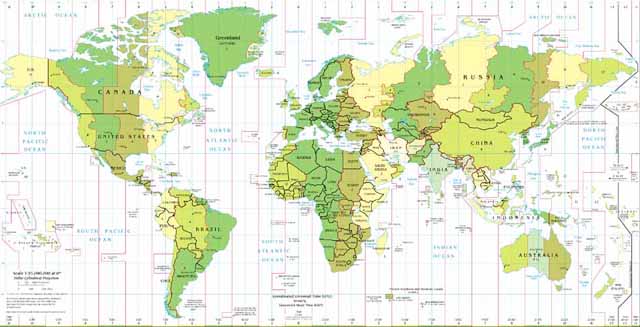
In this step, students work in a group to gather background knowledge on the Cold War era and the practice of scrapbooking.
The Cold War: Who What Where Why When
The result is a group timeline of at least 15 events critical to the Cold War era. Each event will include the 5 W's.
Once the timelines of each group are completed, students should meet as a class to discuss their findings and create a class timeline.
Scrapbooking 101
Providing students with access to historical scrapbooks will give them the background knowledge they need to create an authentic scrapbook from the Cold War era. Students will investigate a variety of historical scrapbooks to identify different types of content, themes, and organization.
Students will be evaluated on their completion of the KEY FEATURES CHART, comparing and contrasting the differences between the scrapbooks.
|
Step Two: The Era Take a Role
|
|


At this stage, each group in the class will be assigned a decade to study and within each group, each person will select a specialization:
Biographer - investigate the famous people of the decade.
Politician - consider the political climate, nationally and globally, of the decade.
Scientist - explore the advances in technology and science during the decade.
Journalist - analyze the hot topics and headlines of the decade.
Historian - study the daily life during the decade.
Once students select a specialty, they will use the RESOURCES to select at least eight topics to study that relate to their specialization. Students will then complete eight CONCEPT MAPS they complete and cite the information sources they use.
When students complete their individual work, they will meet with the members of their specialty from other groups to compare and contrast their work.
Students will be evaluated at this stage by their CONCEPT MAPS and CITATION information.
|
Step Three: The Artifacts Getting to Know Granny
|
|
Students will now apply the information they have gathered about key events to a specific person, Granny. By using the timeline of Granny's life the group members will determine which artifacts would have been included in Granny's scrapbook.
The group will now:
-
Share concept maps with one another
-
Determine the best five maps created by each group member
-
Determine an artifact for each of maps.
-
Determine who will make each of the 25 items to include in your scrapbook.
-
Fill out the organizational chart to help group members keep track of requirements.
|
Step Four: The Finished Product Scrap it Up
|
 |
In this final step, group members will compile the 25 items they have created into one volume of Granny's Cold War Scrapbook. Together they will select a method of organization and compile the items into a neat and organized book. Binding materials should be accessible.
Students will then share their work with other groups, and the work of all groups will be compiled to complete a comprehensive view of Granny's life throughout the decades of the Cold War ear.
Resources Needed
To effectively complete the project as it currently reads, the following items are needed:
- TimeLiner software, or an equivalent program
- Access to the Internet
- Scrapbooking materials (scissors, glue, paper, large paper, etc.)
- Access to print resources related to the Cold War era
- Access to United Streaming Video, or an equivalent program
In addition, the lesson requires at least one classroom teacher to implement the project. Team teaching with a media specialist or teacher/librarian would be ideal.
Evaluation
The final product of each group will be a 25 page scrapbook containing "primary" artifacts from a decade of history. When the work of all groups is compiled the result will be a scrapbook outlining the key topics of each decade in the Cold War era.
Students will be evaluated individually and as a group according to the accompanying rubrics:
| Individual Work |
Beginning 1 |
Developing 2 |
Accomplished 3 |
Exemplary 4 |
Score |
|---|---|---|---|---|---|
|
Factual / Historical Accuracy
|
Several pieces of historical information are inaccurate or not included. | More than three pieces of historical information are inaccurate. | All but a few pieces of historical information appear to be accurate. | All historical information
appears to be accurate.
|
|
| Historical
Relevance
|
More than two items included do not describe important trends or key events of the time period. | Two items included do not describe important trends or key events of the time period. | All but one item included describe important trends or key events of the time period. | All items included describe important trends or key events of the time period. | |
|
Perspective |
Few items included demonstrate Granny's perspective in the Cold War era. | All but two items included demonstrate Granny's perspective in the Cold War era. | All but one item included demonstrates Granny's perspective in the Cold War era. | All items included demonstrate Granny's perspective in the Cold War era. | |
|
Variety |
Items included are generally one or two types of artifacts. | Items included do not cover a variety of types of artifacts. | Items included cover a variety of types of artifacts, with only one or two duplicates. | Items included cover a wide variety of types of artifacts. | |
|
Spelling and Grammar
|
Many spelling and grammar errors are found in the final product. | More than three spelling or grammar errors are found in the final product. | No more than a couple of spelling or grammar errors are found in the final product. | No spelling or grammar errors are found in the final product. | |
|
Citations
|
Source citations are not included or pictures and information in source citations is incorrect and/or not in the assigned format. | Some of the pictures and information in the source citations is incorrect and/or not in the format assigned. | Most of the pictures and information in the source citations is correct and in the format assigned. | All pictures and information in all source citations is correct and in the format assigned. |
|
| Group Work |
Beginning 1 |
Developing 2 |
Accomplished 3 |
Exemplary 4 |
Score |
| Theme | Students failed to demonstrate a plan for organizing the scrapbook and did not create a unified final product. | Students attempted to demonstrate a plan for organizing the scrapbook and created a fairly unified final product. | Students demonstrated a plan for organizing the scrapbook to create a fairly unified final product. | Students worked together to demonstrate a well-thought out plan for organizing the scrapbook to create a unified final product. | |
| Creativity/
Attractiveness |
The arrangement on the pages, including the backgrounds, captions, and graphics, detract from the purpose of the album. | The arrangement on the pages, including the backgrounds, captions, and graphics, do not enhance purpose of the album. | The arrangement on the pages, including the backgrounds, captions, and graphics, positively contribute to the purpose of the album. | The arrangement on the pages, including the backgrounds, captions, and graphics, enhance the purpose of the album. | |
| Preparedness | Group was unable to accomplish all tasks by the required due date. | Group was able to accomplish all but two tasks by the required due date. | Group was able to accomplish all but one task by the required due date. | Group was able to accomplish all tasks by the required due date. | |
| Cooperation | Group members did not work together to delegate responsibility, accomplish tasks, and meet goals. | Group members rarely worked together to delegate responsibility, accomplish tasks, and meet goals. | Group members usually worked together to delegate responsibility, accomplish tasks, and meet goals. | Group members worked together to delegate responsibility, accomplish tasks, and meet goals on a daily basis. |
Conclusion
By participating in this webquest, students will gain an understanding of the key events, people, news stories, technological advances, and trends of the era, as they relate to the life of an individual living during the Cold War era. Students will also develop cooperative learning skills, as they use their creativity to work together to create the artifacts from one decade of Granny's scrapbook.
Credits & References
The design template, as well as many of the organizational ideas came from The WebQuest Page and the Design Patterns page.
The images incorporated in this webquest came from the website www.pics4learning.com or were original. Several of the worksheets attached to this webquest came from the website www.Teach-nology.com.
Ideas, resources, and inspiration were provided by a variety of friends and colleagues, including the members and instructor of the course: Shane Russell, Mary Ann Mazza, Teresita Doebley, and David Fama.
We all benefit by being generous with our work. Permission is hereby granted for other educators to copy this WebQuest, update or otherwise modify it, and post it elsewhere provided that the original author's name is retained along with a link back to the original URL of this WebQuest. On the line after the original author's name, you may add Modified by (your name) on (date). If you do modify it, please let me know and provide the new URL.
Last updated on April 14, 2004. Based on a template from The WebQuest Page