

During the same year, a group of young Islamic revolutionaries seized the U.S. embassy in Tehran. They took more than 60 hostage. They also demanded the return of the shah to face trial. Most of the U.S. hostages remained prisoners for 444 days before they were released on January 20, 1981.
Khomeini had also encouraged Muslim fundamentalists, or strict believers, in other countries to overthrow their secular governments. Intended to be a means of unifying Muslims, this policy heightened tentions between Iran & its neighbor, Iraq. While the Iranians were Shi'a, the Iraqis belonged to the rival Sunni Muslim sect. In addition, a military leader, Saddam Hussein, governed Iraq as a secular state.
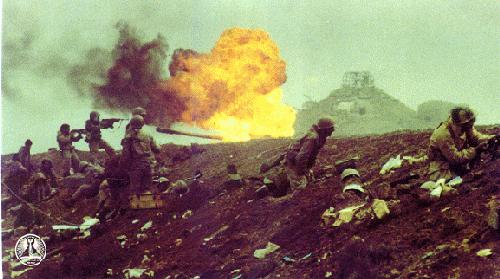
War broke out between the two countries in 1980. Muslim killed Muslim in a territorial struggle. Caught in the middle, the U.S. secretly sold weapons to Iran in an effort to get their hostages released. A million Iranians and Iraqis died before a UN ceasefire ended the hostilities in 1988.