


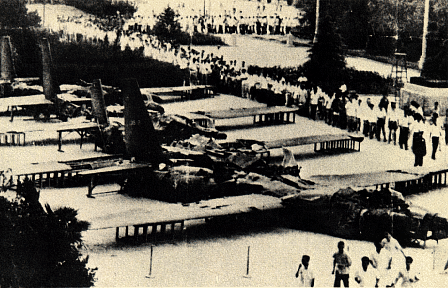
In May 1960, the Soviets shot down a U-2 plane, and its pilot, Francis Gary Powers, was captured. The U-2 incident brought mistrust and tensions between the superpowers to a new height.After serving one year, nine months, and nine days of his sentence, the U.S. and the Soviet Union reached an agreement concerning the return of Powers. On the "Bridge of Unity" between East Germany & West Berlin, on Feb. 10, 1962, the Soviet Union finally returned Powers to the U.S. The Soviet Union agreed to his return because the U.S. consented to release a Soviet spy named Colonel Rudolph Ivanovich Abel.
The responses of the Soviet Union and the U.S. to the U-2 incident serve as classic examples of actions that strained relations during the Cold War. Relations declined until the Cuban Missile Crisis several years later where they reached their lowest point.