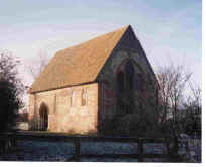
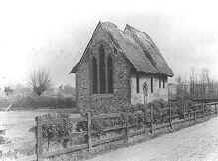
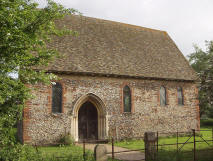
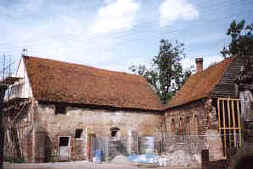
There is little to see of Coggeshall's abbey save the gate-house chapel (more of which follows) but a walk along the footpath which runs through the farmyard provides the visitor with a chance to see the 16th Century farmhouse and the remaining portions of the abbey outbuildings. No visible trace remains of the once great church of St. Mary which belonged to the Cistercian order who worshipped and farmed the land at this site on the banks of the River Blackwater from the 12th Century until the Dissolution of the monasteries in the time of Henry VIII. The farm and the remaining abbey buildings are in private ownership.
|
Restoration of the Abbot's lodging & Guest House |
Following the Dissolution the chapel was used as a barn/cowshed and fell into serious disrepair, but in the late 1800s the chapel was restored and tiles replaced the thatched roof. A curate was appointed and St. Nicholas was used for services for the parishioners of Little Coggeshall.
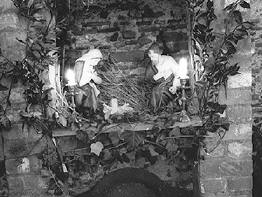 |
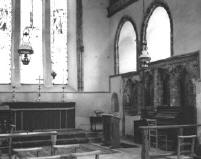
The Christmas crib in St Nicholas' chapel in 1940 when the parish church of St Peter was unsafe for use. |
When St. Peter's church was hit by a bomb and badly damaged, the tiny chapel served the spiritual needs of all the inhabitants for some time and to this day, monthly services are held in this ancient place of worship. Unfortunately, St. Nicholas' chapel is kept locked , but arrangements can be made with the vicar for visitors to be admitted to the chapel.