|
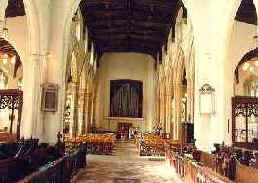
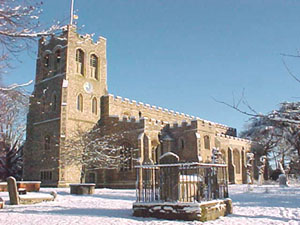
The church of St. Peter-ad-Vincula stands at the top of Church Street on the site of at least one, and possibly two, earlier churches (Saxon and Norman). It is one of the largest in Essex (only Saffron Walden and Thaxted are bigger) as well as being one of the finest examples of the Perpendicular style of architecture in the county. It shares with the chapel in the Tower of London the rare dedication to St Peter-ad-Vincula (St Peter in Chains) and was built in the 15th Century, a prosperous time in Coggeshall's history, with the wealthy wool merchants pouring vast sums of money into the building of the church.
|
 |
|||||||
|
||||||||
|
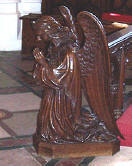
Restoration work was undertaken in the mid-19th century and much of the beautiful carving dates from that time and was the work of local woodcarvers, who were famed throughout Essex and beyond for their craftsmanship. In 1940 the church was bombed and photographs of the resulting devastation can be seen on this site and in Coggeshall's museum. The church you see today has been rebuilt using as much of the original material as possible, and now, half a century on, it is difficult distinguish between the 15th and the 20th century work - a tribute to the skill and dedication of the craftsmen who restored St Peters to former glory.
|
||||||||
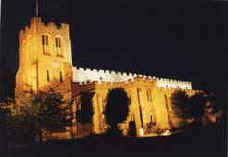 |
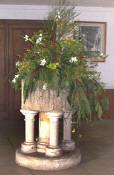
The church has fine acoustics and is a venue for choral works and concerts. The recent addition of an extension which contains meeting rooms, a kitchen and all the usual facilities ensure that the building is used to its full potential. The new building is attached to the north side of the church and is in the style of the rest of the church. The church looks wonderful when it is flood lit for special festivals and occasions. A Flower Festival is held on each August Bank holiday which attracts thousands of visitors.
|
|||||||
|
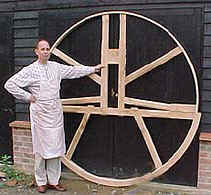
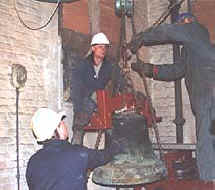
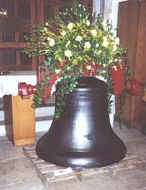
The millennium saw the addition of two new bells to the peal of eight and they are now considered to be one of the best in the country. The new bell wheels were made by Andrew Beckwith and the one for the tenor bell, which weighed over 1.25 tons, was over 7feet in diameter. The task of taking down and re-hanging the bells was undertaken by the ringers themselves. On many weekends visiting teams of bell-ringers are in Coggeshall to ring St Peter's ten bells and a bell-ringing school is held at the church to teach and encourage new ringers. Anyone interested in learning the art of bell-ringing or in bell-ringing in general should contact the Tower Captain, Brian Meeds, Tel. no. 01376 562892. |
||||||||