|
Return to previous page. 1. Equal Poisson ratio 2. Poisson ratio of nanoparticle greater than matrix 3. Poisson ratio of matrix greater than nanoparticle |
These are examples for combinations of nanoparticle and matrix materials: |
| Ag (Silver) |
|
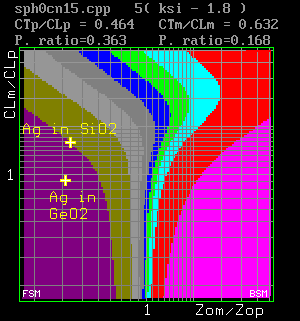
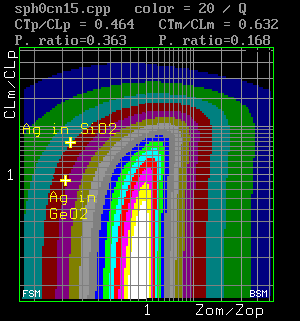
Figure 4(a) sph0cn15.cpp md54sq.gif md54sk.gif The Poisson ratios correspond to a Ag nanoparticle in SiO2 and also GeO2. The actual relative parameters of Ag in SiO2 and Ag in GeO2 are plotted as crosses. (The Poisson ratio of GeO2 is 0.18, while the Poisson ratio of SiO2 is 0.17) |
![]() |
![]() |
|
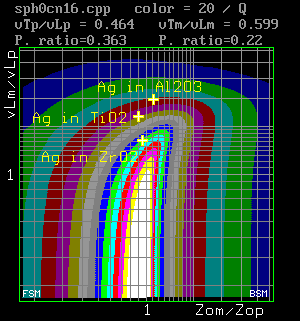
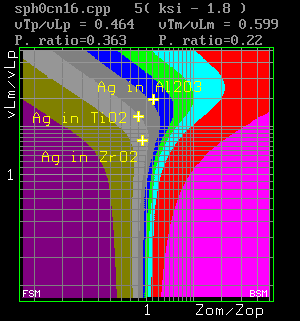
Figure 4(b) sph0cn16.cpp md54aq.gif md54ak.gif The Poisson ratios correspond to an Ag nanoparticle in Al2O3, TiO2 and ZrO2. The actual relative parameters of Ag in the matrices are shown as a cross. |
![]() |
![]() |
|
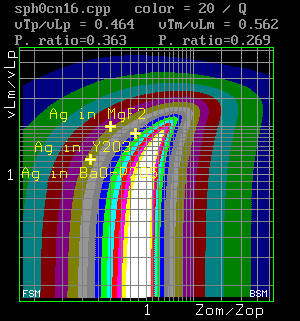
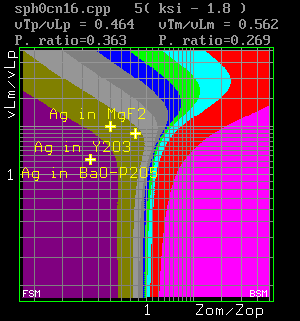
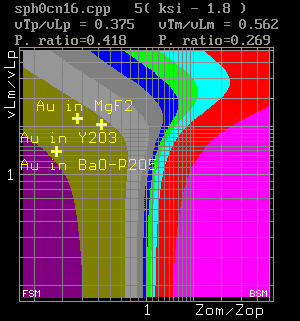
Figure 4(c) sph0cn16.cpp md54eq.gif md54ek.gif The Poisson ratios correspond to an Ag nanoparticle in BaO-P2O5, Y2O3 and MgF2. The actual relative parameters of Ag and the matrices are plotted as plus symbols. |
![]() |
![]() |
| Au (Gold) |
|
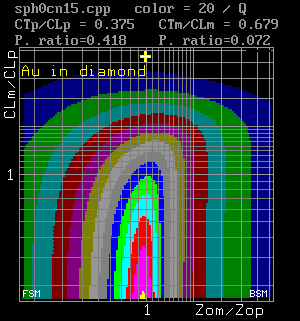
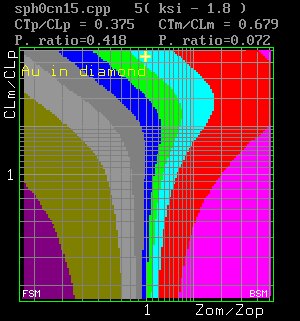
Figure 4(d) sph0cn15.cpp md54fq.gif md54fk.gif The Poisson ratios correspond to an Au nanoparticle in diamond. The actual relative parameters of Au and diamond are plotted as a white symbol. At right, note the continuous transition of ξ from FSM to BSM. |
![]() |
![]() |
|
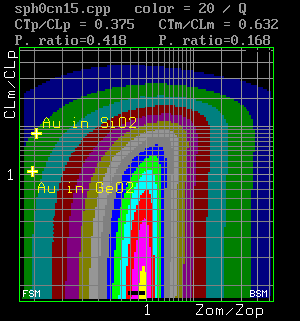
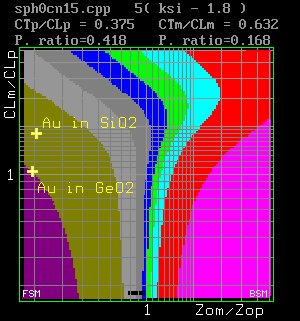
Figure 4(e) sph0cn15.cpp md54vq.gif md54vk.gif The Poisson ratios correspond to an Au nanoparticle in SiO2 and GeO2. The actual relative parameters of Au and the matrices are plotted as plus symbols. |
![]() |
![]() |
|
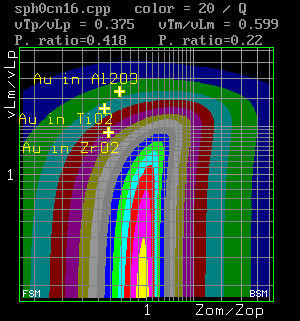
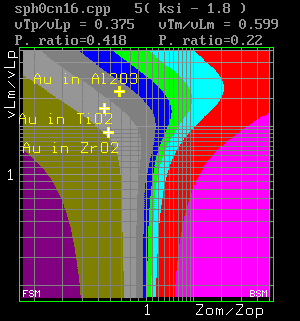
Figure 4(f) sph0cn16.cpp md54cq.gif md54ck.gif The Poisson ratios correspond to an Au nanoparticle in TiO2, Al2O3 and ZrO2. The actual relative parameters of Au and the matrices are plotted as plus symbols. |
![]() |
![]() |
|
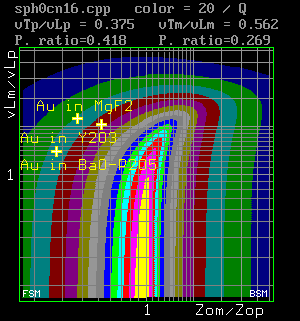
Figure 4(g) sph0cn15.cpp md54wq.gif md54wk.gif The Poisson ratios correspond to an Au nanoparticle in BaO-P2O5, Y2O3 and MgF2. The actual relative parameters of Au and the matrix is plotted as a plus symbol. |
![]() |
![]() |
| Silicon |
|
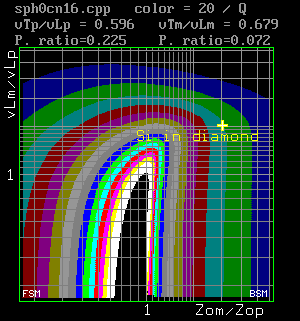
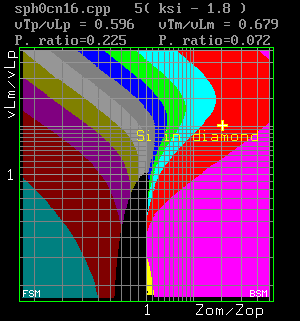
Figure 4(h) sph0cn16.cpp md54dq.gif md54dk.gif The Poisson ratios correspond to an Si nanoparticle in diamond. |
![]() |
![]() |
|
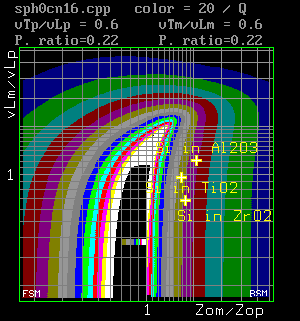
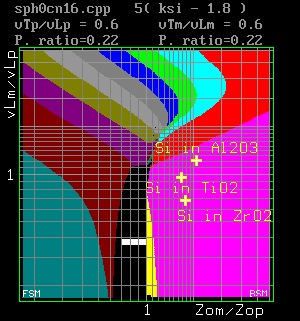
Figure 4(i) sph0cn16.cpp md54bq.gif md54bk.gif The Poisson ratios correspond to an Si nanoparticle in TiO2, Al2O3 and ZrO2, all of which have nearly the same Poisson ratio. |
![]() |
![]() |
|
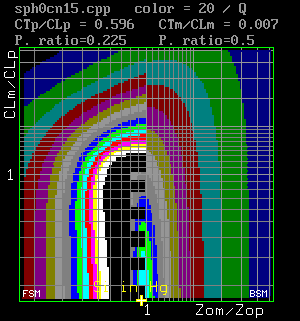
Figure 4(j) sph0cn15.cpp md54iq.gif md54ik.gif The Poisson ratios correspond to an Si nanoparticle in Hg. The actual relative parameters of Si-in-Hg is plotted as a plus symbol. |
![]() |
![]() |
|
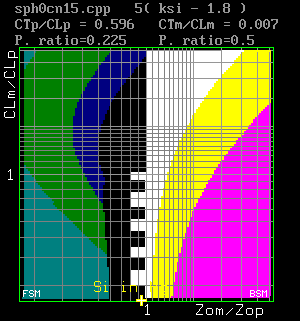
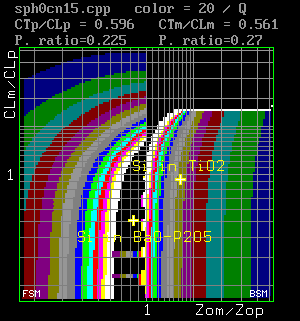
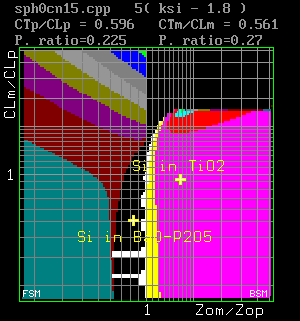
Figure 4(k) sph0cn15.cpp md54xq.gif md54xk.gif The Poisson ratios correspond to an Si nanoparticle in BaO-P2O5. This is a special situation since the Poisson ratio of Si is lower than that of the matrix. ( Ignore the TiO2 data point ) |
![]() |
![]() |
|
Figure 4(l) sph0cn10.cpp md54gw.gif md54gf.gif The Poisson ratios correspond to a CdS or CdSe nanoparticle in TiO2 or BaO-P2O5. The actual relative parameters are plotted as white symbol. |
![]() |
![]() |
|
Figure 4(m) sph0cn12.cpp md54kw.gif md54kf.gif The Poisson ratios correspond to an Si nanoparticle in SiO2. The actual relative parameters of and Si in SiO2 is plotted as a cross. |
![]() |
![]() |