|
|
|
|
|
|
|
|
|
|
|
|
|
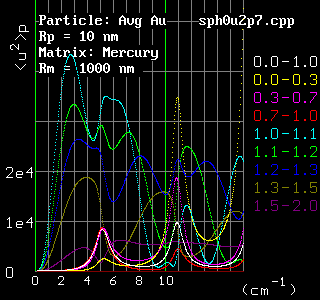
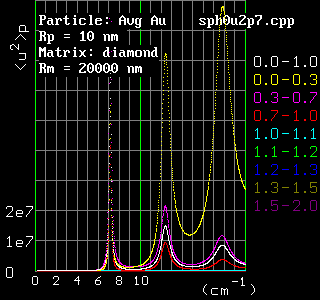
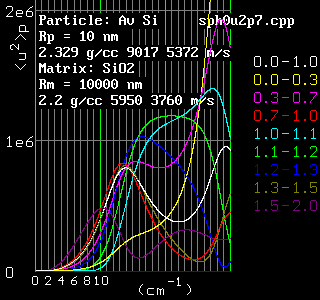
Fig. 1203(a) The yellow curve is < u2 >p The "area under the curve" for a pseudomode is supposed to be Mp+m / Mp . See equation (B2) in the core-shell paper. Purple tickmarks simply denote peak locations. The actual sum of < u2 >p values (blue and red parts together) under the first peak is 0.892 Mp+m/Mp | 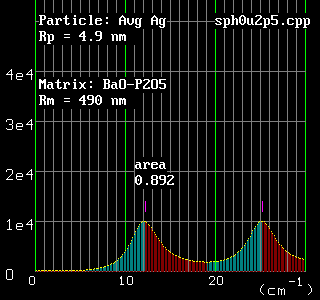 |
|
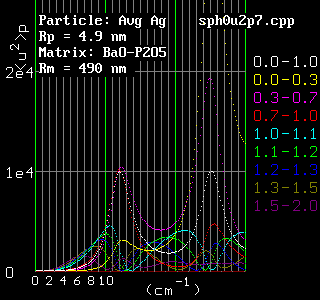
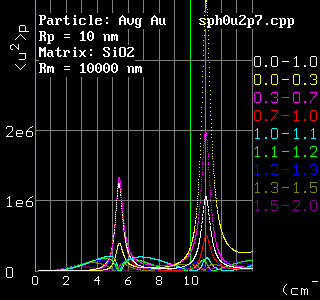
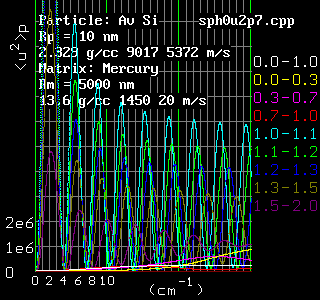
Fig. 1203(b) The yellow curve is < u2 >p The "area under the curve" for a pseudomode is supposed to be Mp+m / Mp . See equation (B2) in the core-shell paper. Purple tickmarks simply denote peak locations. The actual sum of < u2 >p values (blue and red parts together) under the first peak is 1.061 Mp+m/Mp | 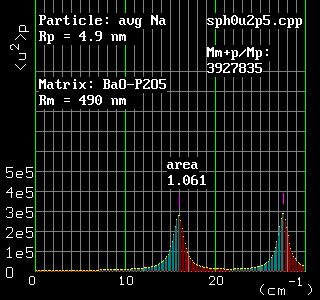 |
|
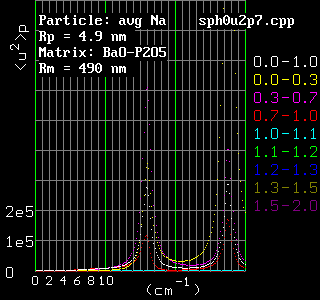
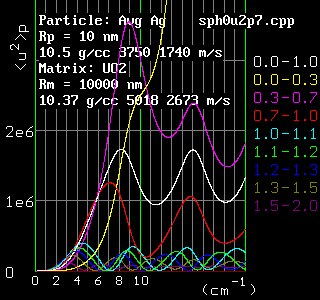
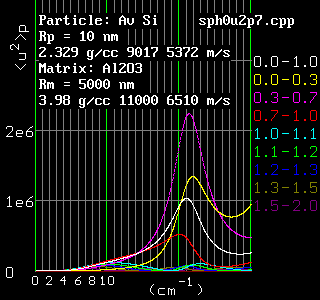
Fig. 1203(c) The yellow curve is < u2 >p The "area under the curve" for a pseudomode is supposed to be Mp+m / Mp . See equation (B2) in the core-shell paper. Purple tickmarks simply denote peak locations. The actual sum of < u2 >p values (blue and red parts together) under the first peak is 0.847 Mp+m/Mp | 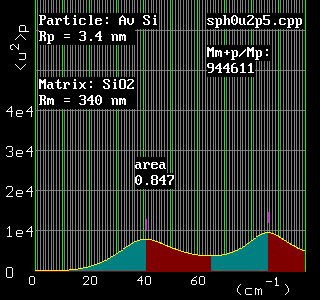 |
|
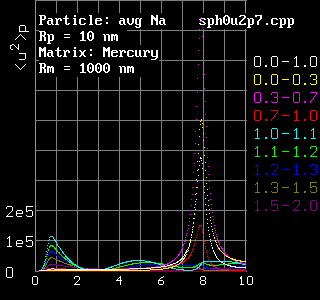
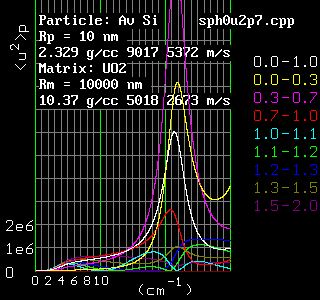
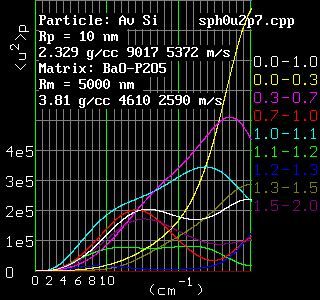
Fig. 1203(d) The yellow curve is < u2 >p The "area under the curve" for a pseudomode is supposed to be Mp+m / Mp . See equation (B2) in the core-shell paper. Purple tickmarks simply denote peak locations. The actual sum of < u2 >p values (blue and red parts together) under the second peak is 1.038 Mp+m/Mp | 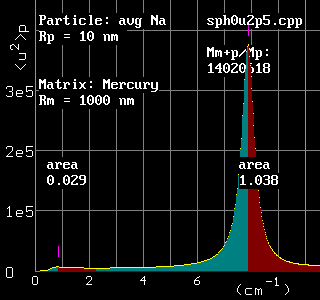 |
|
Fig. 1203(e) The yellow curve is < u2 >p The "area under the curve" for a pseudomode is supposed to be Mp+m / Mp . See equation (B2) in the core-shell paper. | 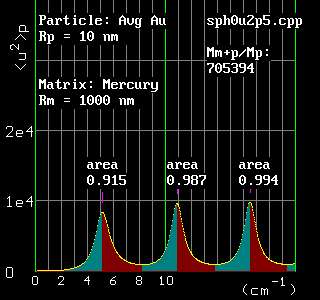 |
|
Fig. 1203(f) The yellow curve is < u2 >p The "area under the curve" for a pseudomode is supposed to be Mp+m / Mp . See equation (B2) in the core-shell paper. This matches Figure 1 in the "audi" paper. sph0u2p6.cpp - THz scale | 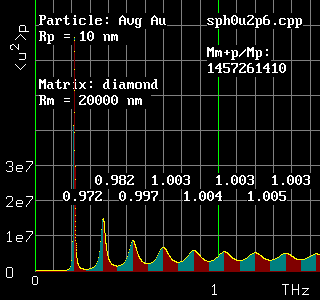 |
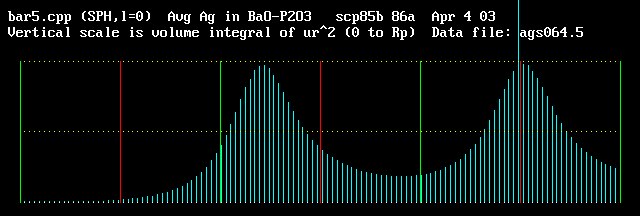
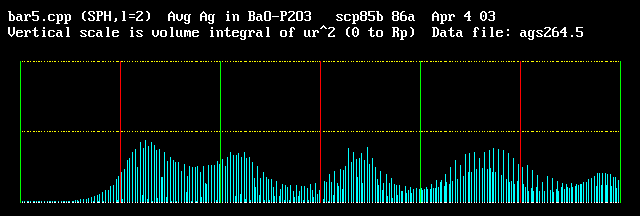
| Whether the outer matrix surface has free or fixed boundary conditions hardly affects the frequency dependence of amplitudes inside the nanoparticle. This serves as a test of the macroscopic limit of matrix size being reached. |
| (SPH,l=0) | |
| Free surface | 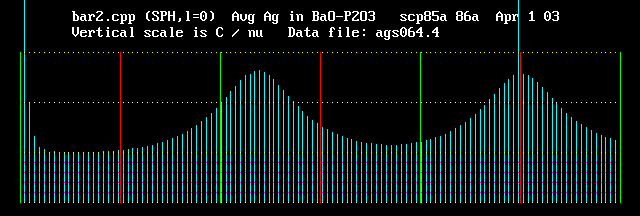 |
| Fixed outer surface | 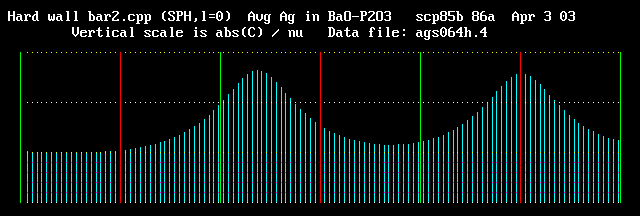 |
| (TOR,l=1) | |
| Free surface | 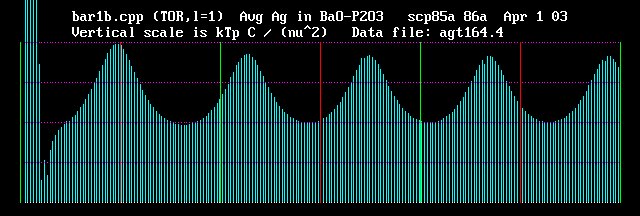 |
| Fixed outer surface | 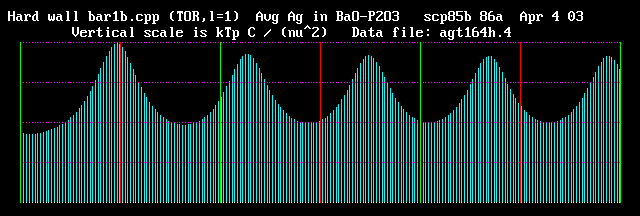 |
| (SPH,l=2) - longitudinal part | |
| Free surface ags264.4 ags264e.gif | 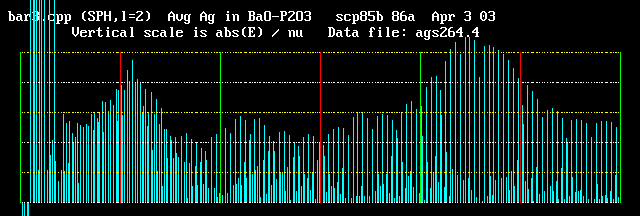 |
| Fixed outer surface ags264h.4 ags264he.gif | 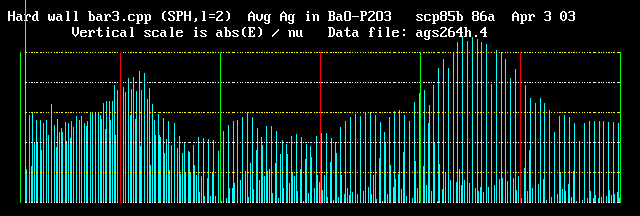 |
| (SPH,l=2) - transverse part | |
| Free surface ags264.4 ags264.gif | 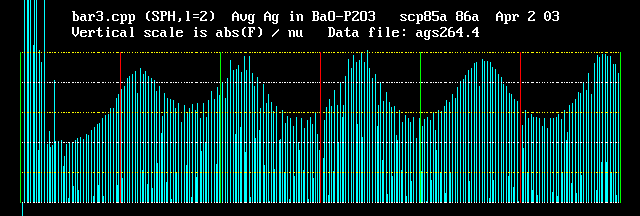 |
| Fixed outer surface ags264h.4 ags264h.gif | 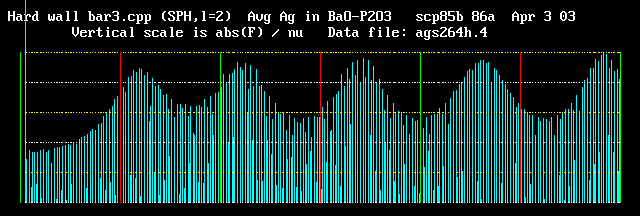 |