

Tailwheel Flying
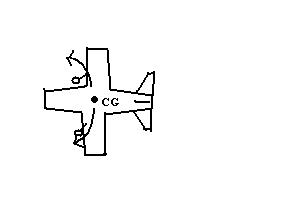
Tailwheel, or conventional gear, takes quite a bit of practice to master. In order to understand the forces associated with this style of landing gear, you must first understand Center of Gravity and Arm. Center of Gravity or CG is the balancing point of the aircrat. Basically if you balanced an airplane using the tips of your fingers on the wings, it would be the point where your fingertips are.
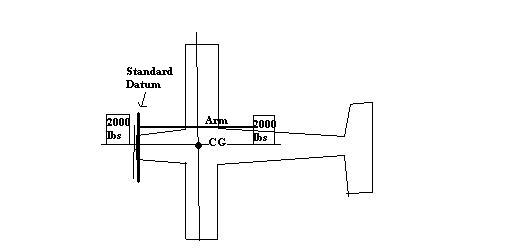
Standard Datum is the point on the aircraft specified by the manufacturer (in our case we can use the firewall) where all points are measured from.
Arm is the distance from the standard datum to the position where the weight is being measured (I.E the pilot seat, the distance to the landing gear). The longer the distance of the arm is, the further back the object being measured is.
Since the Center of Gravity behind the main gear, the aircraft is liable to spin around on itself (called a groundloop). You notice the tail might try and spin around to the front and you break your gear, or end up driveing backwards. The further the arm of the CG the more susceptable to groundlooping. In order to prevent the rotation, you must catch it quickly and counter the groundloop. Use rudder and if needed differential brakes to maintain a straight path over the ground.
Taxiing
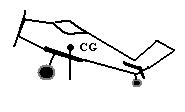
You want to get to the re-arm pad, but everytime you try to turn, you break your gear. First off, Taxi SLOW. If you are in a rush, tower out. Use differential brakes and moderate power and here's the rule.. Hold your stick back to maintain a straight course (it keeps the tail on the ground) and put it at neutral when trying to make a sharp turn. Be careful not to pop up and bust your prop. Heavy braking can cause flipping.
Takeoff
Takeoff is normally easy. Hold the stick back, add full power, and use rudder to maintain a straight course. After about 3 to 5 seconds let the stick come forward and level the aircraft. Then let it take off, don't yank it off before she's ready to fly. That can cuase a deadly stall or spin. Then Gear up!
On a carrier you will want to use at least 1 notch of flaps. The more weight, the more flaps. Then when your off the deck, gear up and flaps up to 1 notch. Do not bring them all up at once, or you will lose a substantial amount of lift and go down to visit Ol' Davey Jones.
*Note: When you add power in a tailwheel airplane, the prop wash over your tail can give you immediate elevator and rudder control.
Landing
Landing is the trickiest part of tailwheel flying. Luckyily for us in AH2, there is never any wind to worry about, so you usually are landing straight ahead with no additional horizontal forces. You want to make sure your nose is aligned with your flightpath (you are flying straight, not crooked). That way the CG can't swing around on you because it is aligned with your flightpath.