

Aerodynamics 102
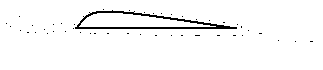
Let's start with some definitions. Relative wind is the airflow relative to an airfoil (wing). Chord line is the line that flows from the trailing edge to the leading edge of a wing. The Angle of attack is the angle between the chord line and the relative wind. Most aircraft stall at 16-18� AOA. To increase angle of attack, you pull back on the stick. The faster you pull back, the more the angle of attack and the faster you go up. When you increase angle of attack you increase lift and induced drag. If you want to maintain airspeed you will want to pull slowly and have a small angle of attack, producing less lift.

G Force is the force of gravity. As you increase AOA, you increase g forces. The faster you pull, the more g's. If you push the stick forward, you decrease the angle of attack and start pulling .99g and less... even to numbers like -6g's. 0g is weightlessness. No gravity, no lift, no stall. To break a stall quickly, snap the stick foreward really quick and pull back slowly. Awesome, eh?
Engine Forces
An engine creates four types of forces on your aircraft. You feel them everytime you are rolling down the runway. They are called P-Factor, Torque, Gyroscopic Presession, and Spiraling Slipstream. All four of these forces cause your plane to yaw or roll left or right.
P-factor is basically the force created by the right side of the propeller being greater than the force being created on the left side of the propeller at a high angle of attack. The higher the angle of attack, the higher the force that the right side of the propeller creates. In a negative angle of attack, the left side of the propeller is creating more force than the right side, therefore the aircraft will want to yaw left.Kepp this in mind when you are aiming and you have to change your angle of attack. The nose will swing left or right, depending on the elevator inputs. You will have to apply opposite rudder to couter the movement.
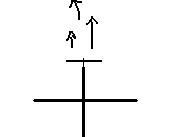
Torque is, by definition, the moment of a force; the measure of a force's tendency to produce torsion and rotation about an axis, equal to the vector product of the radius vector from the axis of rotation to the point of application of the force and the force vector. Basically, that means that if your propeller is spinning, whatever the prop is connected to will want to spin the opposite way. And even simpler; Newton's Third law, to every action, there's an equal and opposite reaction. The torque of the propeller spinning right cuases the aircraft to roll to the left. Some foreign aircraft props spin counter-clockwise and the aircraft will roll to the right.
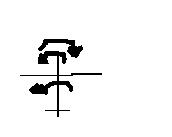
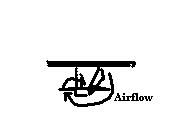
Slipstream is the air being forced behind by the propeller. As it moves over your aircraft, it spirals in the same motion as the propeller and travels around the body of the aircraft. It will hit the tail from the left and push it right (or the left in certain aircraft). You can usually feel it most while on the ground with full power (takeoff) because the ground is blocking the air from moving down away from your aircraft.
To counter these forces you need to apply rudder. To practice flying coordinated, climb straight out and see if you can maintain your heading. There is a small tube with a ball in it in your cockpit. That is the turn coordinater ball. The goal is to keep the ball in the center of the two lines. That means your aircraft is flying straight through the air. If the ball is off to to right, your nose is to the left of your actual flight path. You need to apply right rudder (STEP ON THE BALL) to put the ball back in the center.
Keeping your aircraft coordinated will keep the aircraft from flying sideways, which creates a lot of drag and slows your aircraft down. Want to stay fast? Stay coordinated.