 |
|
|
|
|
|
|
|
|
|
|
Our roof recipe |
|
|
|
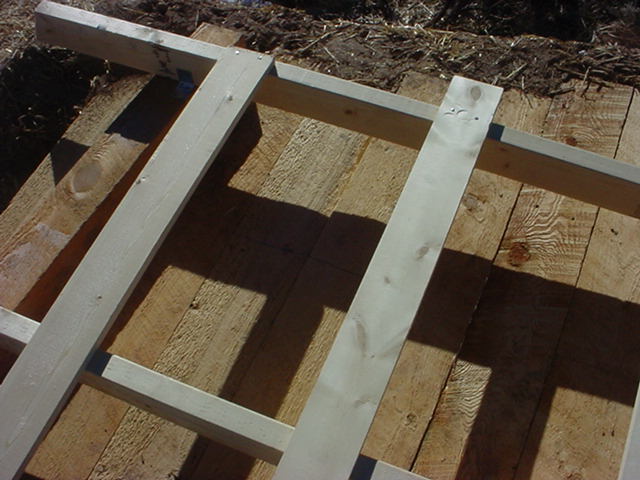
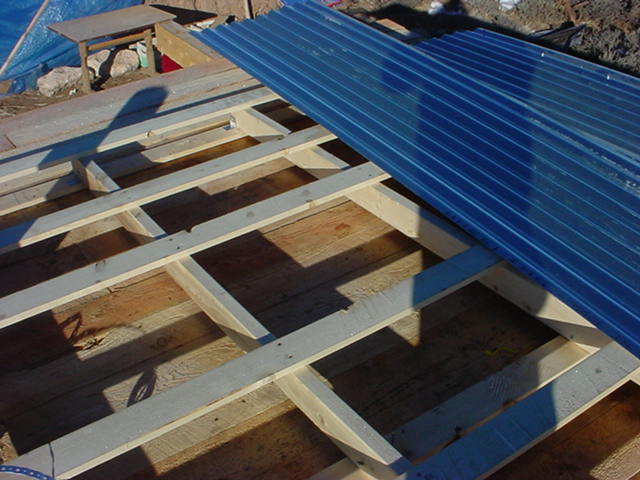
We did not want to invest too much resources into our roof as we intend to remove it in spring and build a loft over our studio. We made sure our roof was constructed to withstand heavy snowloads and heavy winds, however it was constructed to be easily taken off and recycled. We used leftover beams to support our rafters. We used 2x4 rafters but supported them mid span to limit a free span of not more than six feet. The rafters were spaced two feet on center. 1x4 purlins were nailed to rafters 16 inches on center. The corrugated steel panels was screwed to the purlins using easily removable "pro-panel" screws. To deal with the protruding stovepipe, we positioned and cut a 6 1/2 inch hole directly in the steel panel and later installed a 6 inch steel storm guard over the pipe/roof connection. To complete roofing, we will extend cob wall about a foot above roofline to create a "parapet". We also need to extend roofing to cover overhang above our door as well as adding a gutter to catch precipitation. |
|
|
|
 |
|
 |
|
|
|
1x4 purlins were nailed to 2x4 rafters. |
|
Positioning panels in place to prepare installation with "pro-panel" screws. |
|
|
|
|
|
 |
|
|
|
 |
|
|
|
|
|
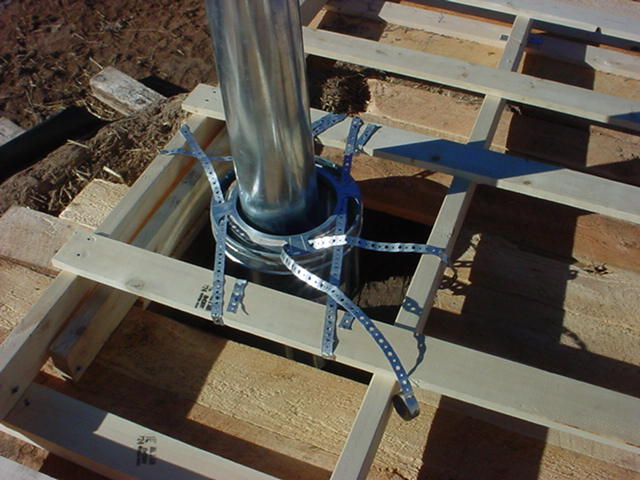
Stovepipe located between rafters. Heat sheild temporarily supported by metal strapping. |
|
|
|
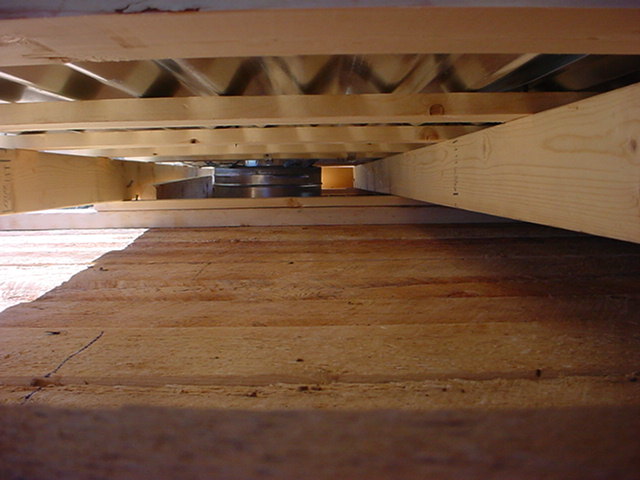
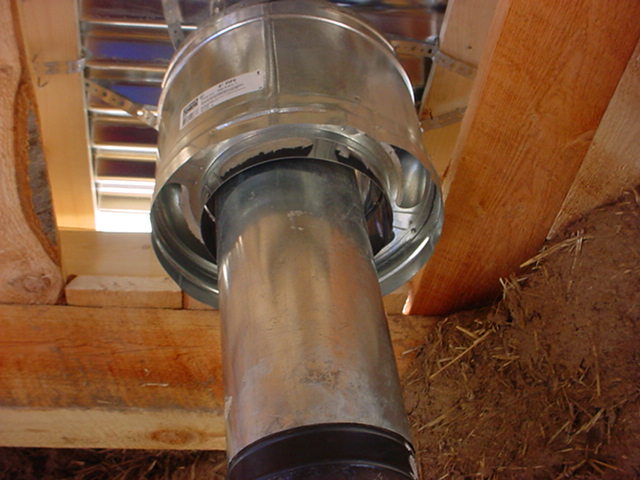
View of stovepipe heat sheild between steel roofing and ceiling boards. All exposed combustible materials will be lined with 10 gauge flame-proof steel for addition protection. |
|
|
|
|
|
 |
|
|
|
 |
|
|
|
|
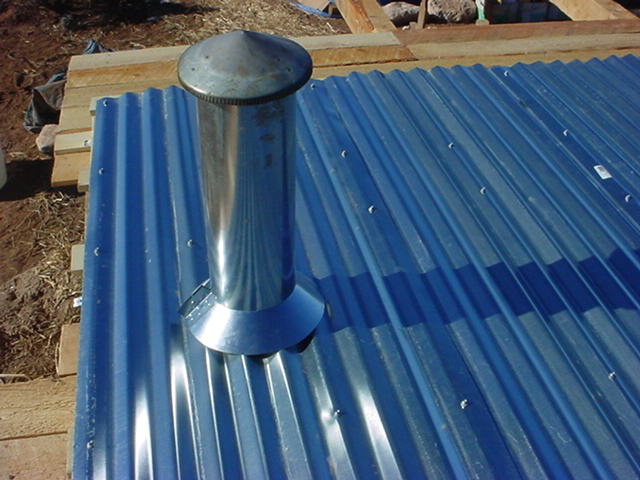
Stovepipe fits through a hole cut in steel roofing panel. A stormguard was used to weatherproof gap between roofing and pipe. |
|
|
|
|
|
|
View of heat shield from inside studio. |
|
|
|
 |
|
 |
|
|
|
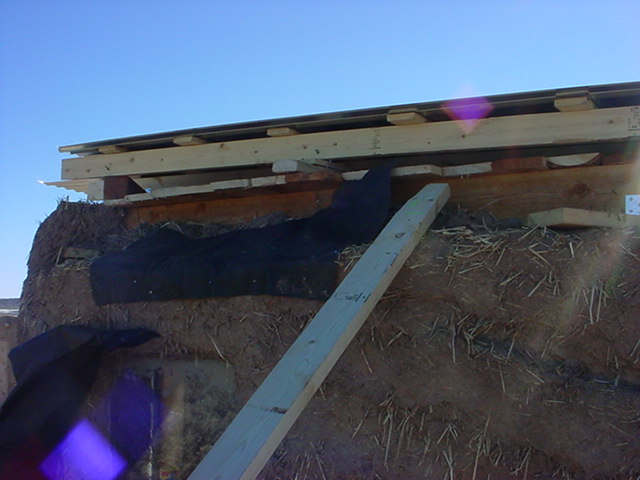
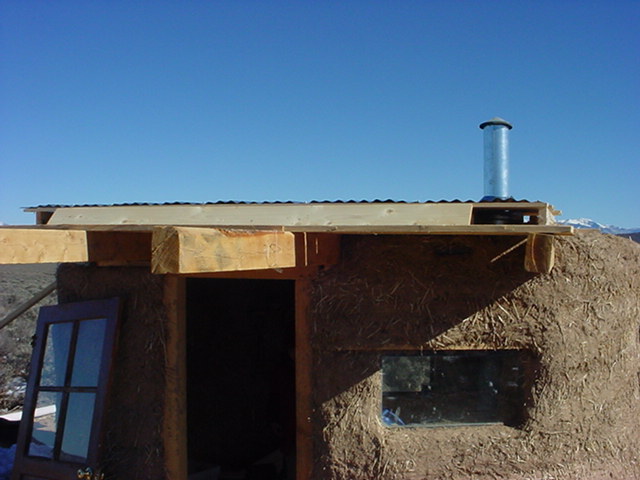
View of roofline. We will extend the cob wall up to about a foot above roofing. This will create a parapet to conceal steel roofing. |
|
An additional 2 feet of roofing material will be added to extend roof to overhang. |
|
|
|