Knots
Blood Knot
A very popular and reliable knot for joining lines of similar breaking strains.
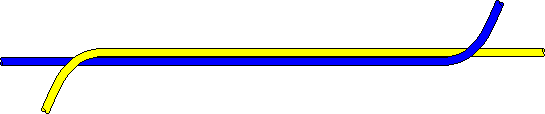
Lay the 2 lines side by side.

Gripping a loose end twist both lines together.
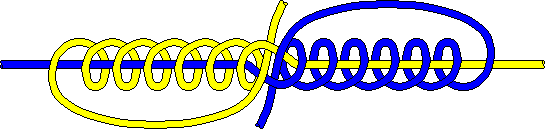
Pass the free ends through the center twist in opposite directions.

Wet the knot (as with all monofilament knots), pull tight and trim as shown above.
Double Overhand Loop
Used to form loops of all sizes.
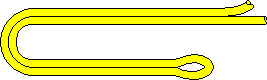
Double up the line and then form a loop.
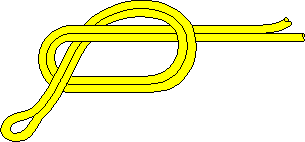
Pass the end through the loop to form a knot.
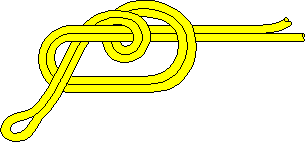
Pass the end through the loop again, forming a double knot.

Wet the knot (as with all monofilament knots) and pull tight forming a small loop about 3/4 of an inch long. Trim off the excess line.
Half Blood Knot
One of the easiest and most popular knots for attaching monofilament line to eyed hooks and swivels.

Thread the line through the eye.

Wrap the loose end at least six times around the line.
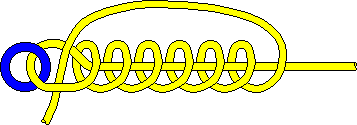
Pass the end through the loop closest to the eye.

Wet, pull tight and trim.
Loop to Loop
A very useful knot for tying hook lengths to main line as the two can easily be separated again to allow a quick change.

Tie a double overhand loop into both of the lines to be joined.

Pass one loop through the other.
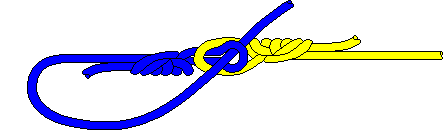
Thread the end of the shorter line (or hook end of a hook length) through the inner loop.

Pull this line all the way through the loop, feeding the double overhand knot through as well. Arrange the knot as shown above and pull tight. To undo this knot simply grip the loops and push them together and unthread the hook length.
Palomar Knot
The Palomar Knot is a very popular, strong, quick and easy knot for attaching large eyed hooks and swivels to braid or heavy monofilament line.
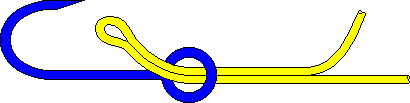
Begin by forming a loop and passing it through the eye.
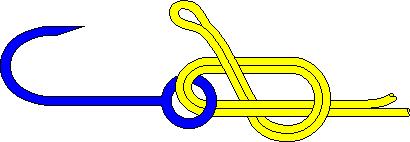
Form a knot as shown above with the looped end of the line.
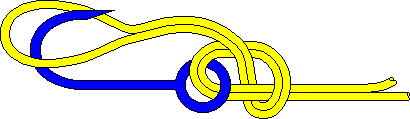
Now open up the loop a little and pass the hook or swivel through the loop.
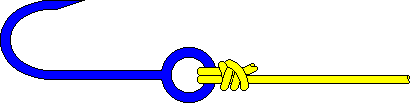
Wet the knot and pull tight, trimming off the excess line.
Spade End Knot
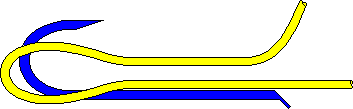
Lay a loop of line over the bend of the hook. Grip the loop together with the bend between your forefinger and thumb.
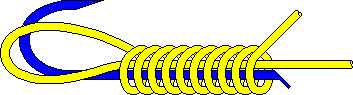
This is the tricky part - wrap the short end ten times around the line and hook shank. This can be wrapped either from the spade down to the bend or, as shown above, from the bend to the spade. The second is probably the easiest to master.
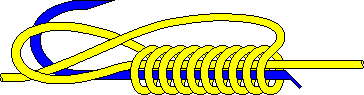
Swapping your grip to reveal the loop and bend, pass the free end of line through the loop.
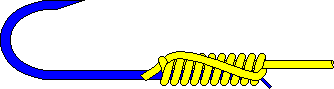
Pull the main line and free end equally to tighten the knot. Wet the line and dress the knot before final tightening. It is essential to ensure the line comes from the inside of the hook over the front of the spade. Trim off the loose end.
Stop Knot
The knot to use for tying sliding stop knots with either monofilament or power gum.

Lay a loop of line over the main line and hold it between your thumb and forefinger.

Wind six turns around both lines.
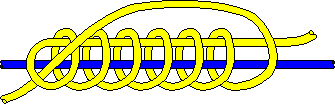
Thread the end through the loop.
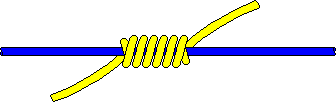
Pull tight and trim, leaving 2 inches of line after the knot.
Water Knot
The standard knot for tying fixed paternoster leger rigs, it is also good for connecting two dissimilar lines together.
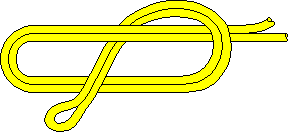
Double about 2 feet of line, form a loop and pass the doubled end through it.
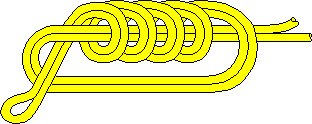
Continue passing the end through the loop, 4 times in total.

Wet the knot and pull tight so a loop of about 1 foot is created and trim the loose end.
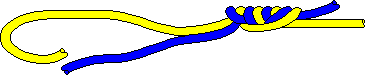
Cut the loop off center so that further knots on the ends do not foul each other.
Note :- If you are joining to separate lines together then this loop shortcut method of tying is not usable. In such a case the 2 lines are laid side by side (as opposed to simply looping the line) and the above steps performed. There will be no loop to cut at the end as two separate lines have been used throughout.
This page was created by Michael Donnelly