| The Great Depression |
 |
 |
 |
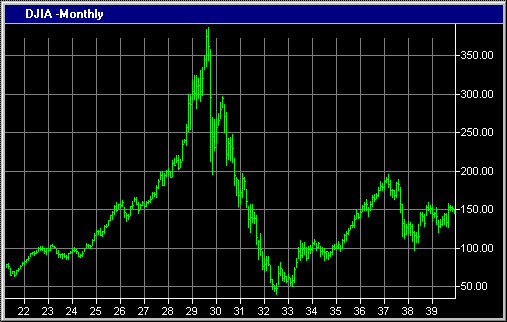
| Thursday, October 24th, 1929 |
| PRICES OF STOCKS CRASH IN HEAVY LIQUIDATION, TOTAL DROP OF BILLIONS |
| 2,600,000 SHARES SOLD IN THE FINAL HOUR IN RECORD DECLINE |
| MANY ACCOUNTS WIPED OUT |
| Reasons Behind the Stock Market Crash of 1929: |
| How did the Government Respond? |
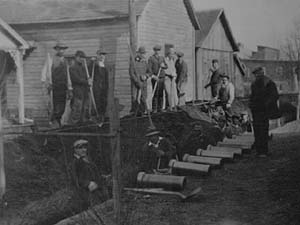 |
| Public Works Administration (PWA) |
| Buying on Margin |
| Investors would borrow money from banks to purchase stocks. They would pay as little as 5% down and borrow the rest. If the investor could not repay the loan, the stock-broker became the owner of the stock. The problem was that when stock prices began to fall, brokers called in their margins (outstanding loan balances). People were unable to pay their loans back, and therefore they defaulted on the loans. Early in the fall of 1929, investors began selling off their stocks because they were worried that their loans would be called in. This sent the whole stock market into a nosedive. When people defaulted on their loans, the banks essentially lost the money they had loaned to investors---money that belonged to the people who placed it in the bank in the first place. This created a "run on the banks" or citizens running to banks to withdraw their money---so they would not lose it. The banks, however, had failed to keep enough money in their possession in order to give customers thei money back. Banks failed and closed as a result of this rush. People lost their entire life savings. |
| Key Vocabulary Words: |
| Margin, Stock Market, Stock Brokers, Investors, Stock, "Run on the Banks", Loans, Bear v. Bull, Overproduction. |
| Who was affected by the Great Depression? |
| In a word, EVERYONE. Farmers and laborers became unemployed. Wages and income dropped for those who still had their jobs. Investors lost their life savings. People could not afford to pay their home mortgages and therefore lost their homes. Unemployment drastically increased and so did the poverty rate. The country was becoming desperate. |
| The government enacted many measures to help fight the economic problems associated with the Great Depression. First, there was massive bank reform. Prior to the Great Depression, there was no minimum amount of money that banks had to have on hand. The government required that banks keep a certain percentage of their assests on hand for customers to withdraw. Also, the federal government created the Federal Deposit Insurance Corporation (FDIC). This means that government would insure your bank account up to $100,000. If the bank failed, the government would reimburse you up to $100,000 of your account. Also, there were programs that put umemployed people to work constructing things for the federal government. Some examples of prgrams were: Civilian Conservation Corps (CCC) and the Public Works Administration (PWA). |
| Great Depression Websites |
|
|
|
| Warning Signs in the Economy of 1929: |
| Essentially, there were three major warning signs in the economy prior to collapse. They include: 1) Increasing gap in wealth between rich and poor 2) A weak banking system, and 3) Overproduction of manufactured goods. The top 5% of wealthy Americans owned 33% of the wealth. This lead to the poorer Americans not being able to afford to purchase the big ticket items that would sustain the profit of companies in the economy. Eventhough sales of "big-ticket" items began to level off, companies continued to produce the same amount of product (overproduction), thus leading to a surplus of goods. With this surplus, companies lost money in two ways. First, a reduction of sales cuts into profits. Second, static supply and lowered demand leads to price reduction. Companies, as a result were forced to cut employees. Additionally, banks had limited regulations covering the amount of depositors money they could lend out, who they could lend it to, and for what. This was a recipe for disaster. |
| Mr. Jarzynski's |