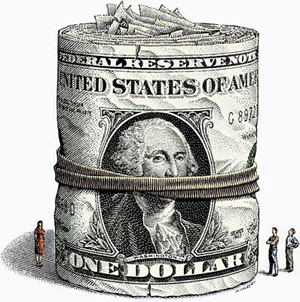
Below are a selection of 1900 Chicago food prices from The 18th Annual Report of the U.S. Commissioner of Labor.
Rib Roast: $.13
Chuck Steak $.08
Sirloin $.14
Beef $.06
Butter $.22
Cheese $.17
Coffee $.14
Flour $.02
Lard $.10
Mutton $.08
Pork Chops $.10
Rice $.06
Sugar $.06
Other Prices:
Dry Beans --quart $.09
Bread --1 lb loaf $.05
Eggs --dozen $.18
Milk --qt. $.06
Molasses --gal.$.60
Irish Potatoes --bushel $.39
Robert Hunter in Tenement Conditions in Chicago p. 46 cites a tenement in which small dark 2-3 room apartments rent for $4-7 per month. Frances Enbree concludes the average rent paid in slum districts was $8-10 per month, bath and heat not included. Heat would be a coal stove. Toilets were either shared inside water closets, or two-hole outhouses underneath the sidewalk or stairs. A bath costs $.25, or a laborer could visit the free public bath.
Robert Hunter in Poverty rates for lodging hotels. The better class favored by single men with steady employment charged $.25-0.50 cents per night, feature good sanitary conditions, a bathroom down the hall, and separate rooms for each lodger. The $.20 and cheaper rooms have partitions and poor sanitary conditions. The cheapest hotels procided floor space among hundreds of other men for $.02. For $.05 a filthy mattress was also provided. The city also made the floors of the police stations available free to homeless med, and some months had as many as 11,000 applicants.
Homer Hoyt suggests that older houses in the more fashionable neighborhoods rented for $25-60 per month. Apartments were being built for the upper-class along the fashionable boulevards which were to be rented for $100-300 per month, or even $1000 for vertain Lakeshore Drive palaces. Apartment or flat living was becoming popular because of increasing difficulties in getting servants to maintain large detached residences.
Such middle class and upper class residences usually came equipped with many modern conveniances, such as bathtubs and flush toilets. A few even had the relatively new electric lights, telephones and steam heat. Due to improved public transportation many of the new middle and upper class residences were being built some distance from the congested areas close to the city center. Outlying and suburban locations such as Hyde Park, Morgan Park, the North Shore and Austin were undergoing rapid growth. Sometimes these were used by the upper class as summer homes. The family would also maintain a flat closer in which would be used by the whole family in the winter and by the husband for the weekdays during the summer.