In June, I traveled from my home in Barrow, Alaska to Anchorage in order to attend the live taping of West Coast Live. One of my companions, Laura, was selected as an Aquaphone operator and suggested that I "appropriate" an Aquaphone. She thought that it would be marvelous to hear the sounds of the Arctic Ocean enhanced by the technology of the Aquaphone. After the show, I engaged Sedge in conversation and Laura surreptitiously carried away a fully assembled, professional model Biospherical Digital Optical Aquaphone.
Anyone who has attended West Coast Live can imagine the problems inherent in transporting a fully assembled Aquaphone. Not having the proper carrying case, I had to hand carry the instrument. It is difficult to be discrete when traveling by air and hand carrying an Aquaphone. The gentlemen at the security checkpoint and the airline attendants were not amused. It took some quick talking to convince them to let me transport the "device".
Barrow is the northernmost community in the United States. It is situated on the Arctic Ocean, between the Chuckchi and Beaufort Seas. I decided that anyone could record the sounds of the Arctic Ocean, but to really experience the seas with an Aquaphone, I should wait until the ice moved in and the water began to freeze.
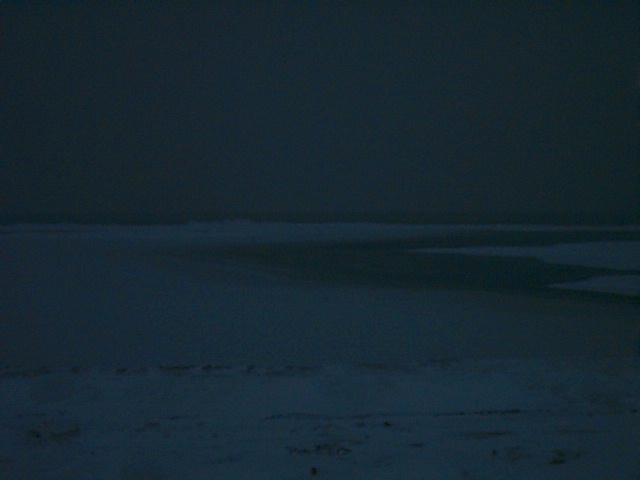
The sun set in Barrow for the last time this year about ten days ago. There are only a few hours of daylight during mid-day. This picture is a view of the Arctic Ocean taken from Barrow (November 28, 1997). It is dark, ice is beginning to form along the shore, there is open water some distance out and the pack ice is on the horizon.
The temperature was five degrees Fahrenheit. It was snowing and the wind was blowing at 20 miles per hour. With the able assistance of two family members, Kilian (age 2),
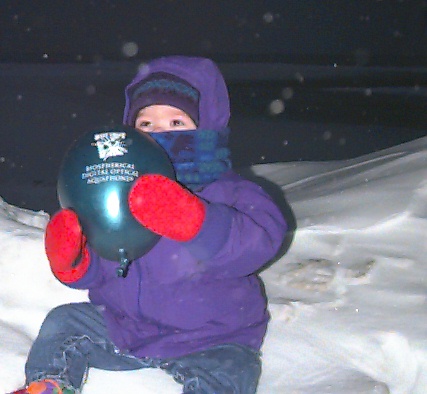
and Renata,
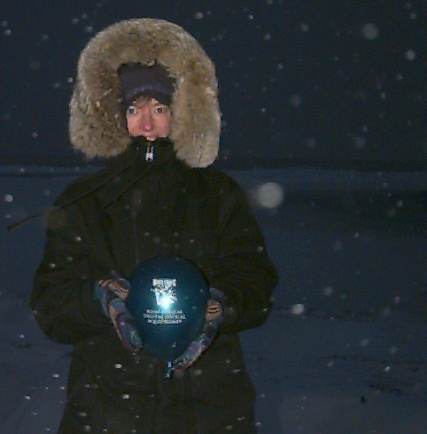
the sounds of the Arctic Ocean were recorded using the Aquaphone and modern, digital computer technology. Click here to listen to the recording.
One thing that became obvious immediately was the effect that the cold weather was having on the Aquaphone. The device was certainly designed for the temperate climate of the San Francisco Bay area and not the harsh winters of the Arctic. Experienced Aquaphone operators understand the importance of atmospheric pressure and fluid dynamics on the proper operation of the Aquaphone.
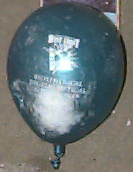
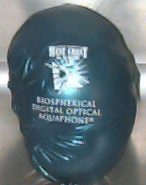
The biospherical membrane of the Aquaphone began to shrink when it was taken out into the cold arctic air. The fluid-filled transducer inside the Aquaphone started to get sluggish (and eventually froze after prolonged exposure to the elements.) As you can see from the pictures below, the Aquaphone did not fare well in the arctic elements.
Notice the deformation on the left side of the Aquaphone, slightly below center. Snow and ice are visible in the center.
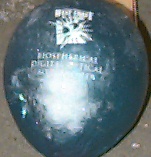
The fluids inside the Aquaphone eventually froze, causing a severe deformation of the rear case of the Aquaphone. This series of photos shows the changes in the case.
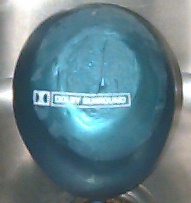
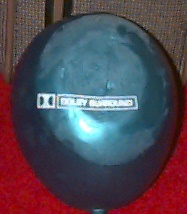
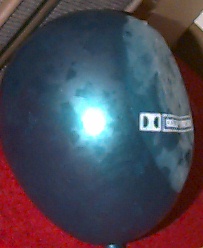
We attempted to restore the Aquaphone to working order by carefully warming it to room temperature. However, the protective membrane of the equipment shows significant stress and the Aquaphone has been rendered unusable.

Since the Aquaphone had been made unusable, we took the opportunity to "reverse engineer" it in order to try to improve its design. Different materials were tested for use as the external membrane and an access port was incorporated into the design to allow replacement of the fluid-filled transducer. Some of the Biospherical qualities of the Aquaphone were sacrificed in order to develop a more rugged device. A picture of the prototype ruggedized arctic Aquaphone is shown below.
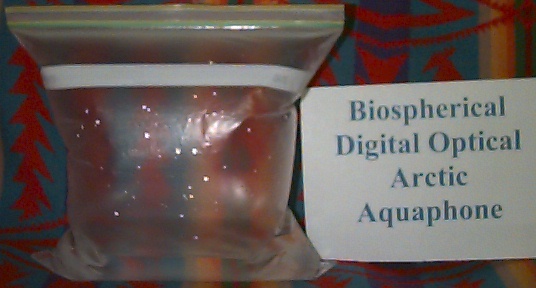
The professional model Biospherical Digital Optical Aquaphone is poorly suited for use in arctic environments. It will work once but will likely suffer significant damage. A few simple modifications should make the Aquaphone suitable for operation in low temperature situations.