The Red Center of Australia
***
ULURU
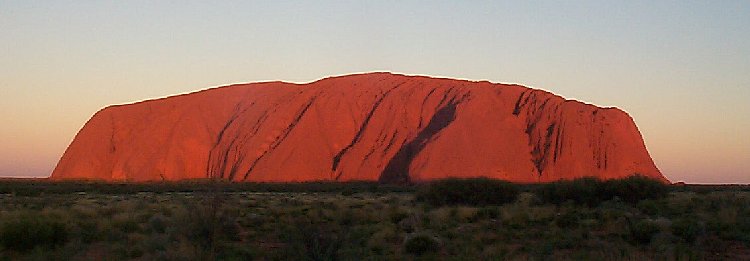
A trip to Uluru, Kata Tjuta, Watarrka National Park and through the Western MacDonnell Range to Alice Springs.
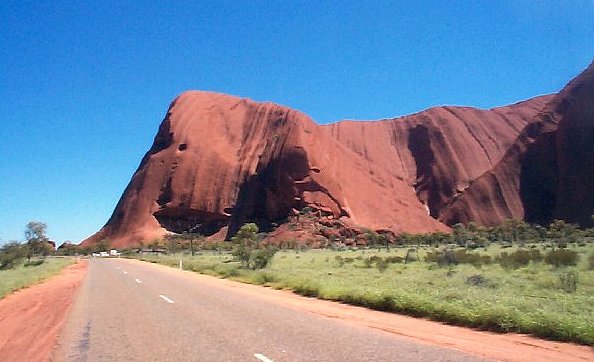
The whole area is a treasure house of a 1000 million years of geological history
Uluru is 384 m high and has a circumference of 9,4 km.
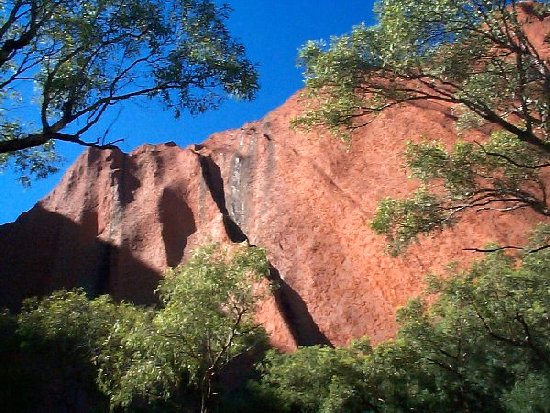
We abstained from climbing Uluru as it is considered inappropriate according to the spiritual traditions by the aboriginal custodians!
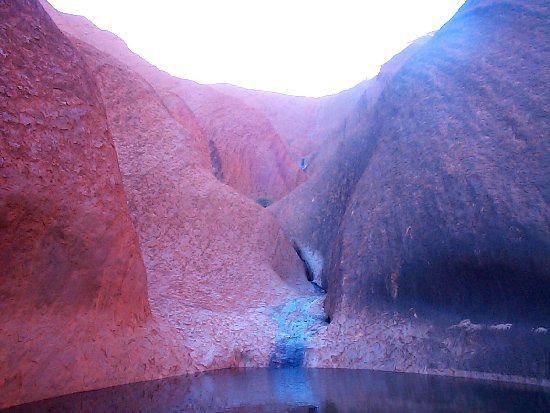
Tjukurpa of the Aboriginal Anangu people (their religious philosophy) is a fully integrated world view that explains the physical features of the land and also their metaphysical origines.
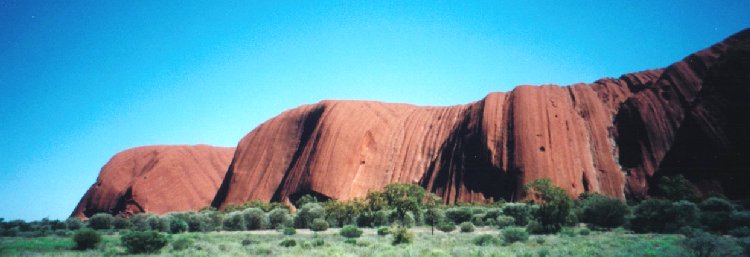
The Uluru-Kata Tjuta National Park has been declared a UNESCO Biosphere Reserve. On 26 Oct 1985, Uluru was given back to its traditional Anangu owners by the Australian Government.
***
KATA TJUTA
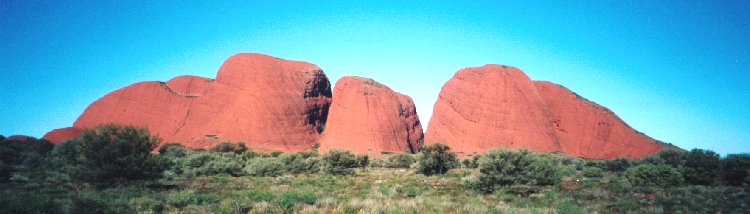
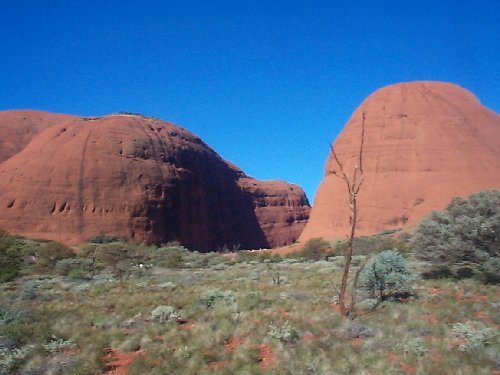
There are 36 domes of varying size. The highest is 546 meters above ground level.
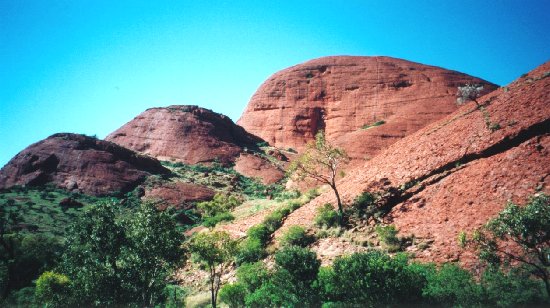
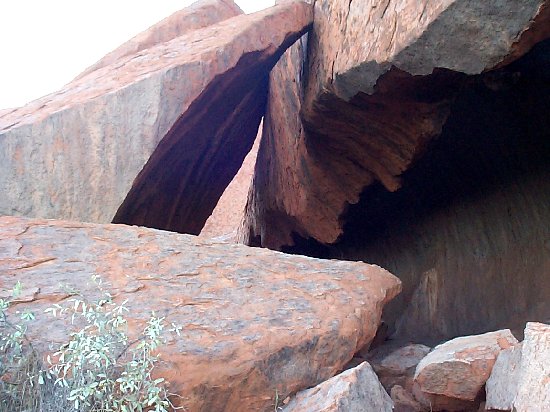
Red color of the rock is due to high iron content in the rock.
***
DESERT ANIMALS
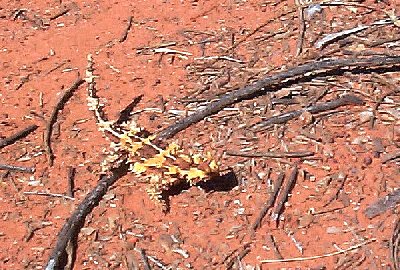
Lots of lizards can be found in Central Australia. The Thorny Devil (above) looks unfriendly, but is a very peaceful creature.
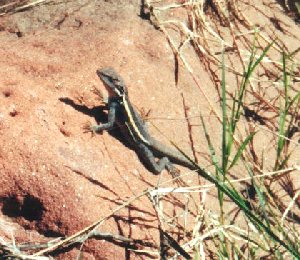
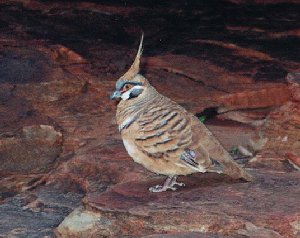
Spinifex Pidgeons are a common sight.
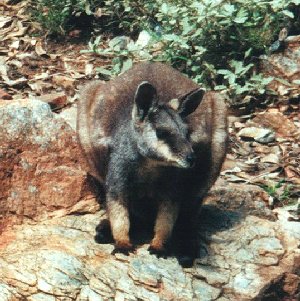
The black-footed rock wallaby is one of the many native species that is moving ever closer to the brink of extinction.
***
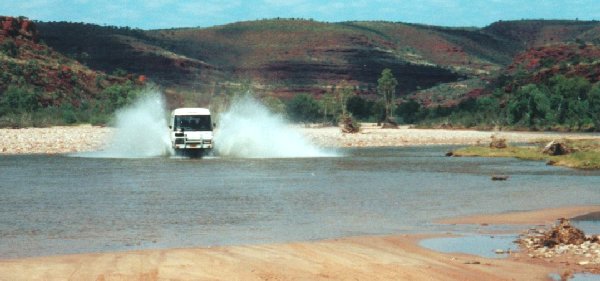
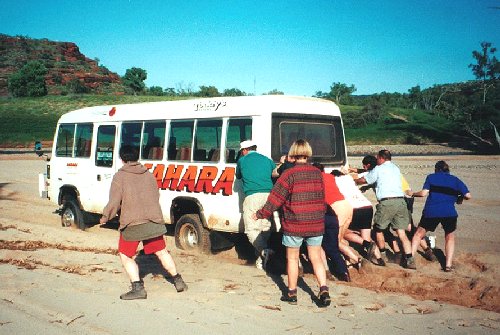
BY 4WD OVER UNPAVED ROADS
***
WESTERN MACDONNELL RANGES
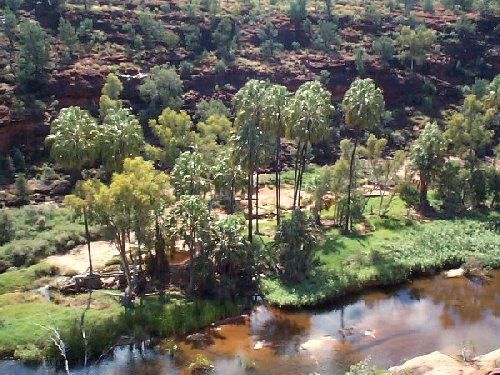
Palm Valley
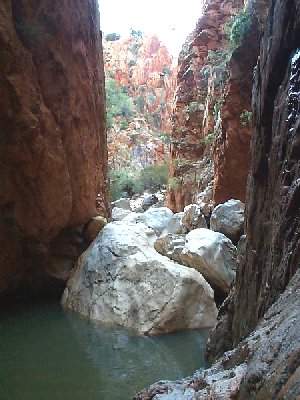
Standley Chasm
***
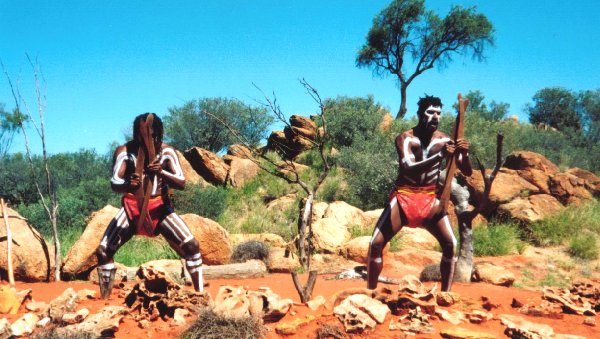
ABORIGINAL CULTURE
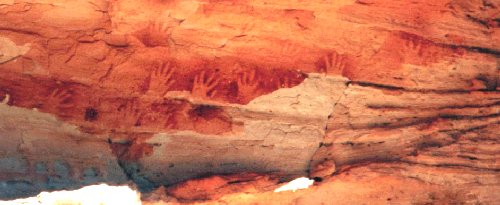
Aboriginal rock art in Wallace Rockhole. Above hand paintings may be up to 200 years old, whereas the carvings below are considerably older.
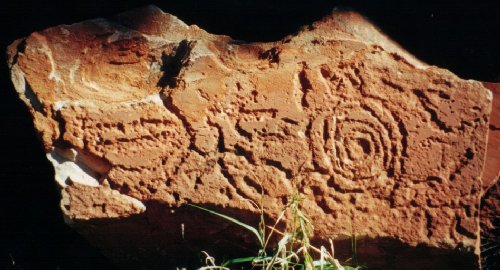
The Aboriginal people in the Uluru area call themselves "Anangu". They are also known as Pitjantjatjara
***
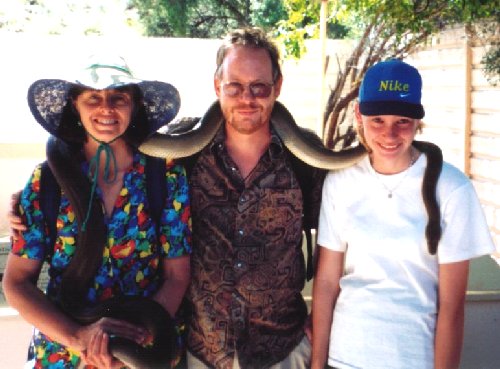
REPTILE CENTER, ALICE SPRINGS
Not native to cental Australia, this olive python is not dangerous at all!
Updated: 19-Apr-01
�
�