

|
|

|
|
|
|
|
Virtual Paths and Channels
As with any network, the primary level of connection is through physical wires. How those wires are then used for data transmission is up for many ways of implementation. ATM uses a method that is different from the standards of Ethernet that most people are familiar with. Instead of sending data out to be delivered through any number of paths, ATM establishes one path from end to end and uses it to transmit all data. This is quite like how a phone call between two people work.
Within each virtual path, many different channels can then be established. In the case of a video conference, one channel may be used to broadcast the video data and another channel to broadcast the audio data.
Anyone familiar with current Internet technologies is well aware of how streaming video and audio are not of the best quality because of the fact that data can arrive out of order. This doesn't happen with ATM. Because of the established virtual path, all data travels sequential from point A to point B. Once again, this is very similar to how a phone call between two people functions.
Another important facet of ATM to take note of is how bandwidth is assigned to the virtual paths. When a path is established, it is not assigned a certain amount of the overall bandwidth. Bandwidth is added and removed from the path as needed. This optimizes the bandwidth of all the different paths running on the physical layer.
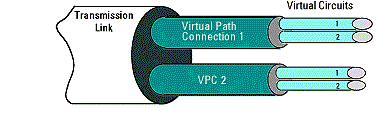
Figure 2: Virtual Paths and Channels


