Women in the West
 Background
Information:
Background
Information:
The
westward movement was a major transplanting of young families. All the kinfolk who could be gathered
assembled to make that hazardous passage together. Women were part of the journey because their fathers, husbands,
and brothers had determined to go. They
went West because there was no way for them not to go once the decision was
made.
On
the Overland Trail, women strove to be equal to the demands of the day. They asked no special help or
treatment. They responded to the
spectacular beauty of the land, and they took keen interest in the economies of
the road, recording the costs of ferriage and food supplies. They were as knowledgeable as men about the
qualities of grasses for the animals.
They understood what was expected of them and endeavored to do their
share of the work each day.
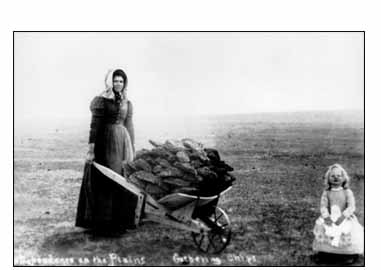
The women on the Overland Trail did the domestic chores: they prepared the meals and washed the clothes and cared for the children. But they also drove the ox teams and collected pieces of dung they called “buffalo chips” to fuel their fires when there was no wood. And when there were no buffalo chips, they walked in clouds of dust behind the wagons, collecting weeds. They searched for wild berries and managed to roll some dough on a wagon seat and bake a pie over hot rocks in order to lift meals out of the tedium of beans and coffee.
For
women traveling with small children, the overland experience could be
nerve-wracking. Children fell out of
wagons. They got lost among the
hundreds of families and oxen and sheep.
Children suffered all the usual childhood ills – measles, fever,
toothaches. But on the Trail, children
who were drenched by days of heavy rains or burned by hot sun could be
especially irritable and hard to care for.
Free from supervision, older children were full of excitement and
mischief. Their mothers worried
constantly that Indians would steal them.
The
diaries of men and women carry certain predictable characteristics, with men
writing of “fight, conflict and competition and…hunting” and women writing of
their concerns with “family and relational values”. But it is not true, as some have concluded, that the diaries of
men and of women are essentially alike.
Although many women, along with the men, wrote of the splendors of the
landscape and the rigors of the road, although many overland diaries seem tediously
interchangeable, there are not only important distinctions, but distinctions so
profound as to raise the question whether women did not ultimately perceive the
westward trek differently. Traveling
side by side, sitting in the very same wagons, crossing the continent in
response to the call for free land, women did not always see the venture in the
clear light of the expectation of success.
There were often shadows in their mind, areas of dark reservation and
opposition. The diaries of women differ
from accounts of the men in both simple and in subtle ways.
In
the very commonplace of their observations, the women bring us a new vision of
the overland experience; they bring it closer to our own lives. They do not write of trailblazing or of
adventure but of those facets of living that are unchanging. In reading their diaries we come closer to
understanding how historical drama translates into human experience. Through the eyes of the women we begin to
see history as the stuff of daily struggle.
-
 from Women’s Diaries of
the Westward Journey by Lillian Schlissel
from Women’s Diaries of
the Westward Journey by Lillian Schlissel
Photos from Women of the West website
at: http://www.wowmuseum.org/gallery/sod/sod17.html
OBJECTIVES
SWBAT - Discuss and list some of the occupations/roles women held in the West.
SWBAT - Evaluate primary source material in order to gain knowledge of the time period.
ANTICIPATORY SET
Begin with an open discussion prompted by these questions:
Do you think life was different for men and women in the West? How?
If you lived in the West at the period we’re discussing, and had the choice, would you have preferred to be a man or a woman? Why?
What benefits were there for women who moved west? What drawbacks?
What sorts of jobs did women do in the west?
INSTRUCTIONAL INPUT
Lecture using Women’s Diaries of the Westward Journey by Lillian Schlissel to point out both the opportunities and difficulties women faced as they moved westward.
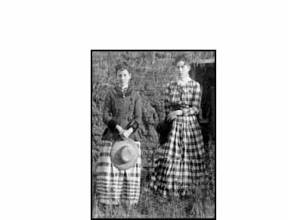
Show overhead photograph of Rachel Fisher, Indiana to Oregon
emigrant, and ask the class to speculate on her story. What type of situation brought her to the
Oregon Trail? Then read one of her
letters aloud to class. Explain her
situation and the results of her journey on the Trail.
MODELING
Lesson in Analyzing Primary Source Material: Handout on analyzing primary sources and handouts of women’s diary, journal entries and letters from the western migration.
We will go over the handouts together, then read some of the entries. We will then try to apply some of the concepts of analysis to the journals.
CHECKING FOR UNDERSTANDING
Understanding will be assessed in the class discussion that follows student group work.
GUIDED PRACTICE
Students work in groups to answer questions related to
women’s experiences in the western frontier.
We will then reconvene as a class to discuss students’/group responses
to questions.
INDEPENDENT PRACTICE
Homework – Students are to find one primary source document from the period (on the internet, old newspapers or from my handouts if necessary), analyze it and answer questions on worksheet related to the analysis of historical primary source documents.