
Wm. K. Davis and Wm. H. Davis were listed as working for Underwood from 1846 through 1850. This bit of information is important because both employees became competitors in later years.
They sold their products as far away as the west coast. They claimed that their meat would keep up to 5 years. Underwood deviled ham was their best known modern day product, it was first brought to the arket around 1868.
Even though the federal government didnt require manufacturers accurately list their wieghts and measurements, most of Underwoods products could be counted on to be exactly as listed by the company.
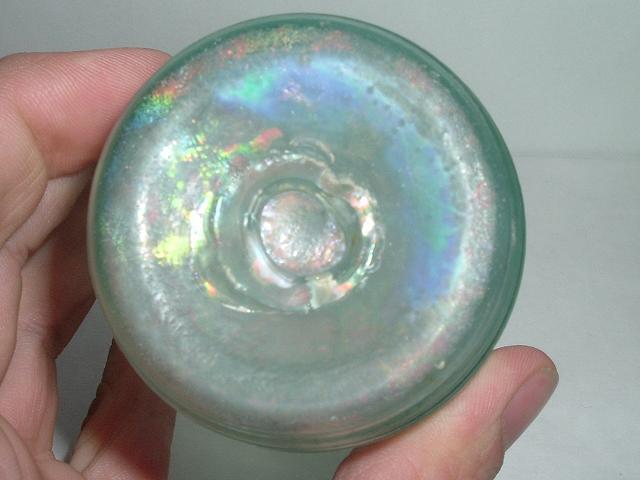
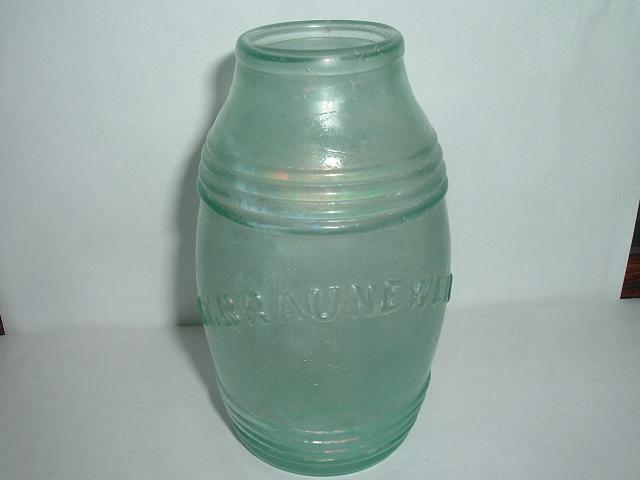
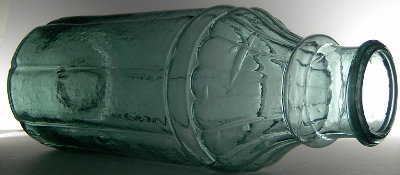
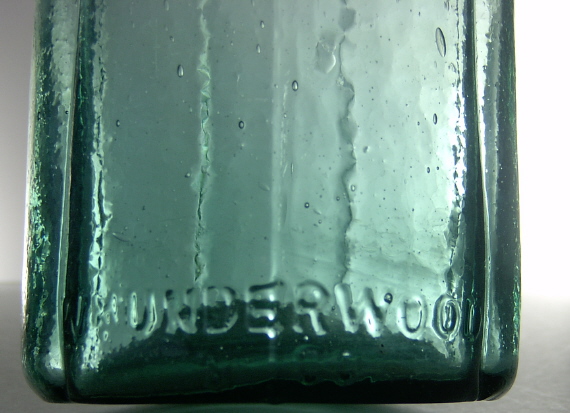
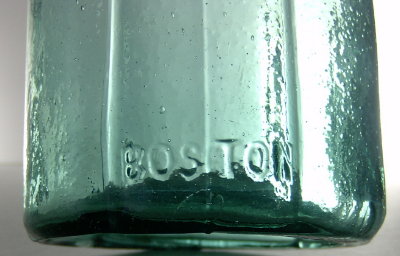
This large very decorative jar one of the best and rarest of Underwood's beautiful containers. It is bottom embossed W.M. Underwood & Co. and is either open or iron pontiled. The glass is very crude and somewhat thin with a beautifully applied string lip and stands at 11 1/2 inches tall and 4" wide. It is usually found in an aqua almost teal color.
From the collection of Stinger Haut.