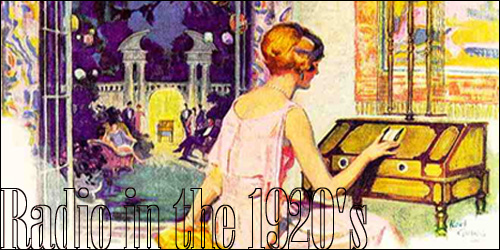
During the 1920's, none of the new inventions were met with more spectacular success than the radio. By the end of the decade, 618 stations were in business, and networks were regularly broadcasting from coast to coast.
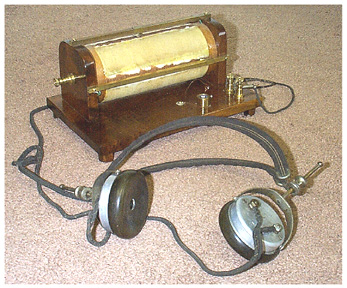
In the 1890�s, Guglielmo Marconi, an Italian, established wireless telegraphy.
The first scheduled radio program took place in Pittsburgh on November 2, 1920 on radio station KDKA, which was founded by Westinghouse Electric. This program gave the results of the Harding-Cox presidential election. Although this was a historic event, the program was only heard locally. However, the program�s success inspired KDKA to begin the first regularly scheduled broadcasting of news, church services, and music.
By 1921, the first talk show had been broadcasted. This program, broadcasted on station WBZ, was centered around farming.
On July 2, 1921, RCA made its broadcast debue when they aired a commentary of a heavyweight boxing championship on their radio station, WJY. This was the first big sporting event that was heard over the radio. By the fall of 1921, the radio broadcasted a commentary of baseball�s World Series game.
During 1921, the radio began to grow in popularity. During this year alone, the nation spent about $10 million for radio sets and parts.
As the popularity of the radio grew, brand-name companies began to promote the sales of their products by incorporating their name into the title of radio programs. The first example of this took place in 1921, and was an orchestral radio entitled �A&P Gypsies.�
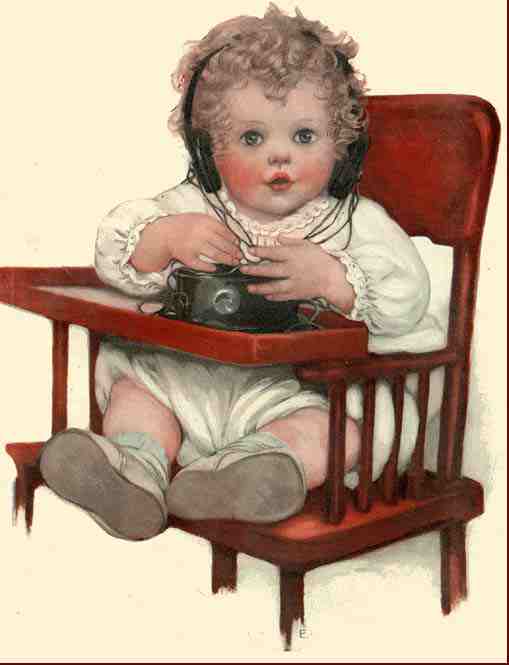
By October, children were even able to appreciate the radio, when WJZ broadcasted a children�s program entitled �The Man on the Moon.�
Although the radio was met with extreme demand in America, few working-class homes could afford the cost.
During the year of 1922, radio waves were up for grabs as 500 new stations began to broadcast. With this increase in stations came a competition among stations for airtime. Many programs began to overlap because stations began to broadcast on the same radio length. A family listening to one program frequently overheard many overlapping programs.
During the initial days of the radio, the programs were considered a public trust that must be kept unpolluted by commercialism, and it was believed that many citizens would be outraged if the radio became an advertising medium. However, in 1922, the first sponsored program was broadcasted over station WEAF in New York. The commercial was broadcasted by Queensboro Corporation, who paid $100 for a ten minute message promoting the sale of apartments in Long Island. The advertiser, a real estate corporation, was discreet in announcing their sponsorship; however, this precedent opened the doors for advertisements on the radio.
Initially, radio stations had difficulties in recouping the cost for broadcasting, as they depended solely on the sales of radio sets. With sponsored programs and advertising, the radio�s financial problems ended.
By 1924, 2 � million radios were in American households.
As the radio reached more and more households, Americans began to petition the government to intervene in the free-for-all mess that the radio had become. This problem was finally resolved in 1926 when the Federal Radio Commission was organized to stop signal and frequency wars between radio stations. This commission allotted a specific spot on the radio for each station and ordered 1,100 stations off the air.
It wasn�t until New Year�s Day in 1927, that radio programs could be heard from coast to coast when the Rose Bowl football game was reported. Long distance was now possible, and many national commercial networks drowned out local programming.
By the end of 1929, 12 million families had radios in their homes (40%).
The popularity of the radio rapidly increased throughout the 1920�s, and with it came demands for more news, music, sports, and talk shows. By the end of the decade, 618 stations were in business, and networks were regularly broadcasting from coast to coast.
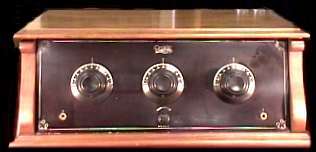
Because of this popularity, the radio became a product of the mass market and there was a large demand for receivers. Customers were so desperate that groups stood in lines just to complete forms in order to obtain radios once the stores sold out.
 |
|
 | 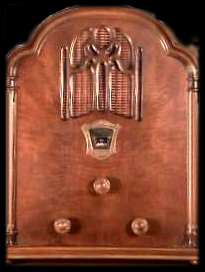 |
Before the advent of the radio, the advertising industry was virtually silent. Radio�s airwaves allowed for advertisement and the consumption of products. Advertisers sought mass markets, and they used radio to spread their messages. With such advertising came the mass production of many products. Mass production and consumption changed the economic structure of America. It led the masses towards a new, higher cultural level. The radio obliterated the village and the farm as islands of isolation and led America into a world of fancy goods.
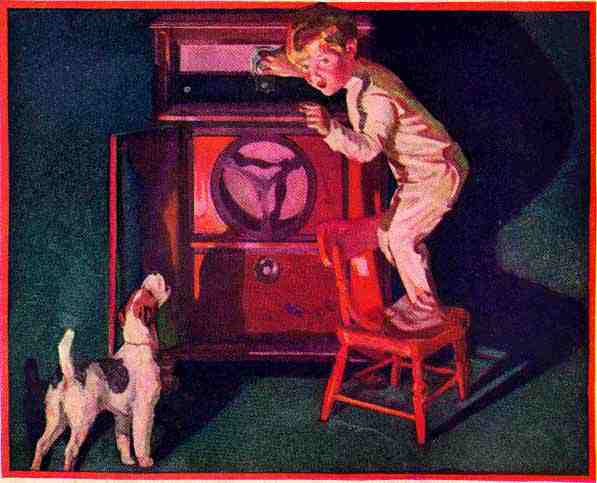
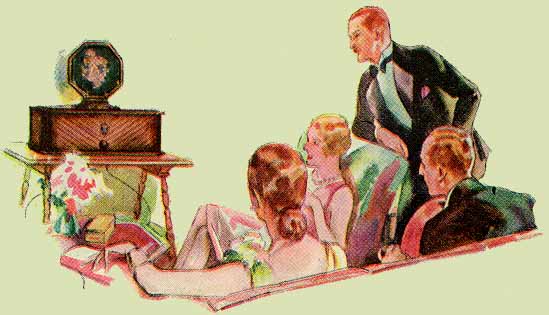
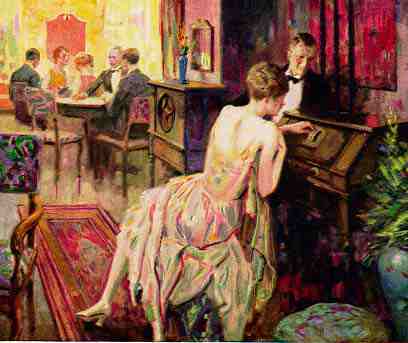
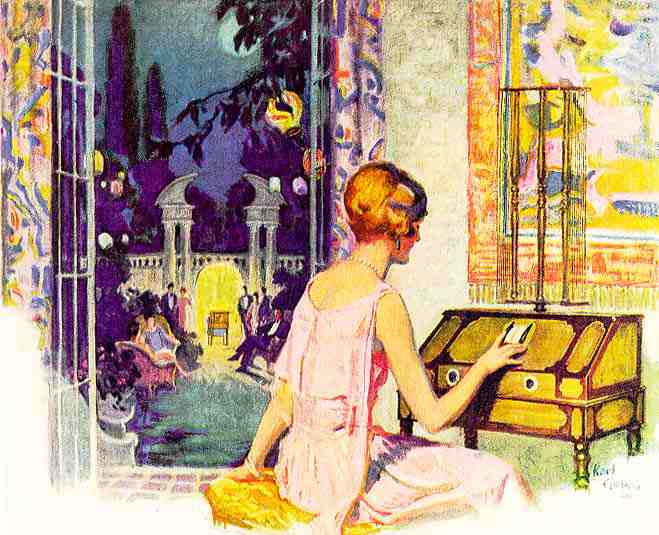
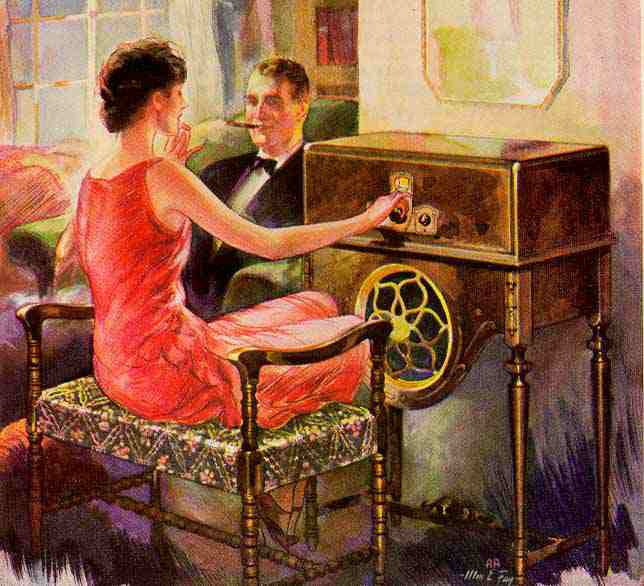
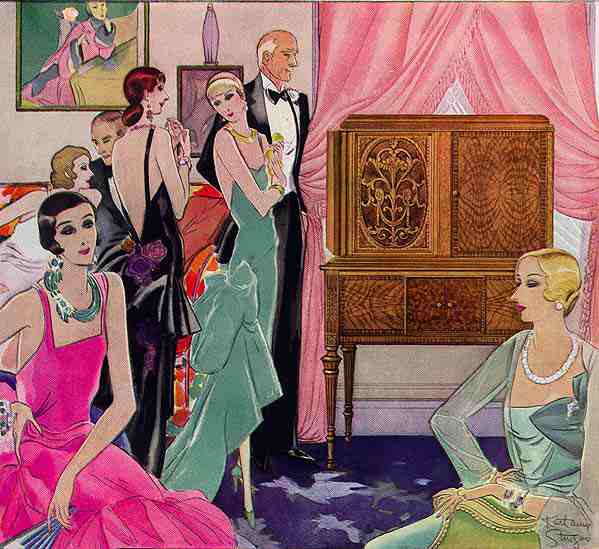
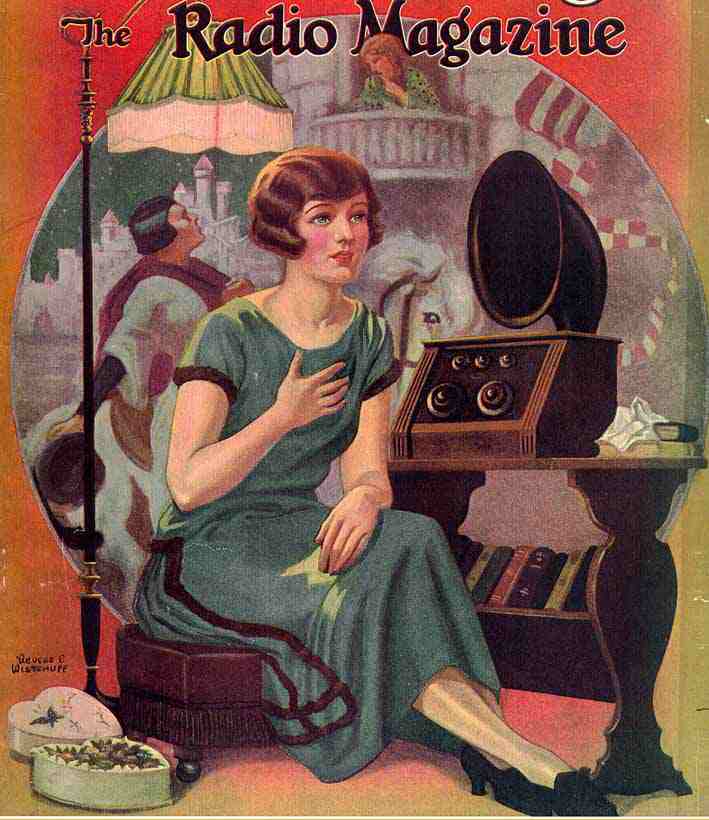
Life in the US changed in the 1920�s because of an increase in living standards due the mass production and consumption brought about by advertising. The radio also brought about a more relaxed attitude on how life should be lived, and showed the public a new way in which to find pleasure and entertainment. As the number of hours people worked began to decline, the number of hours the public could listen in on radio programs increased. People were beginning to have extra money to spend on entertainement, and this money was funneled into a family radio. While the Model T Ford enticed families away from their homes, the radio lured Americans to their parlors to share a common experience. During this decade, the family gathered around the radio, just as they once did around a fireplace years before. The radio enhanced a sense of community among the ethnic groups, as each group listened to programming suited to their interests and needs. It served to knit the nation together by allowing everyone to share a common expericance. The radio had a duel purpose; entertainment as well as public service. The radio brought public events into American homes. Broadcasting began to establish itself as a public service and it conquered the isolation of people in sparsely populated regions, and became a practical communications technology. Because of the radio, millions of Americans were able to hear polititions� views, helping the country to be better educated in its voting. As the radio became a mass medium, newspaper publishers were being challenged in their way of delivering news.
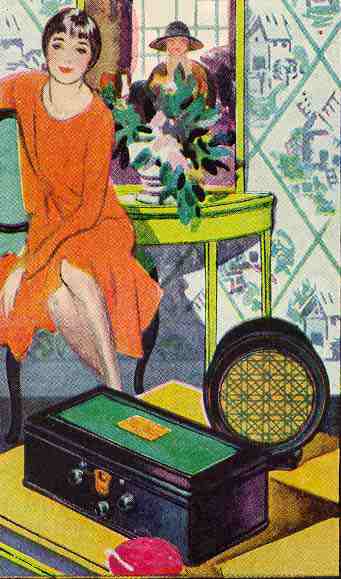 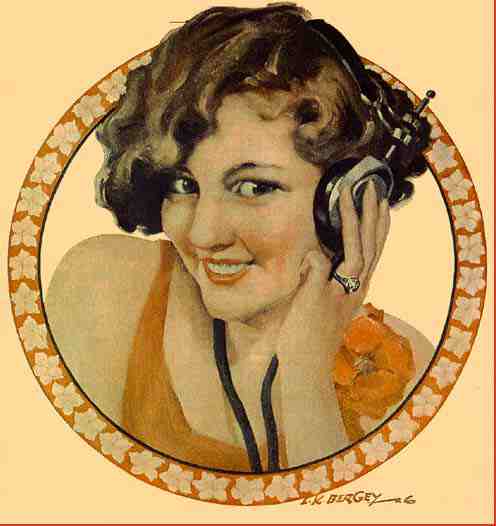 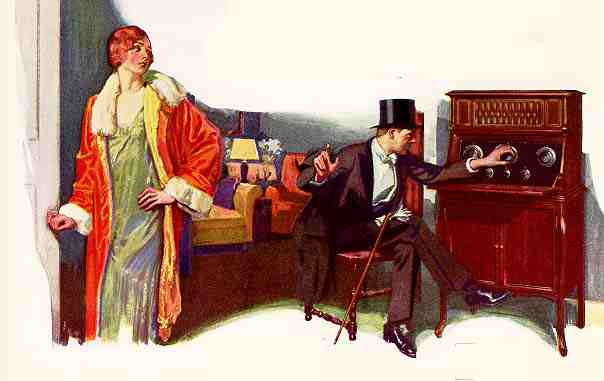         |

Throughout the 1920�s, public broadcasts became more regular and widespread, as thousands of commercial radio stations opened. The public enjoyed hearing music and their taste for jazz and new melodies became diverse. The radio became so popular that families tuned in daily. Most of the daytime programs were geared towards women, while the nighttime programs were geared towards men. The radio offered music for dancing, and many stations put big bands and orchestras live on air. It was through the radio that music could become so popular. The radio broadcasted programs featuring classical music, church broadcasts, farm news, stock market reports, variety shows, comedy shows, live events, drama, jazz, and sports events.
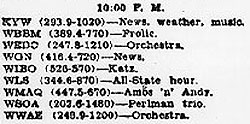
Amos 'n' Andy was a very popular show that was on the station WMAQ. Here is a clip where "Amos unwittingly becomes the "wheel man" for a pair of robbers who knock off a fur store." This Amos 'n' Andy Radio Clip was aired on June 22, 1929. (7:27)
Uncle Don was a popular children's show that aired from 1928 until 1947. It featured Don Carney. On the show he would pledge the flag, sing, tell jokes, announce listeners' birthdays, tell a stories, and give club news. This was the format for other children's shows that followed.


1920 ~ Westinghouse builds a 100-watt radio station in a shack on top of its 9 story factory in Pittsburgh, which became known as KDKA.
November 2, 1920 ~ Frank Conrad and Donald Little broadcasted election returns from 8pm until after midnight. This became known as the first radio broadcast.
1921 ~ The nation spent about $10 million for radio sets and parts.
July 2, 1921 ~ The first big sporting event was heard over the radio (boxing). RCA made its broadcast debue with this heavyweight boxing championship that took place in Hoboken, NJ and was broadcasted by WJY with a transcript of the fight commentary telegraphed to KDKA in Pittsburgh for rebroadcast by that station.
1921 ~ The government began liscencing radio stations.
1921 ~ the first sponcered orchestral radio program called "The A&P Gypsies" aired.
November 11, 1921 ~ President Harding�s speech on Veterans� Day delivered at Arlington National Cemetary in Washington D.C. is carried by radio to huge crowds in New York and San Franscisco.
Fall 1921 ~ Baseball�s world series was broadcasted.
October 1921 ~ Children began to listen to WJZ�s children�s program entitled �The Man on the Moon.�
1921 ~ Amos �n� Andy was the most popular program on the air, earning the actors a salary of $50 per week.
1922 ~ Scores of individual station efforts coalesced into a broadcasting boom which began to sweep across the US.
August 28, 1922 ~ The first commercially sponsored program was heard over station WEAF in New York.
1922 ~ 500 new stations began to broadcast.
1922 ~ With the boom of radio broadcasting also came about the boom of radio equipment sellers.
1923 ~ The first occasion on which radio carried political convention proceedings.
1924 ~ 2 � million radios were in American households.
1926 ~ The country�s first radio network was established, called the National Broadcasting Corporation. Stations around the nation offered steady programs of music, news, and sports.
1926 ~ The National Broadcasting Company was formed.
1927 ~ The Federal Radio Comission was organized to stop signal and frequency wars between radio stations.
1929 ~ The nation spent $842,500,000 for radio sets and parts.
1929 ~ 12 million families had radios in their homes (40%).