
The World Trade Organization
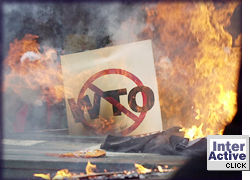
"The World Trade Organization's overriding objective is to help trade flow smoothly, freely, fairly, and predictably."
statement from the official web page of the World Trade Organization
The World Trade Organization (WTO) is an international organization whose purpose is to enhance global trade by eliminating trade barriers between member nations. There are 135 member nations who represent 90% of all world trade. Three fourths of these countries are developing or least developed countries (LDC's) and the others are developed nations (OCED's).
The organization was started in 1995 at the Uruguay Rounds as a successor to GATT (the General Agreement on Tarriffs and Trade). The GATT regulations are still used as guidelines for the WTO but the relatively new organization has more power and seeks to standardize regulations that guide international trade.
The powers and responsibilities of the WTO are as follows:
1. Administers trade agreements
2. Acts as a forum for trade negociations
3. Settles trade disputes
4. Reviews national trade policies
5. Cooperates with the other international organizations (IMF and World Bank)
6. Provides technical assistance and training programs for developing countries to assist trade policy issues.
The structure of the WTO is divided into four layers of power. At the top is the Ministerial Conference who meets every two years. The next down is the General Council made up of ambassadors and heads of delegations from member nations who meet several times a year in Geneva. The next level down contains the Goods Council, the Service Council, and the Intellectual Property Council who report to the General Council. The last layer is made of committees who work on specific issues like third world development, membership applications, the environment, and regional trade agreements.

