

The Battle in Seattle
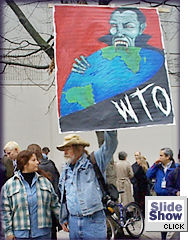
"They were organized, educated and determined. They were human rights activists, labor activists, indigenous people, people of faith, steel workers, and farmers. They were forest activists, environmentalists, social justice workers, students, and teachers. And they wanted the World Trade Organization to listen. They were speaking on behalf of a world that has not been made better by globalization."
-"N30 WTO Showdown" Paul Hawken, participant in Seattle protests,
of Yes! Magazine
From November 30 to December 3, 1999 the streets of Seattle were filled with 40,000 to 60,000 protesters from all parts of the nation. Over 700 organizations representing such interests as environmental, humanitarian, and labor rights participated in this mass protest against the World Trade Organization. Their goal was to block the WTO's Third Ministerial Conference and bring the issues of globalization into the international spotlight. They succeeded with both goals.
By 10 am the first morning the police had started using tear gas to subdue protesters. Rubber bullets, tear gas and pepper spray were used so frequently and without control that by midafternoon the police were running out of supplies while metro busses, pedestrians and bystanders had become accidental victims of these painful chemicals.
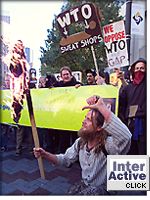
By midafternoon major Paul Schell had declared a state of emergency, called in the National Gaurd, set a 7pm curfew into affect and created "no-protest" zones in the downtown area. In the following three days over 500 people were arrested. Unfortunately what had started as a peaceful protest had escalated to become violent riots spurred by both the Seattle police and a small violent segment of the protestors known as "the Anarchists."
The Anarchists were a group in all black with a strong history in activism who targeted certain buildings and businesses for property damage in protest of these bussinesses investment records. Starbucks was targeted due to it's refusal to sell free trade coffee, Fidelity Investments because they invested in Occidental Petroleum which is a company responsible for violence against the indigenous people in Columbia. By the end of the protests over $3 million dollars of property damage had occurred to add to the $17 million of profits downtown businesses lost during this crucial holiday shopping time.
Seattle was a turning point. These protests got the world's attention. No longer can the WTO and other international organizations make decisions without the scrutiny of people all across America. These people now know what these organizations are and how the decisions they make affect our everyday lives. The question remains now: the WTO heard the protesters clearly but did they listen to their demands?

