
Effects of Protests
"But even if today's protest against the World Bank and the IMF move bayond yesterday's scripted face-offs and arrests to violent melees that might turn off many Americans, analysts say these broad, blunt, e-mail fueled demonstrations are likely to flower for a simple reason. They work...."
-"D.C. Rally takes on Guardian of Finance"
John Donnelly, Boston Globe
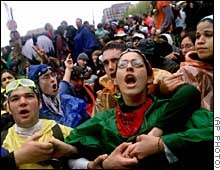
The effects of the protests in Seattle and Washington DC are yet to be fully realized as we wait for substantive reactions from the international organizations. Yet the issues of Globalization have been brought to the forefront of American politics now that the WTO, IMF and World Bank are household names.

Another surprising result that came out of Seattle and Washington is the changes in the way that Americans protest. The technology era has changed the way that activists can communicate and rally together. The amount of protesters in Seattle (40,000-60,000) would never have been able to assemble so effectively without the use of e-mail and the internet.
Hand held video recorders and community access cable channels also played apart in the protests by allowing protesters to provide their own media coverage and not just rely on the commercial media which is backed by many of the major corporations that were being attacked by the protesters.
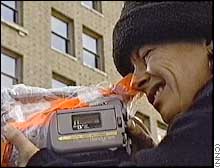
While mainstream media chose to focus mainly on the violence of the protest and make references to hippies reminiscing about the 60's, information regarding the issues of the protesters was being dispersed by activist magazines, web sites, cable channels, radio shows, and e-mail. The protesters did their best to counter the destructive force of the media downplaying the protests and just meaningless riots.
John Stauber, editor of the PR Watch and food safety advocate showed concern "that the focus on violence- though instigated by police and the media, not demonstrators- 'plays into the hands of the corporation.' He worries that it can be used to turn the middle class against the protestors.
'One of the biggest challenges of the movement is to reach out to the disaffected mainstream."
(As quoted by Kenny Bruno in "Beyond Street Tactics: The Anti-Corporate Globalization Movement after Washington" from Corporate Watch)
