Background
In my country, Peru, there is a lot of information about children's malnutrition, but when I did my thesis about children's weight and upbringing at private schools in Lima, Peru (2002), I was very surprised to discover that being overweight and obesity were not as severe as the problem of malnutrition.
According to the National Health and Nutrition Examination Survey (NHANES 1999-2000), researchers have determined that "16 percent of children and adolescents ages 6-19 years are overweight . . . this represents a 45 percent increase from the overweight estimates of 11 percent obtained from NHANES III (1988-94)" (NCHS, 2004, para. 1). All the research investigated shows the increasing of fast food in children's diet and a sedentary life are the principal causes of overweight and obesity in children.
The main reason for this change on a nutritional diet is the agitated life of family, especially parents, that in most of the cases, work in two jobs, all day, and fast food is the easiest and quickest food for their children, but is it enough healthy for children's nutrition and growth? The present research shows the importance of healthy nutrition and sports in children and the influence of overweight and obesity of children when they become adults.
OUTLINE
I. Causes of Child Obesity
Over the last 20 years, many authors tried to explain the main reasons of overweight and obesity in children. This section gives information about children's diet and style of life since mother's pregnancy, their birth, and society influence in the style life and diet of children.
-Children's Nutrition Before their Birth
A lot of authors try to explain the definition of obesity and overweight, but there were a lot of changes on the standards of the relation between weight and height charts. Clark, Parr, and Castelli (1988, p. 42-45), explains different arguements about the relationship between mother's diet and baby's size and weight, but they don't have enough support to assure that relationship. During pregnancy, an adequate caloric intake promotes optimal utilization of the nutrients for growth of the fetus; a desirable weight gain recommended by the Committee on Dietary Allowences (1980) is between 22-27 pounds (10-12 kilograms) throughout the 36 weeks of pregnancy. Even though it is more than 20 years now, this recommendation has not changed, but it is important to remember the increase of 300 calories daily above normal caloric requirements meets all the energy demands of pregnancy, and the quantity has to be the same of the quality. For example, a bar of chocolate has 300 calories, a little of calcium, big quantity of fat, and also sugar. Along the same lines, one glass of reduced fat milk with one cheese sandwich made with wheat bread, cheddar cheese, lettuce and two slices of tomatoes, has big quantity of calcium, carbohydrates, fiber, and vitamins. Obviously, the last option is the best for the mother and her baby's growth. In this topic, nothing is a fact, but in the next part during the infancy, societal influence in the children and their learning are very important.
-Children Start Eating
When babies start eating solid foods, they also start personnel interactions and learn differents customs in the way and times to eat. Family is a very important factor in this period because infants imitate the behavior of their around and at the beginning, parents, grandparents, and closer family are the unique people thay can see and learn about. Breast feeding may can help to prevent the excesive amount of the first food and subsequent obesity, but there is not enough research to support this proposition and follow it like a real fact.
-Nutrition During Childhood
The prevalence of overweight in children do not depend only on family influence, but society during this period is more important because children begin their relationship with another children, and at the same time, they learn different eating styles and also behavior during the feeding time.
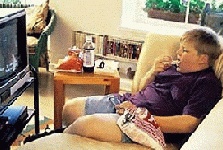
Also, heredity is an important factor in the obesity of children. Owens and Paige (1982, p. 9-13) estimates that with one parent, a child has a risk of about 40% of becoming an obese adult; with two has a risk is increased to 70%. At school, as children's diet changes, the daily intake of proteins and calories have risk to change because children realised that candy bars and fat snacks are to closer for them to buy and choose them like an option for their lunch instead of their homes lunch. In most of the cases, these snacks have more sugar and fat necessary for the adequate development of children. After eating the quick snack at school, children go home and eat more food, play nintendo, and watch television.
Current oingoing research
A recent survey (Beteta, 2004) shows that respondents choose diet in first place (44%), sedentary life (35%), and in the last place heredity (21%) like the most common cause of overweight in children. The differences between each answer are not too defined, so it means all the respondents have not clear the most important cause of overweight, but diet is the most known cause of overweight for them. The ongoing research shows the three options very important in the develop of the overweight and obesity in the childhood.
II. Prevalence of Child Obesity
Through the years, instead of decreasing the prevalence of overweight and obesity in children, it has increased because of many factors, but the most important are: sedentary life and diet. This section explains them and the variety of definitions among the years.
-Definition of Obesity Through the Years
A lot of definitions of obesity has changed in the last 20 years. For example, in the eighties, the majority of children obese were considered obese because they didn't look "good" for them and their height, but all the changes in the height and weight charts didn't help too much to confirm or change that fact. At this time, obesity is recognized both, adults and children, as an excess of body fat. Kedesdy and Budd (1998, p. 345), explain that a relative body weight that is 20% grater than the ideal body weight (RW) is the criteria to define the obesity, but the RW is tied to reference population and maybe or may not be stable or completely representative because of the uncertain ways to find tha exact body's adiposity, especially in children. The body mass index (BMI), which is based on measures of weight (in kilograms) and height (in meter squared), is the most common way to diagnostic overweight in adults and it has been used for children. Also, this method estimates excess adiposity through a simple method. For example, a child with a weight of 42.2 kilograms and a height of 1.2 meters would have a BMI of 29.2 (42.2/{1.2}2) and this equivalate mild obesity or everweight.
In the table 1 is shown the realationship between RW and BMI.
-Sedentary Life and Obesity in Children
Majority of obese children do not practice any sport. The reason of that is that practicing a sport, requires skill, and physical strength enough to develop and be great to play it very well. Sports like football, baseball, basketball, gimnastics, and swimming, requires a lot of time and dedication for obese children that most of the time, prefer nintendo and/or playstation instead of doing sports.
-Poor Diet in Obese Children
Everything in life is learned, and eating also is learning. The genes of parents are very important in the shape, face, and customs of children, but the daily calorie intake of child depends principally of their family prefers, it starts when mother buy food for all the family because children does not have any right to neither change nor buy something different, and that is a very important fact to assure.
III. Effects of Children's Obesity
In the past, an overweight child reflected a "healthy boy", but all the research investigated and the authors read in all this research confirms that it was a mistake. This section, explains the reasons of why a healthy boy is not neither an overweight nor fat boy.
-Child's Upbringing
A child with overweight usually look shorter than a boy with adequate weight in relation to his height, even though they are the same age. The principal reason of this statement is, the width of obese children give the appearance for society and children around them are shorter. Kedesdy and Budd (1998, p. 352) explain the health risks of obesity during childhood are not clear, and significant health problems are less frequent in childhood and occur primarily in children with severe obesity. They also explains that in children psychology, the consequences of obesity could be as same dangerous of the healthy effects because even if their eating habits, they probably take too much care in diet, physical activities, and everything they involve an adequate weight to do not return at their "fatty appearance" again.
-Type 2 diabetes
Sedentary life join to excess of sugar in children's diet "help" the type 2 diabetes to start development on these children. The main reason is that this type of diabetes appears in people who have problems with the reception of sugar in the blood through the insulin. When the insulin works slow or almost does not work, the sugar can not be controlled, and it is too high in the body. Children with a history of it in their family, will be inclined to develop type 2 diabetes in their body for all their lives because this illness only can be controlled by the diet, low consumption of sugars and fat, and if they are not controlled, diabetes could lead them to death.
-Cholesterol levels
Early studies in 1970s with animals showed the no relationship between breast-feeding on cholesterol metabolism. However, Owens and Paige (1982, p. 11) demonsted through a longitudinal study of infant baboons that the early formula-feeding during the first for months of life is better to accumulate HDL-Cholesterol (healthy), oppsosite of the breast-feeding levels that increase the LDL-Cholesterol levels.
Cheung and Richmond (1995, p. 159) states that "this conclussion does not identify clear the mechanism of this effect of high HDL-Cholesterol levels, but it is probably mediated by the hepatic regulation of cholesterol metabolism". Considering this study, the exposure of children to dietary cholesterol during the early time through the formula-feeding may be beneficial later to not accumulate high cholesterol levels of LDL-Cholesterol in their blood. Wong, et al (1992, p. 79) also did a study about the prevalence of hypercholesterolemia in children watching TV between 2-4 hours per day and their conclussion is that an excess of television viewing was a better predictor of hypercholesterolemia, than the family history of high cholesterol.
-Problems with Overweight Start Early in Life
Not only when children with overweight and problems of obesity grow up, start their problems. Opposite of everyone can think, problems start very soon. Let's check some examples:
At school, obese children do not have the same rythm, force, and strength enough to have the skills to play the most popular sports, like football, soccer, volleyball, and even swimming.
At home, obese and overweight children depend on their parents to eat and develop their food habits. They make them more kind and take care more than majory children of their age. If obese children have grown up with wrong habits of eating because of their family and also their parents and brothers are all overweight people, this children feel really comfortable at home and they enjoy spend time with their family.
With friends, most of overweight and obese children are very lonely children. They usually look for people like them to share their customs and habits of feeding. Children of the same age, but with an adequate weight or very good players of any sport, usually make jokes about "fatness", and most of the times, especially in this 21st century, an overweight or obese boy or girl is worse than a very intellectual child because of their appearance.
Current oingoing research
A recent survey (Beteta, 2004) shows that seventy nine percent of respondents believe that overweight children will be future obese. The outgoing research confirmes the answers if the weight is not supervised in time.
IV. Treatment
There is not a unique specialist to treat the overweight and obese in children. A professional team of a physician, a nutritionist, and a psychologist is really important to treat and prevent overweight in children, but the treatment is not only for children. It is also for the family, school, and all the people around them.
-For Overweight and Obese Children
The treatment for the childhood obesity have been controversy over the years. Kedesdy and Budd (1998, p. 343) explains this controversy when they say that a 3-year-old boy with an adequate raise and weight for his age within a year consumes 80 calories more than he needs will easily goes to a delayed obesity at adolescence or adult. Epstein (1990, p. 67) also considers that many children who are overweight are at risk for becoming obese adults and an early treatment may help to prevent adult obesity. He explains children have short history of maladaptive eating patterns than adults, so their behavior may be easier to change. The most important reason to treat overweight and obese children is that they can achieve to loss weight by maintaining weight and by growing taller. With an adequate calorie intake diet that covers all the requirements, children need to grow healthy and in a good shape, and according to my outgoing research (Beteta, 2004), the quick snack at school, fast food at home, nintendo, and watch television, characteristics of childhood, have to be change for an hour of physical activity, and thus the prevention of obesity is well done.
-For Children's Parents
Parents must encourage their children to eat an adequate calorie intake, and the most important thing is to encourage daily physical activity. Sophisticated sports are not necessary to help children be in good shape. Walking or troting is just enough to make their children habits and maintain it for all their lives like a life style.
Here are some examples from Win Publication-Helping Your Child (2004, para. 12) about how parent can help their overweight children:
- "Making sure their children eat breakfast", it will provide them enough energy to their daily school day, and avoid quick and fatty snacks.
- "Giving children a lot of differents kind of vegetables and fruits instead of fatty and too sweet snacks". Be sure children like unless some of the wide variety of healthy snacks to give them the chance to elect what vegetables and/or fruits they prefer to eat.
- "Talking in a very good way, indirectly and basic form, about future problems of overweight and obese children", is important to make children realise that being healthy all the periods of our lives, is the best way to live.
- "Cooking with less fat and sugar" not only helps children weight going well, also helps all the family to maintain health.
Schools should hire a professional, in this case a nutritionist specialist in children, to provide healthy nutritional lunch with a lot of variety for everyday because children's weight need to be considered, especially when NHANES (1999-2000) showed 45 percent increase from overweight in the last five years. In the background of the according outgoing research (Beteta, 2004) this increase is also observed.
V. Conclusion
- As you can see from the points outlined in this research, is not known yet if the prevalence of overweight and obese children starts before their birth, but a healthy diet and an adequate calorie intake of the mother's baby are the best recommendations to establish good habits in children.
- The genetics, diet, and sedentary life are inherents characteristics of an overweight and obese children, all of them "help" to maintain child obesity. Increasing the daily activities and changing wrong habits in diet's children are little, but very important details all family have to do to fight with the development of child obesity.
- Obese children and their style of life are the same of their complete families. Of course, there exist some exceptions of the rules, but the most important thing to help an overweight child is changing all his family habits as soon as it possible.
- Future research should give more information about background of overweight and special treatments to fight with it since pregnancy, especially because the number of overweight around the world is increasing, like this research shows.
References:
- Clark, K., Parr, R., Castelli, W. (1988) Evaluation and Management of eating disorders Anorexia, Bulimia, and Obesity. Champaign, Ill. : Life Enhancement Publications.
- Committee on Dietary Allowances, National Research Council, Food and Nutrition Board (1980) Recommended dietary allowances. Phoenix, Ariz. : Oryx Press.
- Cheung, L. & Richmond, J. (1995) Child Health, Nutrition, and Physical Activity. Champaign, IL : Human Kinetics.
-Children and Nutrition (2004). Retrieved November 24, 2004, USA in world wide: http://www.americanheart.org/presenter.jhtml?identifier=3007590
- Google Images (2004). Retrieved November 19, 2004, USA in world wide wide: http://images.google.com/images?q=junk+food&hl
- Kedesdy, J. & Budd, K. (1998) Childhood Feeding Disorders Biobehavioral Assessment and Intervention. Baltimore : Paul H. Brookes Pub. Co.
- NCHS (2004) Prevalence of Overweight Among Children and Adolescents: United States, 1999-2002. National Center for Health Statistics Hyattsville, MD. From world wide: web:http://www.cdc.gov/nchs/products/pubs/pubd/hestats/overwght99.htm
- Owens, G. & Paige, D. (1982) Obesity in infants and children. Clinical Nutrition, 1, San Jose, Cal.: Hallmord Co.
- Strauss, C., Smith, K., Frame, C. & Forehand R. (1985) Personal and interpersonal characteristics associated with childhood obesity. Journal of Pediatrics Psychology. , Vol.10, Washington, DC.
- WIN-Publication-Helping Your Child (2004). Retrieved November 29, 2004, Bethesda, MD, USA in world wide: http://win.niddk.nih.gov/publications/child.htm#overweight
- Wong, N., Hei, T., Qaqundah, P., Davidson, D., Bassin, S. & Gold, K. (1992) Television viewing and pediatric hypercholesterolemia. Champaign, Ill. : Life Enhancement Publications.
Written by Claudia Beteta claudiabeteta$yahoo.com
*Replace the "$" for "@" to send me e-mail. I have written it this way to avoid spam.