Curriculum Page
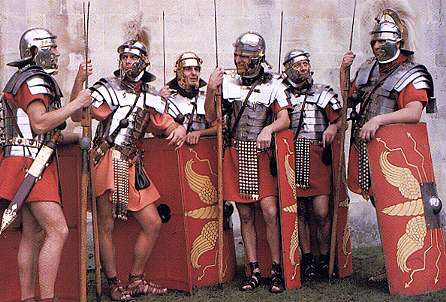
The objectives of this curriculum page on the Roman army are:
To introduce the student to the resources on the World Wide Web that apply to the Roman army,
To guide the student to several web sites for the purpose of exposing them to general topics pertaining to the Roman army, and
To provide the student several possible sites to use as resources to both decide and to research a specific topic pertaining to the Roman army.
Please perform the following tasks using the designated web sites.
Read the article on the page and complete the following items:
1. Where did the Roman army muster and train?
2. What fundamental changes of the Roman army in the Late Republic removed the class differences that had existed in the Early Republican army?
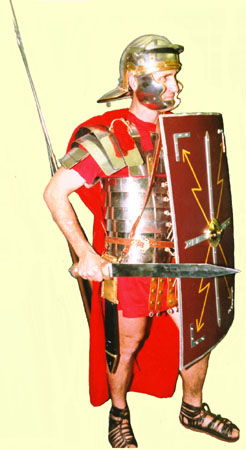
3. Give both the Latin and the English names of the two standard weapons of the Roman legionary soldier. Follow the link "tools of war" to find out what they looked like. Sketch a picture of each.
4. Follow the link "Roman Army Camps," and describe the three elements in the standard fortifications surrounding a Roman castra.
5. Follow the link "Starving a City into Submission with Siege Tactics," and record, according to the article, what three things the Roman army would hurl into an enemy city during a siege to encourage surrender.
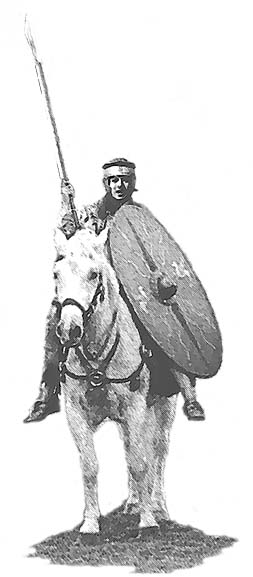
Follow the link "The Army," scan that page, and complete the following items:
6. (The Army of Augustus - the 'classic' legion) Put the following units of the Roman Army in order from largest to smallest: century, legion, contubernium, cohort, maniple.
7. (Army Discipline) What actions could result in execution? Describe the disciplinary procedure called 'decimation.'
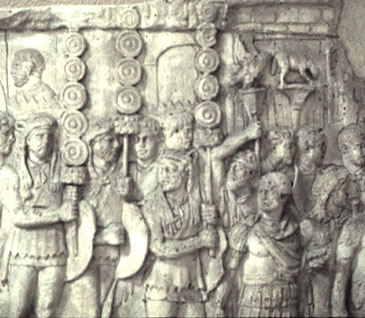
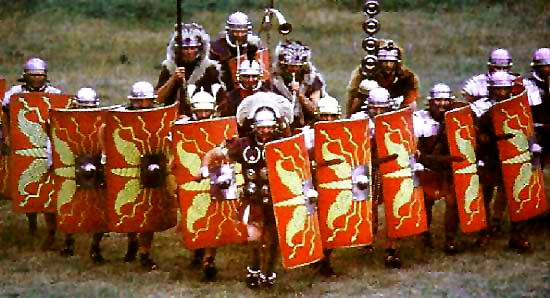
8. What were military 'standards?' What were they used for?
9. Either draw an example of a military standard or describe one in detail.
Read and explore at the web site for a few minutes, then follow the "Teacher Resources" link.
10. Take one of the three quizzes and record your quiz number and your answers on your answer sheet.
 Send
feedback or suggestions to me!
Send
feedback or suggestions to me!
Note: Each picture is a link to the site from which the picture
was obtained. Always give credit where credit is due!
This page last updated on November 12, 2000