
Musical Instruments | Updates | Cairo Opera House | Links
| |
Home | Composers Index
| Musical Epochs
| Musical Forms | Contact Musical Instruments | Updates | Cairo Opera House | Links |
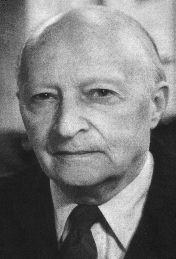 |
He studied with Maliszewski at the Warsaw Conservatory (1932-7) and soon made his mark as a pianist and composer, though few works from before 1945 have been published: those that have include the Paganini Variations for two pianos (1941). He then developed a clear, fresh tonality related to late Bart�k, displayed in the Little Suite for orchestra (1951), the Concerto for Orchestra (1954) and the Dance Preludes for clarinet and piano (1954). But that style was short-lived: in the late 1950s he was able to essay a kind of serialism (Funeral Music for strings, 1958) and to learn from Cage the possibility of aleatory textures, where synchronization between instrumental lines is not exact (Venetian Games for chamber orchestra, 1961). Most of his subsequent works were orchestral, fully chromatic, finely orchestrated in a manner suggesting Debussy and Ravel, and developed from an opposition between aleatory and metrical textures. These include his Second (1967), Third (1983) and Fourth (1993) symphonies, concertos for cello (1970) and for oboe and harp (1980), and settings of French verse with chorus (Three Poems of Henri Michaux, 1963), tenor (Paroles tissees, 1965) and baritone (Les espaces du sommeil, 1975). During this period he was also internationally active as a teacher and conductor of his own music.