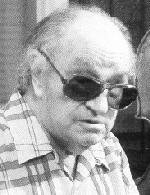
Rodrigo, Joaquin
(1901- )
The most popular Spanish composer of the Franco era, Rodrigo achieved fame in 1940 with the first performance of his Concierto de Arunjuez.
Rodrigo was blind from early childhood and started musical studies comparatively young. An early composition was performed by the Valencia orchestra and he joined the Schola Cantorum in Paris in 1927. There he was taught by Paul Dukas and received encouragement from his compatriot Falla. Throughout the Spanish Civil War he remained in France and Germany, supported in part by grants from Spain, where he returned in 1940. Shortly after his return the Concierto de Arunjuez, a concerto for guitar and small orchestra, was first performed and was so well received that he was immediately hailed as the leading postwar Spanish composer.
Accolades followed. A university post was created for him (1947), election to the San Fernando Fiune Arts Academy (1950); the award of the Cross of Alfonzo the Wise (1953); the Cross of the Légion d'honneur (1963); Academy of the Latin World (1968).
Rodrigo continued to compose instrumental and vocal peices without any great development in style. He is best known for his guitar music although he has written music for other instruments, as well as operatic and choral works. He never repeated the success of the Concierto de Aranjuez, although pieces for unaccompanied guitar and the Fantasia para un gentilhombre, for guitar and orchestra, proved popular.
His
main influence is that of his early teacher, Dukas, but he also reveals touches
of a typically Spanish atmosphere in his works, which belong to a basically
Neo-Classical tradition. While he is the best example of a certain period of
Spanish music, no one has followed in his footsteps, and he is considered by
some to have had a deadening effect on the development of Spanish composition.


