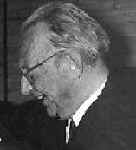
Orff, Carl
(1895-1982)
German composer known for his educational and theatrical music. Born July 10, 1895, in Munich, where he studied music, he conducted in various German theatres and in 1924, with the dancer Dorothea Günther, he founded the Günther School to train children in music, dance, and gymnastics.
His Schulwerk (Music for Children, 1930-1933, revised 1950-1954) begins with simple rhythmic patterns and progresses to sonorous ensemble pieces for xylophones, glockenspiels, and other percussion instruments.
In his famous oratorio-mime Carmina Burana (1937) he set 13th-century secular poetry to concentrated, deliberately simple music for full orchestra and chorus structured around vigorous, pulsating rhythms and rich sonorities. This became the first part of a triptych called Trionfi (Triumphs), the other parts being Catulli Carmina (Songs of Catullus; 1942) for chorus, solo voices, pianos, and percussion, in which the chorus gives an almost instrumental accompaniment to the soloists, and Trionfo di Afrodite (Triumph of Aphrodite; 1951), for full orchestra and chorus. All three have texts glorifying love. His other works include the fairy-tale opera Die Kluge (The Clever Woman, 1943) and the austere musical play Antigonae (1949).


