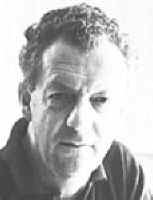
Britten, Benjamin
(1913-1976)
British composer, whose operas are among the finest English-language operas of the 20th century. Born November 22, 1913, in Lowestoft, England, he was trained at the Royal College of Music, London. From 1939 to 1942 Britten lived in Canada and the United States and produced a violin concerto (1939) and the Sinfonia da Requiem (1941).
His first opera, Peter Grimes (1945), based on part of The Borough by the English poet George Crabbe, was a great success, and he followed it with The Rape of Lucretia (1946); Albert Herring (1947); Billy Budd (1951), based on a novella by the American writer Herman Melville; Gloriana (1953), written to celebrate the coronation of Elizabeth II; The Turn of the Screw (1954), from a story by the American writer Henry James; and A Midsummer Night's Dream (1960), from Shakespeare. His later operatic works include Owen Wingrave (1971), based on a story by James, and Death in Venice (1973), based on a story by the German novelist Thomas Mann. Britten termed some of his later works chamber operas, because they require an orchestra of only 12 players.
Britten also composed in other forms, such as the cantata-like works he called “church parables”, including Noye's Fludde (1958) and The Prodigal Son (1968). His War Requiem (1962) is a massive choral work utilizing verses by the British poet Wilfred Owen. In addition, he produced incidental music for plays and films; song cycles; and music for children, including The Young Person's Guide to the Orchestra (1946). Britten's works range in style from the simplest, most lyrical tonality to complex but dramatically effective atonality.
In 1947 he and the English tenor Sir Peter Pears founded the Aldeburgh Festival, now an important year-round center for performances and teaching at the Britten-Pears school. In 1976 Elizabeth II granted him a life peerage. He died in Aldeburgh on December 4, 1976.


